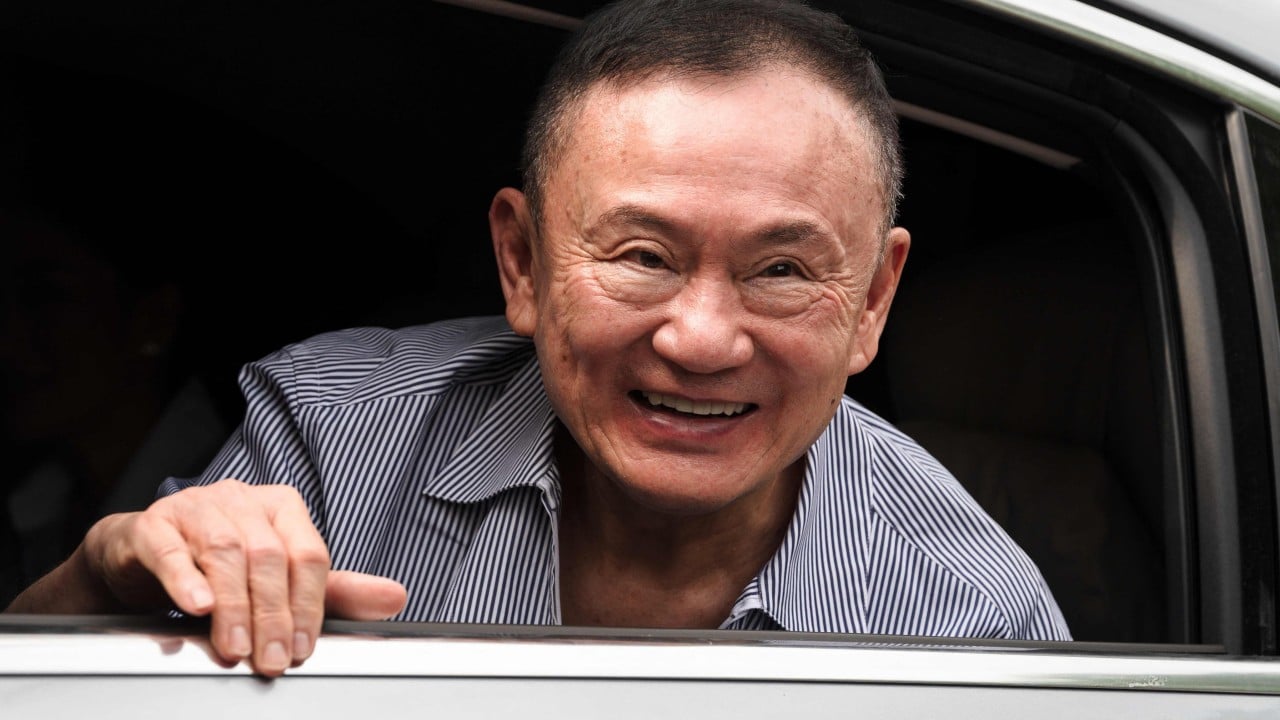
The international media is currently obsessed with a fundamentally flawed question: Can Thaksin Shinawatra truly "leave politics behind" now that he is out of prison?
It is a lazy, naive premise. It assumes that political power in Southeast Asia operates like a Western democracy, where a politician holds office, loses an election, retires to write a memoir, and occasionally gives a paid speech. Learn more on a similar subject: this related article.
That is not how Thailand works. It never has been.
To ask whether Thaksin can step away from Thai politics is to misunderstand the very nature of power in Bangkok. Thaksin does not need an official title to govern. He does not need a seat in parliament. He does not even need to be in the country. For the past two decades, including his 15 years of self-imposed exile, Thaksin remained the gravity well around which all Thai politics rotated. More journalism by Associated Press highlights similar perspectives on the subject.
The mainstream press treats his recent release and the rise of his daughter, Paetongtarn Shinawatra, as a dramatic new chapter. In reality, it is just the continuation of a twenty-year status quo. The consensus view is that Thaksin is a spent force trying to negotiate a quiet retirement. The reality is that he has just pulled off the ultimate political pivot, outmaneuvering both the military establishment and the radical youth movement that threatened to burn down the old order.
The Illusion of Exile and the Myth of the "Retirement"
Let's clear up a historical blind spot. Mainstream analysts spent years writing obituaries for Thaksin’s political career every time the military staged a coup or a court banned one of his proxy parties. They wrote it in 2006 when he was ousted. They wrote it in 2008 when he fled the country. They wrote it again in 2014 when his sister Yingluck was overthrown.
They were wrong every single time.
During my years tracking political risk and corporate investments in Southeast Asia, I watched global boards panic over Thai coups, expecting the Shinawatra influence to evaporate. It never did. Business leaders who understood the ground reality knew that major infrastructure projects, telecom concessions, and trade policies still required a nod from Dubai or London, where Thaksin was living. He ran the Pheu Thai party via Zoom. He picked candidates via WhatsApp. He dictated strategy through intermediaries.
The idea that physically stepping foot back in Thailand, or moving from a hospital wing to his mansion in Bangkok, suddenly changes his involvement is laughable. He never left. You cannot "leave" a system that you spent two decades building, financing, and personifying.
The Real Deal: The Conservative Elite's Faustian Bargain
To understand why Thaksin is free today, you have to look at the 2023 election data, not the sentimental headlines about a grandfather wanting to see his grandchildren.
For twenty years, the fundamental divide in Thai politics was Thaksin versus the Royalist-Military Establishment (the Amart). It was a brutal, sometimes bloody conflict. But the 2023 election introduced a third variable that terrified both sides: the Move Forward Party (MFP).
Move Forward did not just want to beat the military; they wanted to dismantle the structural monopoly of the military, reform the royal defamation laws (Lèse-majesté), and break up the corporate oligarchies that control the Thai economy. They won the popular vote, capturing 151 seats and sweeping nearly every district in Bangkok.
Faced with an existential threat to their survival, the military establishment and the Shinawatra clan did what pragmatists always do. They buried the hatchet and formed a coalition.
Thaksin’s return was not a triumph over the establishment; it was a negotiated settlement. Pheu Thai sacrificed its progressive credentials to form a government with the very generals who threw them out of power in 2014. In exchange, Thaksin got a royal pardon, a commuted sentence, and a luxury hospital stay instead of a prison cell.
This is the nuance the Western press misses. They see Thaksin as a democratic icon fighting against authoritarianism. He isn't. He is a billionaire populist who comfortable bedfellows with the old guard when his own interests align with theirs.
Dismantling the "People Also Ask" Delusions
If you look at global search trends surrounding Thai politics, the queries reflect a deep misunderstanding of how power is brokered in developing markets. Let's address them directly.
Is Thailand a democracy now that Pheu Thai is in power?
No. Thailand is an electoral oligarchy wrapped in a constitutional monarchy. The military-drafted 2017 constitution was specifically engineered to ensure that the unelected Senate and conservative judicial bodies could veto any real structural change. The fact that Pheu Thai had to form a coalition with military-backed parties like Palang Pracharath and Ruam Thai Sang Chart proves that the generals still hold the structural veto. The actors on stage have changed, but the scriptwriters remain the same.
Will Thaksin face another coup?
Highly unlikely in the near term. The traditional triggers for a Thai coup—a populist leader threatening the core institutions of the state—no longer apply to Thaksin. He has effectively joined the establishment. He is now the buffer protecting the old guard from the genuine radicalism of the youth movement. The military does not need to overthrow a government that is actively protecting the status quo.
Can Paetongtarn Shinawatra rule independently?
This is the most naive question of all. Paetongtarn is the Prime Minister, but Thaksin is the strategist. To expect her to operate independently is to misunderstand the family-business model of Thai political parties. Pheu Thai is, at its core, a Shinawatra enterprise. Her role is to provide a fresh, youthful face to a brand that was growing stale, while her father manages the complex web of backroom deals with military factions, corporate titans, and regional power brokers.
The High Cost of the New Coalition
Every contrarian take requires acknowledging the downside, and the downside here for Thaksin is severe. By cutting a deal with the military, Thaksin has permanently alienated his core base: the Red Shirts.
The Red Shirts were the rural poor, the working-class voters from the Northeast who fought and died in the streets of Bangkok in 2010 defending Thaksin's legacy against military crackdowns. They believed they were fighting for a democratic revolution.
By jumping into bed with the generals who ordered those crackdowns, Pheu Thai committed political arson on its own legacy.
Look at the polling numbers. The Move Forward Party (now reorganized as the People's Party after being banned by the Constitutional Court) is surging in the rural Northeast—the historic heartland of the Shinawatra family. Thaksin’s strategy has secured his personal freedom and his family's immediate grip on the premiership, but it has cost him the moral monopoly on the populist vote. He is no longer the undisputed champion of the Thai masses; he is just another elite power broker in Bangkok.
The Reality of Foreign Investment in the New Era
For international businesses and geopolitical strategists, this stability comes with a cynical price tag.
For years, the consensus advice from global consultancies was to price in "political instability" and "regime change" risks when investing in Thailand. That advice is now obsolete. The current alliance between the Shinawatra political machine and the conservative establishment guarantees a period of superficial stability.
But do not confuse stability with progress. This coalition exists to protect monopolies, not to liberalize the market. If you are a foreign tech firm or an energy investor expecting major regulatory reforms, transparency, or a leveling of the playing field, you will be disappointed. The economy will remain dominated by the same handful of family-owned conglomerates that funded both sides of the political divide for decades.
Stop Looking for a Exit Strategy
The international community needs to stop waiting for Thaksin’s retirement party. He will never fade into the background because his survival depends on his relevance. In Thai politics, the moment you lose your leverage, you become vulnerable to asset seizures, court cases, and exile. Power is his only real security guarantee.
Thaksin has not left politics behind; he has re-centered the entire ecosystem around himself once again. The actors who spent fifteen years trying to destroy him have realized they need him to survive the coming democratic wave. He is not a reformed elder statesman looking for a quiet sunset. He is the ultimate political survivor, and he just bought himself another decade at the table.