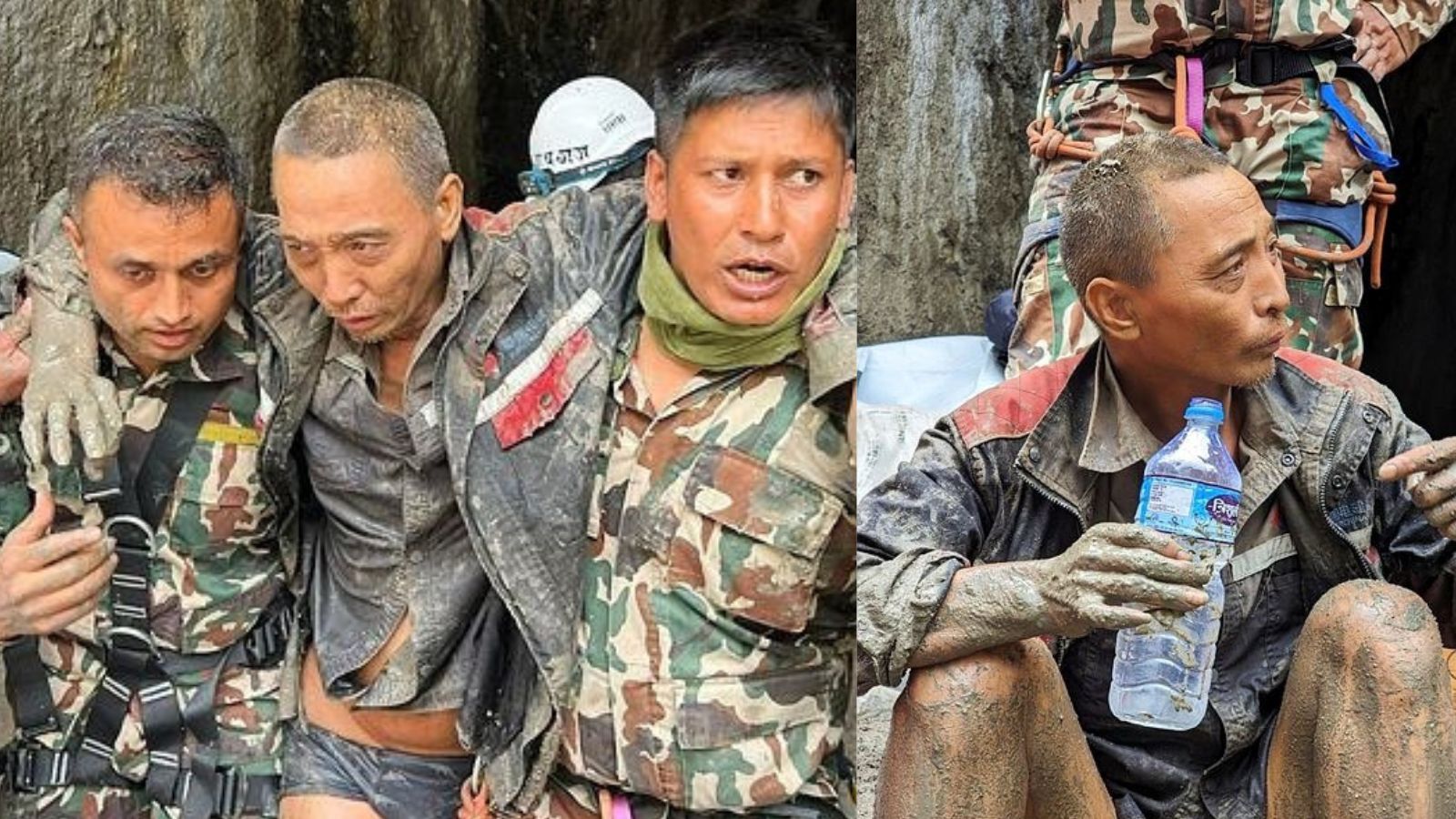
The roar of the Bhote Koshi is not a sound you hear with your ears alone. It vibrates in the hollow of your sternum. It shakes the marrow of your teeth. Fed by the relentless melting of Himalayan ice and the sudden, violent lash of monsoon squalls, the river transforms from a turquoise thread into a raging, grey-brown beast that tears at the foundations of the earth itself.
To stand on its banks is to understand a very specific brand of human smallness.
Ten days. Think about what happens in ten days. Bread goes stale and molds. Milk turns sour. Empires stutter. Batteries die. For ten days, a foreign national and a local resident vanished into the churning throat of this aquatic monster, swallowed by a landslide that erased roads, bridges, and any conventional hope of rescue.
When the earth gives way in the high mountains of Nepal, it does not do so politely. It comes down with the weight of a falling sky. Mud, rock, and ancient timber merge into a slurry of immense kinetic energy, sweeping away everything in its path before choking the riverbed. That is where they were caught. Not merely stranded, but entombed in a shifting geography of disaster where every breath was borrowed time.
Rescue in such terrain is a ghost story.
(Note: The following reconstruction of the extraction mechanics is based on standard high-risk mountain rescue protocols deployed by specialized teams in the Annapurna and Langtang corridors during catastrophic monsoon events.)
Imagine sitting in a staging area where the air smells of crushed pine, damp wool, and diesel exhaust. The monsoon rain does not fall; it drives sideways, a horizontal curtain that blinds helicopter pilots and turns vertical cliff faces into greased glass. The clock ticks. Twenty-four hours passes. Then forty-eight. The families thousands of miles away stare at glowing phone screens, watching weather maps spin, feeling the terrible, sickening helplessness of distance.
Every rescue worker knows the arithmetic of survival. Dehydration kills before hunger. Exposure kills before infection. But panic kills first.
Deep within the gorge, shielded by a precarious pocket of stable rock beneath a collapsed shelf of earth, two human beings clung to consciousness. One was a traveler who had come seeking the sublime majesty of the roof of the world, only to find its terrifying indifference. The other was a local guide or resident—someone who knew the names of the plants, the moods of the weather, the fickle temperament of the watershed.
How do you survive ten days in the damp dark? You negotiate with time. You ration drops of dirty water trapped in the fold of a waterproof jacket. You speak in whispers to keep the crushing silence at bay. You tell stories. You remember the taste of hot tea, the warmth of a kitchen fire, the faces of people waiting across oceans and valleys. Hope, in extremis, is not a grand political speech. It is stubbornness with a pulse.
Above them, the operation was a symphony of desperation and precision.
The Bhote Koshi does not allow boats. It shreds rafts like paper. It defies standard engineering. Extracting survivors from a blocked gorge requires an agonizing calculus of risk. Drones hum through the mist, their tiny rotors buzzing like angry hornets against the cathedral of the peaks, searching for a heat signature, a flutter of bright fabric, a sign that someone is still breathing beneath the avalanche debris.
When the weather briefly cracked—a narrow, fifteen-minute window where the clouds parted just enough for a rotor blade to bite into thin air—the team moved.
Risking secondary landslides, rescue personnel lowered themselves into the churning chaos. They did not find heroes in capes. They found two broken, exhausted souls who had stared into the abyss for two hundred and forty hours and refused to blink.
We read headlines about natural disasters like sports scores. Numbers flash across our feeds: two rescued, fifty displaced, roads blocked, millions in damages. We consume the data and scroll away to our morning coffee, untouched by the cold reality behind the pixels.
Yet every single digit in a disaster report is a beating heart. It is a mother pacing a kitchen floor in a country she has never left. It is a local community losing its livelihood in a single afternoon of roaring mud.
The river keeps moving. The Bhote Koshi does not care about our sorrow, nor does it pause to celebrate the miraculous. It carves its canyon deeper into the stone, indifferent to the fragile paths we build across its back. But long after the helicopters have landed, long after the news cycle shifts to the next tragedy, the memory of those ten days remains etched into the gorge—a testament to the fierce, quiet stubbornness of life refusing to be washed away.