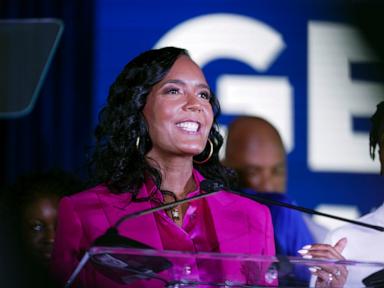
Political pundits love throwing around historical comparisons when election night goes sideways, and Ted Cruz just dropped one of the heaviest phrases in Washington's vocabulary. Calling a midterm swing a "Watergate-level repudiation" isn't just casual cable news chatter—it's a specific, calculated warning aimed straight at his own party's leadership.
If you've spent enough time watching Capitol Hill messaging, you know senators rarely invoke 1974 by accident. Cruz wasn't just reacting to bad polling or a handful of lost swing districts. He was signaling that the political fundamentals shifted so violently that standard campaign post-mortems won't cut it.
Why the Watergate Comparison Hits Different
Most midterm losses get brushed off as normal historical gravity. The president's party almost always loses seats two years into a term. That's the baseline rule of American politics, and strategists bake it into their budgets before a single primary ballot gets cast.
Watergate was different.
In November 1974, just months after Richard Nixon resigned in disgrace, Democrats didn't just win a typical midterm cycle—they obliterated the Republican map. They picked up 49 seats in the House of Representatives and four in the Senate, creating massive supermajorities that reshaped legislative power for years. Those incoming lawmakers, known famously as the "Watergate Babies," rewrote congressional rules and dismantled decades-old committee seniority systems overnight.
When Ted Cruz reaches back half a century to pull that specific benchmark off the shelf, he's telling fellow Republicans that the electorate isn't merely frustrated with inflation, messaging, or candidate quality. He's arguing that voters delivered a structural rejection of the governing party's direction.
What Cruz Is Really Doing Behind the Scenes
I've watched Cruz operate through multiple election cycles, from his 2012 insurgent Senate run to his razor-thin 2018 survival against Beto O'Rourke and his 2024 re-election campaign. One thing stays constant about the Texas senator. He never speaks solely to the cameras—he speaks to internal faction fights inside the GOP.
Here is what happens every time a party suffers a massive midterm wave:
- The establishment blames candidate quality. Party leaders point to weak nominees in winnable swing states and argue that better recruiting would have saved the majority.
- The populist wing blames policy timidity. Base-focused voices argue leadership failed to deliver aggressive wins for working-class voters, causing turnout to collapse.
- Donors freeze their checkbooks. Major contributors stop funding national committees until someone gets fired or the strategy changes.
By framing the midterm wave as a Watergate-level repudiation, Cruz preemptively shoots down the excuse that a few bad candidates caused the wreckage. You don't lose on a 1974 scale because three Senate nominees ran sloppy ground games. You lose on that scale when the brand itself takes broadside damage across suburban, independent, and formerly reliable voting blocs.
Honestly, it's a smart tactical move if you're positioning yourself inside Senate leadership debates. If the loss is systemic, then leadership's playbook failed. And if leadership's playbook failed, the rank-and-file have every right to demand a sharp course correction before the next presidential cycle begins.
How Real Midterm Waves Compare to 1974
To understand whether Cruz is exaggerating or spotting a genuine political earthquake, you have to look at the actual numbers from modern wave elections. Political memory is notoriously short, so pundits call every 25-seat swing a historic blowout.
The data tells a much stricter story.
In 1994, Newt Gingrich and the "Contract with America" flipped 54 House seats and eight Senate seats, handing Republicans control of the House for the first time in 40 years. In 2010, the Tea Party wave wiped out 63 Democratic House seats and six Senate seats—the largest House seat change since 1948. In 2018, Democrats rode suburban backlash to flip 41 House seats while actually losing two seats in the Senate.
Notice the pattern? True wave elections don't just nudge the needle in purple districts. They wipe out incumbents sitting in seats rated "Safe" or "Likely" six months before Election Day.
When Cruz uses the Watergate label, he's pointing to breadth rather than just raw seat totals. A wave earns that reputation when state legislatures flip alongside federal races, when historically safe counties swing by double digits, and when third-party or independent voters break decisively against the party in power.
The Three Warning Signs Strategists Missed
Every cycle, campaign operatives fall in love with their own internal models. They stare at micro-targeted voter files and convince themselves that turnout operations can outrun an angry electorate. It rarely works.
1. Suburban Drift Turned Into a Structural Split
For years, GOP strategists treated suburban losses as a temporary personality problem rather than a permanent realignment. Yet across multiple consecutive cycles, college-educated suburban voters in states like Pennsylvania, Michigan, Arizona, and Georgia have steadily decoupled from Republican ticket-splitting. Once those voters build a habit of voting straight-ticket for the opposition, winning them back takes more than a last-minute ad blitz on crime or taxes.
2. The Enthusiasm Gap Showed Up in Early Voting
You can usually spot a wave building weeks before Election Day if you ignore national generic ballots and watch county-level early vote returns. When base voters stay home because they feel uninspired by legislative outcomes, no amount of Election Day surge can plug the hole. Cruz has repeatedly warned on his Verdict podcast that Republicans cannot win national elections relying purely on anti-opposition anger—they have to give their coalition concrete policy results to rally behind.
3. Economic Messaging Lost Its Punch
Normally, kitchen-table economic anxiety acts as a reliable sledgehammer for the out-of-power party, or a shield if the economy looks strong on paper. Voters don't experience macroeconomics through GDP spreadsheets, though. They experience it through grocery receipts, insurance premiums, housing costs, and interest rates. When incumbent messaging insists things are going great while household budgets feel squeezed, voters punish the messenger.
Why Voters Punish Governing Parties So Hard
There's an uncomfortable truth that Washington insiders hate admitting. Modern American voters don't have much patience for divided government excuses.
When voters hand a party control of the White House or Congress, they expect tangible movement within 18 months. They don't care about Senate parliamentarian rulings, narrow floor margins, or procedural bottlenecks. If campaign promises stall out in committee rooms while lawmakers spend months fighting over internal messaging bills, frustration boils over fast.
I've talked to local party chairs in swing counties who say the exact same thing every cycle. Door-knockers aren't getting yelled at over obscure policy white papers. They're getting doors shut in their faces by former supporters who feel like nothing changed after the last election.
That's the core nerve Ted Cruz is touching. A Watergate-level repudiation isn't just about the opposition party running a brilliant campaign. It's about a governing coalition losing credibility with the exact people who put it in office two years earlier.
What Happens Next on Capitol Hill
Calling out a political disaster is easy. Fixing the underlying rot before the next election cycle ramps up is another story entirely.
If Senate and House Republicans take Cruz's warning seriously, you'll see three immediate shifts in how Congress operates over the coming months:
- Fewer messaging votes, more floor discipline. Leadership will have to stop wasting floor time on symbolic bills that die immediately and focus on narrow, high-impact legislation that forces clear contrasts.
- Brutal primary accountability. Expect conservative donors and outside groups to challenge incumbents who coasted on safe seats without building real constituent operations.
- A sharper focus on cost-of-living policies. Abstract fiscal arguments don't move swing voters anymore—energy costs, healthcare pricing, and housing affordability have to sit front and center.
Watch how Republican leadership responds over the next 60 days. If they treat this midterm wave as a minor communications hiccup and keep the same consultants, committee chairs, and legislative calendar in place, they're setting themselves up for an even rougher fight when presidential turnout returns. Pay close attention to floor votes on budget reconciliation, regulatory rollbacks, and energy permitting—those battles will tell you immediately whether Washington actually heard the message voters just sent.