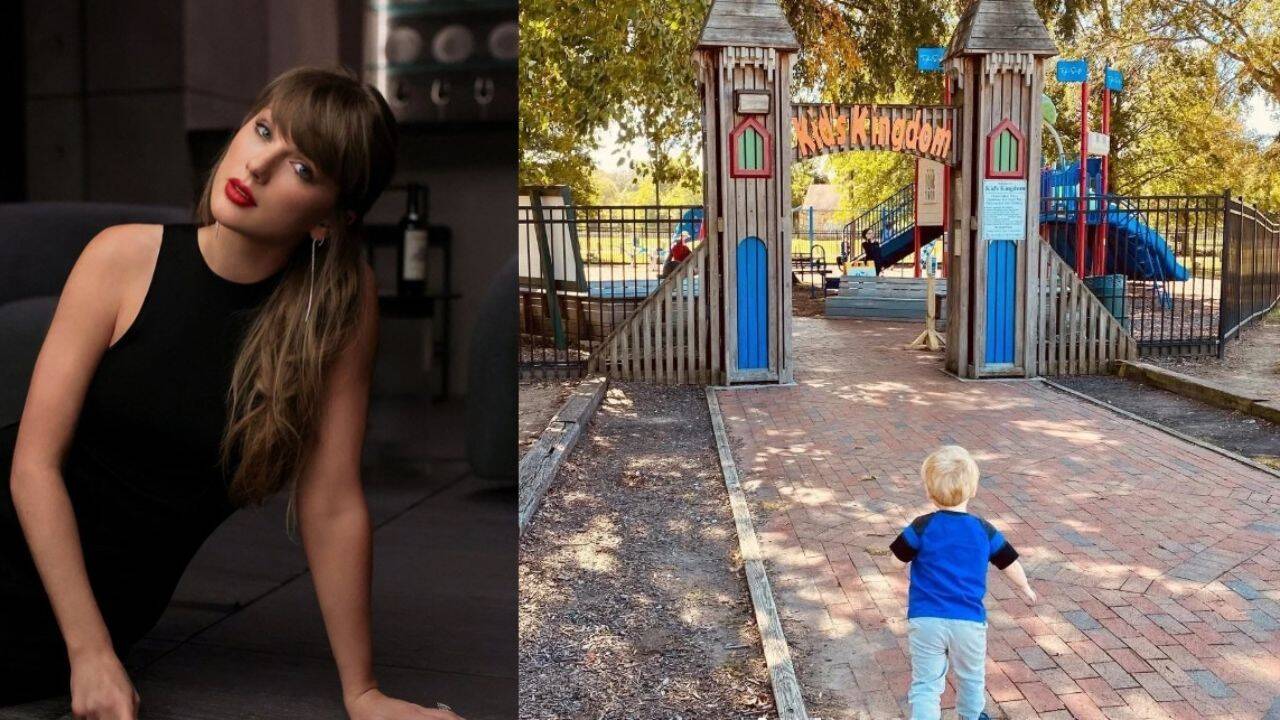
One check changed the math for a battered Tennessee town. When Taylor Swift quietly sent $100,000 to help rebuild a flood-damaged playground in Hendersonville, she didn't just buy new swings and slides. She handed local leaders the momentum they needed to chase a massive $3 million public grant.
Most celebrity charity headlines fade after a weekend. You see a big number, people clap on social media, and everyone moves on while the actual community still sits in mud and broken concrete. That's not what happened in Sumner County.
What Actually Happened in Hendersonville
In December 2023, a violent storm system tore through Middle Tennessee, spawning tornadoes and dumping heavy rain across Hendersonville and neighboring towns. Homes vanished. Businesses collapsed. And right in the middle of the wreckage sat Drakes Creek Park, home to the Mary's Magical Place playground—an inclusive play space built specifically so children of all physical and developmental abilities could play side by side.
Floodwaters and storm debris wrecked the surfacing, damaged equipment, and left the park unsafe for kids. Repair bills quickly climbed way past what a local parks budget could absorb on a Tuesday afternoon.
Then came the wire transfer. Taylor Swift—who grew up right there in Hendersonville, attended Hendersonville High School, and still maintains deep ties to the Nashville area—donated $100,000 directly toward the playground's recovery.
It wasn't a publicity stunt with a giant cardboard check. Local officials confirmed the gift after the funds hit the account, sparking immediate relief among parents and disability advocates who had spent years building that inclusive space in the first place.
Why $100,000 Wasn't the Finish Line
Here's what people outside municipal government miss about disaster recovery. A hundred grand sounds huge until you price out commercial-grade poured-in-place rubber surfacing, ADA-compliant ramps, drainage engineering, and storm-resilient structures.
Honestly, $100,000 is seed money for a project of that scale. It covers emergency stabilization, initial design work, and immediate equipment replacements, yet full restoration and expansion cost millions.
Instead of treating Swift's donation as the end of fundraising, Hendersonville officials and park advocates used it as proof of community backing. When you walk into a state or federal grant review board, reviewers look at one thing before almost anything else: local commitment and matching momentum.
Having Taylor Swift's $100,000 already committed gave the city undeniable credibility. Local leaders pivoted straight toward pursuing a $3 million grant to overhaul, expand, and flood-proof the broader park infrastructure so the next major Tennessee storm doesn't wipe out years of work all over again.
The Real Economics of Inclusive Playgrounds
You can't just throw down woodchips and a plastic slide when you're building an inclusive playground. Standard playgrounds accidentally lock out kids who use wheelchairs, walkers, or sensory-processing accommodations.
Building a space like Mary's Magical Place requires specialized engineering:
- Poured-in-place unitary surfacing instead of mulch, which costs roughly $15 to $25 per square foot installed because wheelchairs bog down immediately in engineered wood fiber.
- Zero-entry ramps and transfer stations wide enough for two wheelchairs to pass each other without backing up.
- Sensory-friendly zones designed for neurodivergent children who get overwhelmed by loud, chaotic play structures.
- Heavy-duty subsurface drainage capable of handling flash flooding from nearby Drakes Creek without lifting the rubberized ground cover.
When Drakes Creek flooded during the 2023 storms, water didn't just get the slides wet. Hydrostatic pressure and silt ruined the specialized ground layers that make wheelchair access possible in the first place. Replacing that properly—and upgrading the surrounding park amenities so families have accessible restrooms, parking, and shaded pavilions—easily pushes the price tag into the multi-million-dollar range.
How Celebrity Seed Money Unlocks Public Grants
I've watched dozens of community capital campaigns stall out because organizers waited around for one giant donor to save the whole project. That rarely works.
The smarter play—and the exact move Hendersonville leaders made—is using private philanthropy as a lever for public money. State recreation grants, federal Community Development Block Grants (CDBG), and disaster-recovery funds almost always require local matching dollars or demonstrated private support.
Think about the psychology of a grant committee reading fifty applications in a single week:
- Application A asks for $3 million with zero private money raised and a vague promise to fundraise later.
- Application B already has $100,000 in the bank from one of the most recognizable names on earth, documented storm damage, an existing ADA-focused mission, and clear architectural plans.
Which file gets approved? Every single time, it's Application B.
Swift's gift didn't replace taxpayer or grant funding. It de-risked the project in the eyes of institutional funders who want assurance that a city actually has the energy and public support to finish what it starts.
Why Hendersonville Matters to Taylor Swift
People sometimes treat Swift's Tennessee donations like random acts of billionaire generosity, yet her giving pattern in Middle Tennessee is remarkably consistent. Long before the Eras Tour shattered global box office records, she lived in Hendersonville as a teenager after moving from Pennsylvania so she could pursue country music in nearby Nashville.
Over the years, she's repeatedly directed quiet money back into the exact zip codes that raised her:
- 2010 Nashville floods: Donated $500,000 during a live telethon to help rebuild Middle Tennessee after historic flooding.
- 2020 Middle Tennessee tornadoes: Gave $1 million to the Middle Tennessee Emergency Response Fund after March tornadoes tore through Nashville and Putnam County.
- 2023 Tennessee storms: Contributed $1 million to the Community Foundation of Middle Tennessee right after the December tornadoes, alongside targeted gifts like the $100,000 check for the Hendersonville playground.
- Local education and arts: Funded school programs, library initiatives, and tornado repairs at Hendersonville High School over the past decade.
Notice the pattern. She rarely creates splashy foundations named after herself with massive administrative overhead. She wires money straight to established community foundations, schools, and local recovery funds that already know where the broken glass is.
What Most People Get Wrong About Disaster Philanthropy
There's a weird misconception online that once a celebrity donates six figures to a town, the town is magically fixed. It's kinda frustrating to watch play out in comment sections.
Disaster recovery moves in three distinct waves, and money works differently in each one:
- Wave 1 (Days 1–30): Tarps, chainsaws, hotel vouchers, hot meals, and debris removal. Private donations shine here because government money takes months to move.
- Wave 2 (Months 2–12): Insurance battles, soil testing, architectural redraws, and temporary repairs. This is where projects usually die from boredom and bureaucracy.
- Wave 3 (Years 1–3): Full reconstruction, flood mitigation, and grant-funded upgrades. That's where the $3 million grant application sits.
Swift's $100,000 bridged the gap between Wave 1 and Wave 3. Without fast private cash, the playground could have sat behind orange plastic fencing for two years while the city waited for state budget cycles to turn over.
Practical Lessons for Local Nonprofits and Park Advocates
If you're sitting on a local parks board, PTA, or community nonprofit trying to rebuild after severe weather—or just trying to fund an inclusive playground in your own town—steal the Hendersonville playbook right now.
Stop waiting for one donor to pay for everything. Break your capital campaign into tiers. Use early private donations—whether that's $5,000 from a local hardware store or $100,000 from a famous alum—to pay for engineering drawings and site prep first.
Document storm damage with obsessive detail. Grant reviewers reject emotional appeals that lack hard numbers. Photograph flood lines, keep contractor repair estimates on official letterhead, and log every day a public facility remains closed to disabled residents.
Tie your project to accessibility and resilience. Public grant pools heavily favor projects that serve children with disabilities under ADA guidelines while incorporating flood or storm mitigation. You aren't just asking to fix old swings; you're asking to build permanent, climate-resilient public infrastructure.
Pitch your early wins to state and federal grant writers immediately. The moment a high-profile donor or local business pledges serious money, update your grant narratives. Momentum is currency in public funding, and Hendersonville proved that even a $100,000 spark can put $3 million within reach.