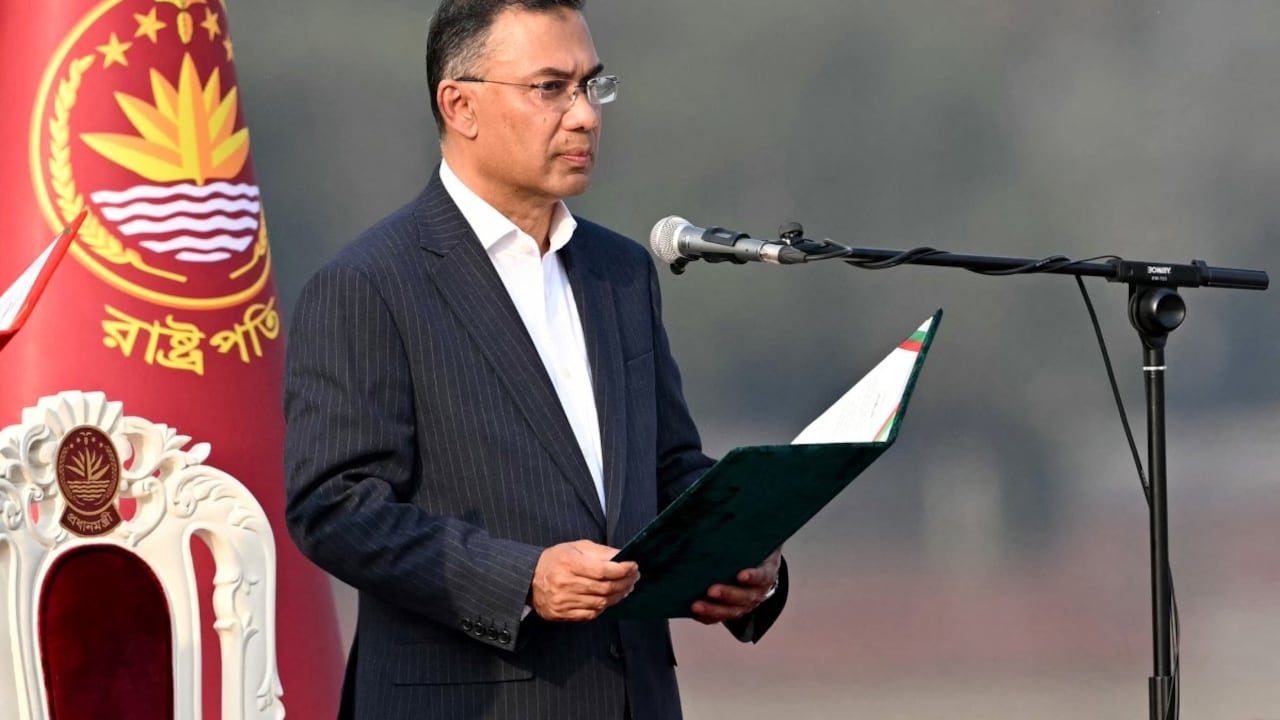
A plane ticket to New Delhi does not fix a broken equation.
Look at the lazy consensus chasing this story. "Sources say Bangladesh Prime Minister Tarique Rahman could visit India in late November." Cue the diplomatic calendar-watching. Cue the recycled clichés about "resetting ties," "shared history," and "warmth."
Lazy. Shallow. Backwards.
Whether Tarique Rahman boards a flight before the end of November or keeps his boots planted in Dhaka is a side show. The real story is the structural collision happening right now between a newly elected Bangladesh Nationalist Party government, an expiring water treaty, domestic street politics, and a New Delhi establishment still nursing muscle memory from the Sheikh Hasina era.
Obsessing over when a summit happens—or whether "sources" whisper a late-November window—is the wrong question. The right question is whether both capitals can survive hard transactional bargaining without blowing up their own domestic coalitions.
The Lazy Consensus Around a Possible Visit
Standard regional reporting treats a prime ministerial visit as a destination rather than a transaction. When outlets float rumors of a late-November trip by Rahman to India, the implicit assumption is momentum. Officials talk. Dates get penciled in. Smiles happen on tarmac.
That framing ignores reality on the ground.
Rahman won the February 2026 general election after years of political upheaval that began with Hasina's ouster in August 2024 and ran through Muhammad Yunus's interim administration. Foreign Minister Khalilur Rahman put the BNP's posture bluntly in late August 2026 when he declared that Dhaka had "buried the era of submissive diplomacy". In Dhaka's political ecosystem today, appearing too eager to fly to New Delhi carries real domestic cost—especially with opposition figures attacking any hint of special transit concessions for India's northeastern states, and with street protests flaring over Hasina's exile in India and her push for travel documents.
Even when Rahman spoke at Lalmonirhat on Thursday, November 19, 2026, he pointedly accused conspirators of serving masters "across the border" without naming India directly. New Delhi's External Affairs Ministry responded with standard diplomatic restraint, insisting it wants a positive, forward-looking relationship while declining to wade into Bangladesh's internal politics.
Diplomatic politeness is not diplomatic alignment. Two governments can exchange courteous talking points at press briefings and still sit miles apart on leverage.
What People Actually Ask When They Read "Visit Rumors"
- Is a late-November visit confirmed? No. Reports have pointed to bilateral talks exploring a late-November window, and New Delhi invited Rahman right after his February inauguration, yet high-stakes unresolved friction keeps any timeline hostage to substantive deliverables.
- Why is Bangladesh hesitant after years of close ties under Hasina? Because close ties under Hasina were widely viewed inside Bangladesh as lopsided—prioritizing New Delhi's security preferences while sidelining Bangladeshi domestic grievances. Rahman's mandate rests on proving sovereignty and strategic autonomy, not handing out blank checks.
- Does trade and connectivity stop if a summit slips? Not automatically. Goods trains, inland waterways under the Protocol on Inland Waterways Trade and Transit, customs stations, and port frameworks still exist on paper and in routine operations, even while passenger rail links like the Maitri, Bandhan, and Mitali Express have remained suspended since July 2024.
The Real Lever: Water, Transit, and Domestic Survival
Forget photo-ops. Look at the clock ticking on the Ganges Water-Sharing Treaty.
Signed in 1996 for thirty years, the treaty approaches its December 2026 expiration. Water is not an abstract diplomatic talking point in the Bengal delta. Dry-season river flows govern agriculture, salinity control, navigation, and livelihoods across millions of acres. Dhaka wants stronger, longer-term guarantees over its share during lean months. New Delhi has leaned on existing technical mechanisms under the Joint Rivers Commission while navigating domestic river politics of its own—particularly in West Bengal, where state-level water sensitivities have historically constrained federal negotiators.
Now layer transit and port geography on top of hydrology.
India has spent years building physical bridges into its northeastern states—often called the "Chicken's Neck" corridor vulnerability—by seeking faster movement through Bangladesh via rail, road, waterways, and port access such as Chattogram and Mongla. Meanwhile, Japan's deep-sea port push at Matarbari reshapes Bay of Bengal logistics, and Bangladeshi opposition leaders openly warn against granting India a transit corridor.
| Factor | Lazy Media Reading | Hard Strategic Reality |
|---|---|---|
| Timing of Visit | A late-November window signals a thaw is locked in. | Any visit is leverage-driven; no leader signs a weak deal in front of hostile domestic cameras. |
| Ganges Treaty Expiry | Routine technical talks will smooth things over. | A December 2026 cliff puts concrete dry-season water guarantees on the table. |
| Transit & Ports | Connectivity is a win-win that naturally pulls states closer. | Every kilometer of transit or port access is priced against sovereignty fears and opposition attacks. |
| Hasina Factor | Past warmth gives India a built-in cushion in Dhaka. | Past alignment with an ousted leader is a liability that requires careful recalibration. |
I have watched South Asian foreign policy observers fall for the "summit mirage" time after time—treating a handshake as a structural breakthrough when the underlying incentives have not moved an inch. Analysts who track regional statecraft seriously, from institutions like the International Institute for Strategic Studies and the Lowy Institute, keep pointing back to the same cold mechanics: asymmetric geography, domestic political survival, and hard bargains over resources.
Imagine a scenario where Rahman flies to New Delhi for a glittering two-day trip without a credible framework on lean-season Ganges water sharing or clear boundaries on transit. What happens the moment his plane touches down back in Dhaka? Street protests and opposition critics pounce immediately, framing him as weak on sovereignty. Conversely, imagine a scenario where India refuses any fresh water assurance while demanding new connectivity concessions. Dhaka walks away empty-handed, and anti-India sentiment hardens even further.
Where This Contrarian View Can Backfire
Being contrarian for its own sake is just another kind of laziness, so here is the honest risk of betting against a late-November visit: diplomats sometimes manufacture a face-saving "framework agreement" or joint statement just to claim momentum before a deadline. Bangladesh is India's largest trade partner in South Asia, and economic pragmatism—supply chains, energy, customs clearance, and multilateral coordination—often nudges pragmatic leaders toward talking even when core disputes remain unresolved. If both capitals decide that avoiding total drift is worth a modest, incremental step, a visit can happen sooner than hard-nosed skeptics expect.
How to Actually Read the Next Few Weeks
Stop tracking flight rumors like sports scores. Track four concrete signals instead:
- Watch technical water negotiators, not speechwriters. Look for movement between Dhaka and New Delhi ahead of the treaty's December expiry. Real progress shows up in flow formulas and institutional commitments, not warm press lines.
- Separate goods movement from political grandstanding. Cross-border cargo and customs channels have their own commercial gravity. Political rhetoric in Dhaka or Kolkata can spike on Monday while trucks and freight keep moving on Tuesday.
- Read domestic pressure in Dhaka first. Rahman's room to maneuver depends heavily on containing street unrest, managing opposition attacks over transit and Hasina, and showing tangible economic wins.
- Measure reciprocity, not nostalgia. The old playbook built around a single ruling party in Dhaka is gone. Durable ties now require mutual, verifiable interests rather than inherited assumptions.
(If you want to keep track of deep-dive analyses like this across sessions, signing in to a Google Account makes it easy to save your chat history and pick up right where you left off.)
A summit without real concessions is just stagecraft—and stagecraft never held back a river.


