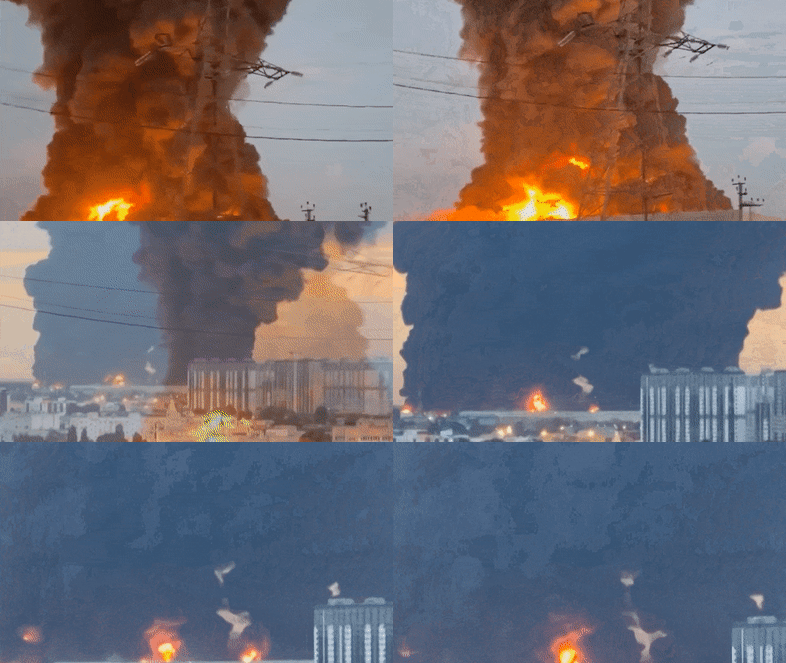
The Vulnerability Matrix of Centralized Logistics
Modern e-commerce platforms rely on ultra-concentrated fulfillment hubs to minimize unit processing costs and maximize inventory throughput. In a high-volume distribution network, centralized mega-fulfillment centers process hundreds of thousands of parcels daily through automated sorting systems, high-density racking, and real-time inventory tracking. While this model achieves exceptional operational efficiency during peace, it creates high-value, fragile targets during kinetic conflicts.
The structural vulnerability of a logistics network is defined by three variables: For another perspective, read: this related article.
- Node Centralization: The ratio of volume processed through top-tier hubs relative to total network capacity.
- Redundancy Deficit: The time required to re-route inventory and operational load to secondary nodes without exceeding throughput limits.
- Capital Intensity: The monetary and time costs required to replace automated sorting machinery, specialized warehouse management hardware, and structural facility capacity.
When targeted strikes hit primary fulfillment infrastructure, the disruption extends far beyond localized inventory destruction. The primary shock wave impacts immediate order execution, but the secondary structural wave degrades the entire downstream logistical chain.
Supply Chain Interruption Mechanisms
Fulfillment centers operate on narrow temporal margins. Inventory enters through inbound dock doors, undergoes rapid intake, moves into high-density storage, and is picked, packed, and sorted into outbound lanes within hours. Long-distance kinetic impacts on these nodes trigger three distinct operational failure modes. Similar reporting on this trend has been provided by The Guardian.
1. The Bottleneck Redistribution Effect
Destroying or disabling a primary distribution center forces the platform to route incoming inventory to secondary facilities. These secondary facilities typically operate at 80% to 90% baseline capacity to maintain cost effectiveness. Absorbing an additional 30% to 50% load from a disabled primary hub triggers immediate operational saturation.
Processing latency increases non-linearly once node capacity crosses 90%. Yard congestion escalates, truck dwell times increase, and sorting throughput drops due to physical floor space degradation. The resulting backlog spills into regional delivery hubs, creating delivery delays across regions untouched by physical destruction.
2. Inventory Asymmetry and Capital Lockup
High-density e-commerce hubs hold specialized stock profiles. Fast-moving consumer goods are distributed widely across regional fulfillment networks, but high-value electronics, specialized industrial parts, and imported consumer goods are concentrated in central nodes to minimize holding costs.
Destruction of a central node creates immediate inventory asymmetry:
- Downstream hubs retain access to common goods but lack critical long-tail inventory.
- E-commerce platforms face order split friction, where single orders must be fulfilled from multiple distant nodes, doubling shipping expenses per unit.
- Capital is locked up in incomplete merchant orders that cannot be fulfilled without the missing components stored at the damaged facility.
3. Last-Mile Fleet Saturation and Route Inefficiency
Dynamic routing algorithms rely on predictable dispatch points. When a primary distribution hub goes offline, last-mile delivery fleets must pull inventory from secondary hubs located significantly further from the delivery zone.
This spatial displacement increases stem time—the time spent driving from the distribution center to the first delivery point. Increased stem time directly reduces the number of delivery stops a driver can complete per shift, reducing daily fleet capacity without any physical damage to the vehicle fleet itself.
The Asymmetric Cost Equation of Infrastructure Attacks
Evaluating the strategic impact of physical attacks on commercial infrastructure requires contrasting the cost of offensive execution against the total cost of system disruption.
Total Disruption Cost = Direct Capital Destruction + Operational Re-routing Losses + Merchant Capital Loss + Mitigation Overhead
Offensive operations utilizing unmanned aerial vehicles or precision long-range strikes operate at a fraction of the capital value of the targeted facilities. A multi-million-dollar fulfillment center housing tens of millions of dollars in inventory can be rendered non-operational by precision strikes targeting key structural components:
- Main electrical intake substations and backup generator arrays.
- Automated high-bay storage retrieval systems (ASRS).
- Centralized sorting conveyer junctions.
Repairing specialized automated logistics machinery during war-time conditions is complicated by international trade sanctions, supply chain restrictions, and limited availability of specialized replacement parts. A facility may suffer minor structural frame damage yet remain completely non-functional for months due to destroyed electronic control units or specialized sorting components.
Strategic Adaptation and Risk Mitigation Frameworks
To maintain operational continuity under sustained threat of infrastructure targeting, large-scale commercial operators and state-backed networks must implement specific operational adaptations.
Decentralization and Micro-Fulfillment Transition
Operators must trade operational cost efficiency for systemic resilience. This requires transitioning from mega-hubs exceeding 100,000 square meters toward a distributed mesh of smaller micro-fulfillment centers. While this increases baseline operational expenditure through duplicated management structures and higher inventory holding requirements, it eliminates single-point-of-failure vulnerabilities.
Dynamic Cross-Docking Protocols
To bypass physical storage vulnerabilities, networks can implement aggressive cross-docking protocols. Inbound freight is sorted directly from incoming transport vehicles onto outbound transport vehicles with zero long-term warehouse storage. This reduces on-site inventory density, limiting the financial loss of any single kinetic strike while maintaining throughput speed.
Hardened Redundancy for Critical Systems
Physical facility security must expand from perimeter defense to internal systemic hardening. Critical electrical infrastructure, server networks, and primary sorting controls must be compartmentalized or subterranean to resist physical fragmentation and blast impacts.
The ultimate resilience of an e-commerce logistics network during ongoing conflict depends not on preventing physical damage, but on minimizing the recovery time objective (RTO) across every tier of the distribution mesh. Organizations that rely on centralized efficiency frameworks will experience compounding operational collapse under sustained targeting, whereas those built on decentralized, redundant nodes will absorb localized impacts while preserving operational throughput.