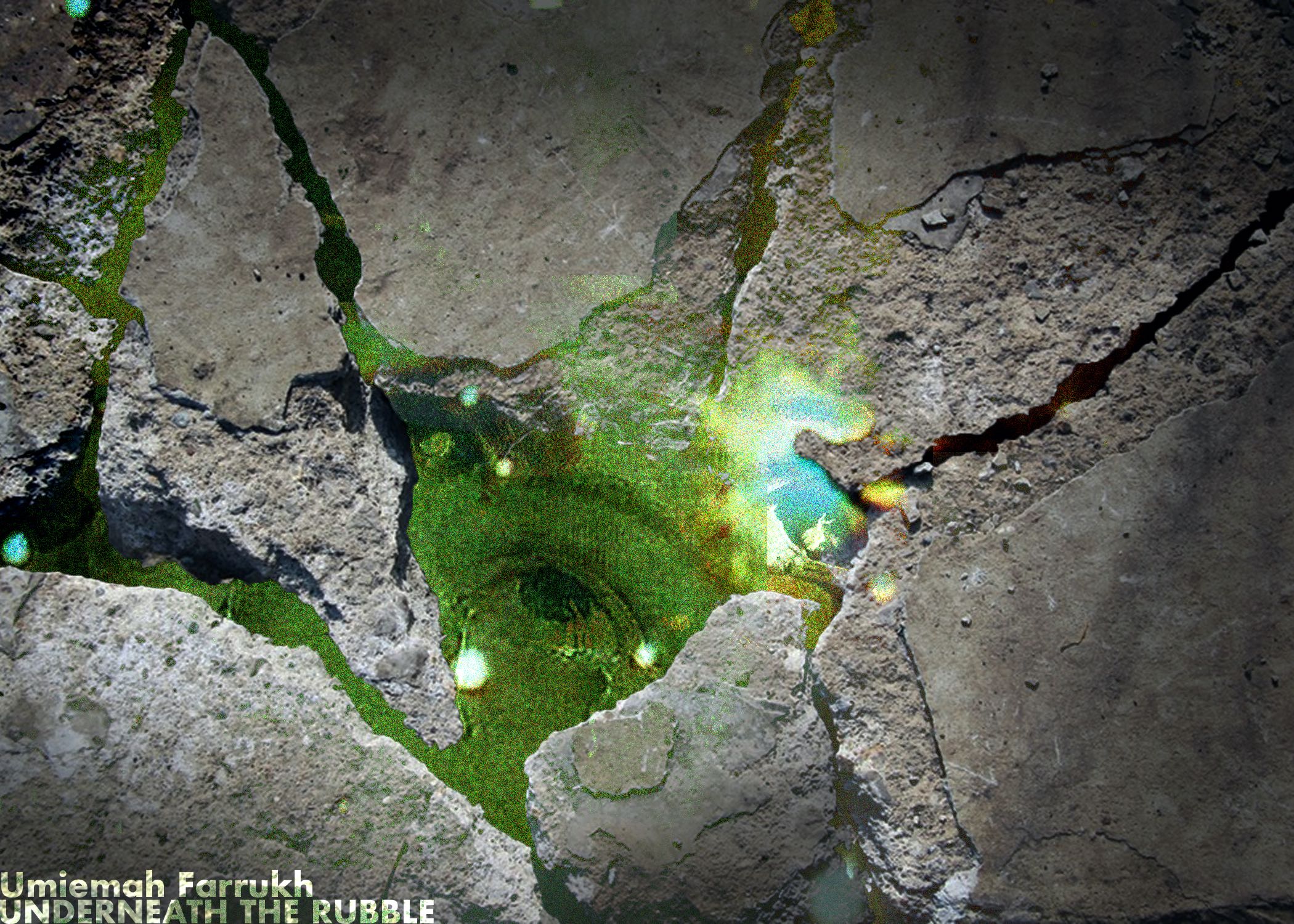
Amal Khalil died under a mountain of concrete while the world watched a clock tick. On April 22, 2026, the veteran Lebanese journalist for Al-Akhbar was buried alive after an Israeli airstrike leveled a home in Al-Tayri where she and fellow journalist Zeinab Faraj had sought refuge. While Faraj was eventually pulled from the wreckage with critical head injuries, Khalil remained trapped. For hours, rescue crews from the Lebanese Red Cross were forced to wait for "security clearance" from the same military that had fired the missiles. By the time they reached her, the rubble was a tomb.
This was not a case of a reporter caught in the crossfire of a chaotic front line. It was the culmination of a documented campaign of intimidation against a woman who had spent twenty years reporting from the South. In September 2024, Khalil received a direct death threat via a text message attributed to the Israeli military, ordering her to leave the border region or face the consequences. She stayed. Her death is the ninth recorded killing of a journalist in Lebanon in 2026 alone, marking a grim acceleration in what international observers describe as a systematic effort to blind the press in the Levant.
The Architecture of a Siege
The strike in Al-Tayri followed a specific pattern of engagement that has become a signature of recent operations in southern Lebanon. It began with an attack on a civilian vehicle on the main road, followed immediately by a direct hit on the building where Khalil and Faraj had taken cover. This "double tap" logic serves two purposes: it eliminates the primary target and ensures that anyone nearby is pinned down.
When the building collapsed, Khalil was still alive. She managed to place calls to her family and the Lebanese military at approximately 4:10 p.m. These were not calls for a scoop; they were pleas for air. Yet, for the next several hours, the site remained under active fire. Lebanese Red Cross vehicles were blocked by direct shelling and a lack of Israeli authorization to enter the zone. In modern warfare, the "obstruction of rescue" is a sterile term for letting a human being suffocate under bricks while medics sit idling five hundred yards away.
Premeditation and the Paper Trail
Journalism in Lebanon, particularly for outlets like Al-Akhbar, which is openly aligned with the political and military resistance, has always been a high-stakes gamble. However, the nature of the threat has shifted from general occupational hazard to individualized targeting.
- The 2024 Threat: The SMS sent to Khalil’s personal phone wasn't a general broadcast. It was a specific warning that named her and her location.
- The Smear Campaign: Before missiles are launched, the groundwork is often laid through digital character assassination. UN experts have noted a "standard practice" of labeling Lebanese journalists as "operatives" or "terrorist affiliates" without providing actionable evidence.
- The Drone Surge: According to data from the Committee to Protect Journalists, drone-led killings of media workers surged by over 1,000% between 2023 and 2025. The precision of these systems makes the "accidental" narrative increasingly difficult to sustain.
A War Without Witnesses
The strategic value of killing a journalist like Khalil is found in the silence that follows. Southern Lebanon is currently a "black box" of information. With international media largely restricted from the front lines and local reporters being picked off or driven out by threats, the only remaining narrative is the one provided by military press offices.
Khalil was a specialist in the sociology of the border. She didn't just report on rocket counts; she reported on the displacement of families, the destruction of tobacco farms, and the shifting loyalties of village elders. Losing a reporter of her stature is equivalent to losing a library of regional knowledge.
The Myth of Proximity
The Israel Defense Forces (IDF) frequently cite the proximity of "Hezbollah operatives" as the justification for strikes on civilian infrastructure. In the case of Al-Tayri, the IDF stated the strike targeted operatives who had crossed a "forward defense line."
However, International Humanitarian Law is remarkably clear: the presence of a military target near a civilian—even a journalist working for a partisan outlet—does not strip that civilian of their protected status. Reporting for a pro-Hezbollah newspaper is not "direct participation in hostilities." It is a job. When the military fails to distinguish between a camera and a Kalashnikov, the legal framework of war collapses.
The Cost of Impunity
We are seeing the results of a multi-year experiment in accountability. Since the killing of Shireen Abu Akleh in 2022, there has been a consistent lack of consequence for the killing of reporters in the Middle East. This has created a permissive environment where a military can comfortably block a Red Cross ambulance while a journalist calls her mother from under a collapsed ceiling.
The UN has called for an independent international investigation into the Al-Tayri strike, but history suggests that such calls rarely lead to the courtroom. Instead, they lead to a filing cabinet.
Amal Khalil’s final dispatches were not written in ink, but in the frantic voice notes she sent while the air in her pocket of rubble ran out. She knew the risks of staying in the South because the threats had been delivered to her palm months in advance. She chose to remain, not out of a death wish, but out of a conviction that a war without a witness is just a massacre in the dark. The bricks that ended her life were meant to bury the story, but the silence they created is now the loudest thing in Lebanon.