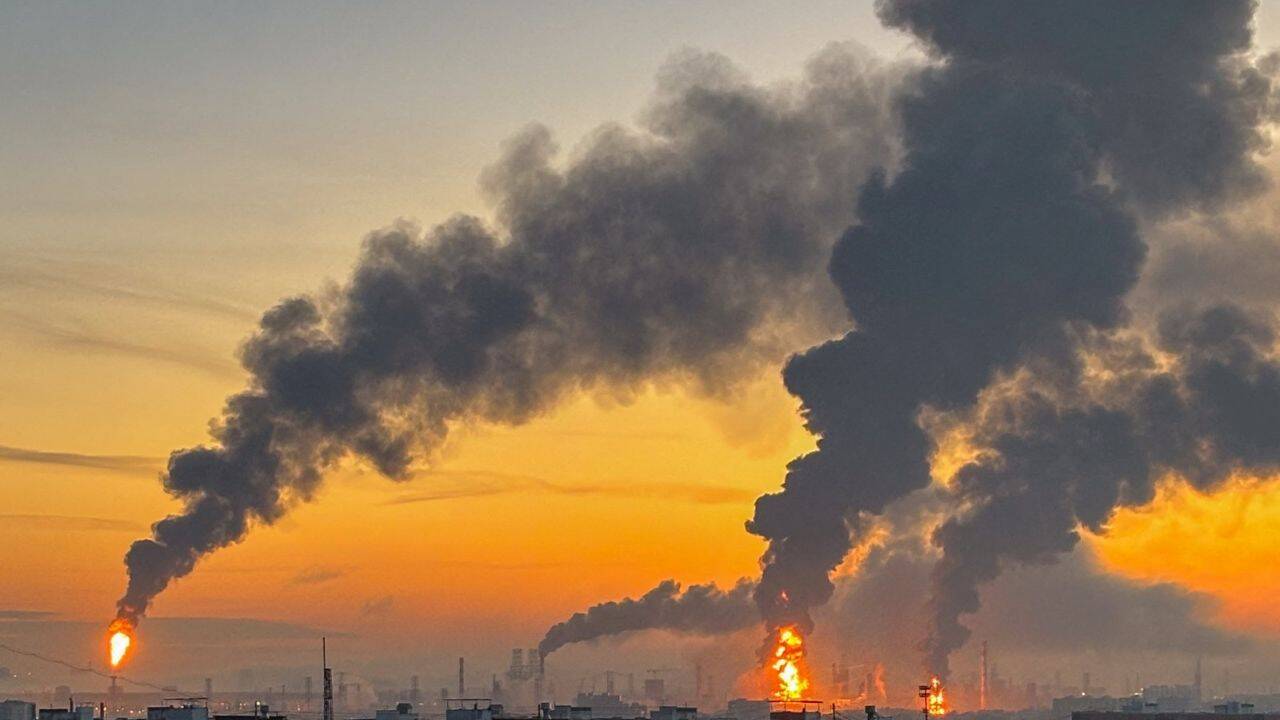
Eight crew missing. Two tankers burning near Romania. Search and rescue launched.
Read a standard wire report and you get the usual tragedy script. Bad weather. Unfortunate timing. A dangerous sea. Maybe a passing nod to regional tension.
That framing lets the real culprits off the hook.
When two tankers catch fire in the Black Sea off Romania and eight seafarers vanish into smoke and cold water, the lazy consensus calls it a maritime accident. Maritime experts, classification societies, and insurance underwriters know better. Accidents happen. Chronic exposure to under-maintained hulls, bypassed safety systems, and opaque ownership structures is engineered.
I have spent years working around commercial shipping operations, hull surveys, and marine claims. I have seen charterers and operators blow millions on emergency response and PR damage control after cutting corners on routine maintenance that would have cost a fraction of the bill. When two vessels burn in the same basin, treating each blaze as an isolated stroke of bad luck is willful blindness.
The Lazy Consensus Around Black Sea Tanker Fires
Standard coverage of a Black Sea tanker casualty tends to follow three predictable tracks.
First, it treats the geography itself as the primary villain. The Black Sea has real hazards: seasonal gales, heavy traffic funneling through narrow chokepoints, drift mines, and war-risk zones that complicate navigation and emergency response. Near the Romanian coast, commercial lanes run close to vital infrastructure, ports, and NATO littoral waters. Real dangers exist there.
Second, it treats missing crew members purely as a search-and-rescue story. Helicopters fly. Patrol vessels grid the water. Coast guards issue updates. Those operations matter deeply to the families waiting for word. Yet focusing solely on the rescue effort obscures why those crew members were in harm's way on a burning hull in the first place.
Third, it frames vessel fires as freak mechanical events. A spark in an engine room. A static discharge during cargo operations. A sudden flare-up.
Calling a tanker fire a freak event ignores how marine engineering works. Crude oil and refined petroleum products do not ignite out of thin air without a chain of failures. Under the International Convention for the Safety of Life at Sea, commonly known as SOLAS, tankers must maintain strict fire-safety architecture: inert gas systems to keep oxygen levels inside cargo tanks too low to support combustion, fixed fire-fighting systems, emergency generator readiness, and trained crews running regular drills.
When a tanker goes up in flames, you rarely have a single isolated failure. You usually have a failure that should have been prevented, compounded by a system that failed to catch it before ignition.
What Is a Tanker Fire Actually Revealing?
If you ask the wrong question—Why did two ships catch fire near Romania?—you get superficial answers about weather, proximity to shore, or regional volatility.
Ask the sharper question instead: Who profited from running these ships at the margin of safety, and who absorbed the tail risk when the margin ran out?
In commercial shipping, risk is rarely priced honestly across the entire chain. A cargo owner wants cheap freight. A charterer wants low daily hire rates. A shipowner wants to squeeze margin out of an aging hull or stretch dry-dock intervals. A flag state wants tonnage fees. Somewhere along that chain, corners get trimmed.
When a fire breaks out, the physical cost lands on the crew in the companionway and the engine room. The financial and reputational cost gets parsed across Protection and Indemnity clubs, hull insurers, coastal states, and salvage contractors.
Dismantling the "People Also Ask" Myths
Whenever a major marine incident hits the news, search engines fill up with the same predictable questions. Most of the standard answers miss the mechanics.
Why do oil tankers catch fire at sea?
Most people picture a dramatic collision—one ship slamming into another and spilling burning oil across the waves. Collisions happen, especially in congested waters. Yet fires on tankers also start from mundane, preventable sources: fuel oil leaks spraying onto hot exhaust surfaces, electrical faults in poorly maintained switchgear, hot work done without proper gas-freeing, or hydrocarbon vapors escaping where seals and vents have degraded.
What turns a localized fire on a dry cargo ship into a nightmare on a tanker is cargo vapor, confined spaces, and escalation speed. If inert gas systems are offline or improperly operated, flammable vapor mixtures can form inside tanks or cofferdams. Once heat reaches structural bulkheads or deck piping, containment becomes brutal.
How dangerous is the Black Sea for commercial tankers right now?
Calling the Black Sea "dangerous" is accurate but imprecise. Any busy shipping basin has hazards. What makes the western Black Sea near Romania distinct is the collision of commercial trade with geopolitical friction and elevated security risk.
Vessels operating in or near conflict-affected waters face electronic interference, altered routing, heightened vigilance requirements, and shifting insurance war-risk zones. When crews are already stretched thin—often working long contracts with uneven relief—layered operational stress leaves zero slack for emergencies.
Can modern ships prevent fires like this?
Technology can reduce probability, not erase it. Modern tankers have gas detection networks, automated alarms, foam monitors, and strict permitting rules. Regulators like the International Maritime Organization set baseline standards that serious operators enforce rigorously.
Hardware does not maintain itself. An alarm system only saves lives if sensors are calibrated, alarms are not silenced out of habit, and crew members know their exact muster roles in thick smoke at 03:00. A state-of-the-art system on paper means nothing on a ship where maintenance is deferred to save cash.
The Nuance Standard Reporting Misses: Shadow Economics and Aging Tonnage
Here is the real blind spot in surface-level reporting. Over the past few years, global oil trade flows have fractured under sanctions, price caps, and rerouted supply chains. That fracture birthed a massive fleet of older tankers—often fifteen to twenty-five years old or more—trading outside traditional Western insurance and classification oversight.
Let's be precise about terms so we do not confuse categories. In maritime parlance, substandard shipping refers to vessels that fail to meet applicable international safety, pollution-prevention, or crew-welfare standards. That is an operational condition, not a nationality or a ship age by itself. Well-run older ships exist. Poorly run newer ships exist too.
Still, age and ownership opacity correlate tightly with risk. Older hulls require heavier steel renewals, more frequent piping repairs, and closer scrutiny of ballast and cargo tanks. When ownership shifts through layered shell companies, or when vessels hop registries and change names rapidly, accountability blurs. Port State Control inspections—such as those coordinated under the Paris MoU or Black Sea MoU—catch plenty of deficiencies, yet no inspection regime catches every boat on every voyage.
Think about what happens when two tankers catch fire in the same regional theater. Even if the two vessels are not directly linked in ownership, similar pressures push marginal operators into the same waters chasing cargoes and freight rates. Two fires near Romania is not proof of a single cause; it is a warning light flashing twice on the same dashboard.
A Thought Experiment: Follow the Margin, Not the Smoke
Imagine a scenario where a mid-sized product tanker is scheduled for dry dock in six months. Steel thickness readings in a wing tank are trending thin, and the main fire pump needs a full overhaul. The owner gets an offer for a lucrative short-haul voyage across the Black Sea that will clear solid profit before the yard slot.
If the owner has a safety-first culture backed by serious technical managers—the kind of standard championed by major oil majors through vetting regimes like SIRE—they fix the pump, verify every safety system, and price the risk honestly. If they do not, the pump gets a patch, the crew gets told to push through, and the margin looks great right up until smoke fills the accommodation block.
You do not need a conspiracy theory to explain why corners get cut. Ordinary commercial incentives do the work every single day.
Where My Contrarian Take Can Backfire
A sharp contrarian argument has a trap: over-correcting into cynicism.
Not every tanker fire is the result of greedy corners or negligent management. Experienced operators with strong safety records still suffer catastrophic casualties. Lightning strikes, sudden equipment failures, medical emergencies turning into operational mistakes, and unpredictable external hazards can overwhelm even a well-drilled crew.
Blaming "bad incentives" for every casualty risks insulting diligent seafarers and technical superintendents who take pride in keeping ships safe under grueling conditions. Worse, jumping to conclusions before accident investigators publish formal findings—whether from the flag state, coastal authorities, or maritime bodies—can point fingers at the wrong link in the chain.
Good analysis holds two truths at once: look closely at systemic incentives and maintenance discipline, and wait for verified evidence before assigning blame.
What Serious Operators, Insurers, and Policymakers Should Do Next
If you work in maritime logistics, cargo trading, marine insurance, or coastal policy, platitudes about "maritime safety" are useless. Action requires changing incentives.
- Audit technical management, not just paperwork. Certificates can be renewed while equipment degrades. Charterers and counterparties that care about supply-chain reliability should scrutinize actual maintenance logs, crew retention, and planned-maintenance execution rather than relying on bare minimum compliance.
- Price true risk into chartering decisions. Cheap freight that relies on deferred upkeep is fake savings. One serious incident, delay, or environmental response wipes out months of rate arbitrage.
- Prioritize seafarer welfare and emergency readiness. When crew are fatigued, under-resourced, or unfamiliar with vessel-specific emergency gear, small incidents turn into tragedies. Drills must be real, not check-the-box exercises.
- Strengthen regional response and salvage readiness. Coastal states like Romania sit along high-stakes sea lanes. Rapid search-and-rescue coordination, firefighting tug availability, and clear salvage protocols save lives and limit environmental fallout when fires erupt.
Eight missing crew members is a human loss that no spreadsheet can balance. Stop calling it bad luck, start fixing the incentives that put people on under-supported hulls, and watch what happens to the numbers.