Seventy-four more buildings. That single update pushed the running count of Taizoom properties with missing lift safety parts to 152—and honestly, the story didn't stop there.
When Hong Kong's Electrical and Mechanical Services Department (EMSD) dug deeper into lift replacement works handled by Taizoom Elevator Company, the numbers kept climbing. What started as a troubling discovery at two public housing estates snowballed into 152 affected buildings, then surged past 300 buildings—reaching 338 properties—as inspections expanded. Regulators eventually found roughly 90 percent of Taizoom-installed lifts, amounting to 720 units, lacked required fire-resistant door frame components.
A missing door frame sounds like a minor trim issue until you remember how a vertical shaft behaves during a fire. Without proper fire-resistant framing and seals around a lift landing, a lift shaft can act like a chimney, channeling smoke and heat between floors faster than residents can react. Even when regulators confirmed the lifts themselves remained safe to ride day-to-day, skipping a mandatory fire-safety part breaks the building's broader defense system.
Why Taizoom Lifts Became a Wake-Up Call
High-density cities live and die by vertical transit. In Hong Kong, tens of thousands of people step into lifts every single hour to get to work, school, clinics, and home. Most riders assume that if a lift passes inspection and gets a certificate, every bolt, frame, and fire barrier behind the wall is where it belongs.
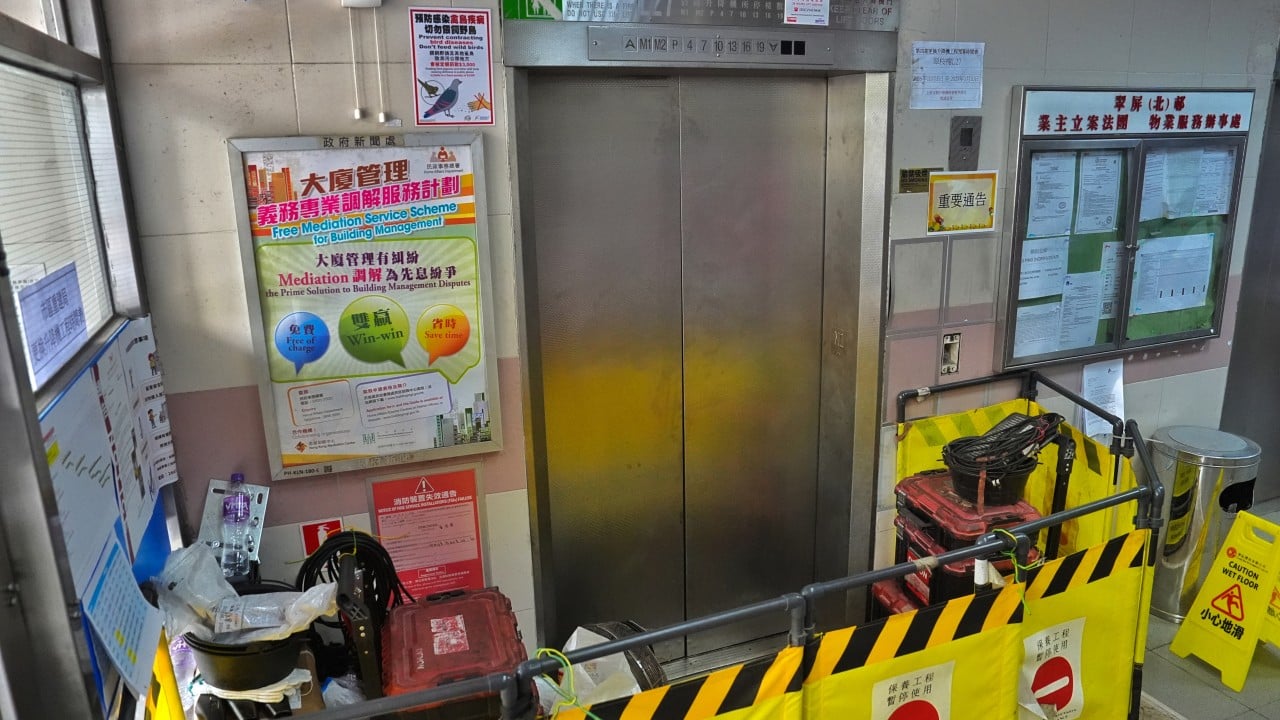
That assumption took a beating in October and November 2026. The investigation kicked off after inspections uncovered missing fire-resistant door frames across 48 replaced lifts at two Tenants Purchase Scheme estates: Tsui Ping (North) Estate in Kwun Tong and Pok Hong Estate in Sha Tin. Soon after, EMSD reported finding missing components at 74 additional buildings, bringing the tally to 152, before broader checks revealed non-compliance across 338 buildings and 720 lifts.
What made the case explode beyond a routine maintenance slip was the suspicion of misconduct. EMSD referred the matter to the police for potential fraud, and reports noted the arrest of a Taizoom board member alongside allegations involving falsified safety declarations. Meanwhile, the Housing Authority signaled plans to pursue liability over installation breaches.
I've watched plenty of building compliance stories play out over the years, and one pattern shows up again and again. Paperwork looks neat long before physical reality gets checked. When a contractor signs off on compliance and nobody verifies what happens behind the landing wall during installation, a shortcut can spread across hundreds of units before anyone catches it.
How Missing Fire-Resistant Door Frames Slip Through
People often ask how 90 percent of a contractor's installed lifts can miss a required part without getting caught immediately. The short answer is that once a lift installation or modernization finishes, critical elements sit tucked inside walls, shafts, and adjoining finishes. A casual glance at a shiny stainless-steel door doesn't tell you whether the fire-rated frame assembly meets specification.
There's also a structural blind spot in how oversight works. When contractors submit declarations confirming that work meets statutory standards, regulators rely heavily on documentation, sampling, and periodic audits rather than standing over every worker on every shift. If internal quality control inside a company breaks down—or worse, if someone cuts corners intentionally—the gap only shows up during targeted enforcement sweeps or whistleblowing.
Safety engineers and industry voices weighing in after the Taizoom findings pointed straight at verification. Some suggested stronger independent third-party checks on completed installations, while others floated date-stamped video or photographic records taken during the actual installation process so inspectors can see what went into the shaft before it was sealed up.
That last idea makes a lot of practical sense. Photos after the fact are easy to stage or cherry-pick. Continuous, time-stamped documentation during installation is much harder to fake, especially when paired with unannounced spot checks.
What Regulators and Industry Are Doing Next
Credit where it's due: once the missing frames came to light, EMSD didn't treat it as a quiet footnote. The department ordered Taizoom to install the missing door frame components and bear the remedial costs, widened inspections to other registered lift contractors, and launched a review of lift approval mechanisms aimed at wrapping up before the end of 2026.
Let's be real, though. Rules on paper only fix half the problem.
Over the past decade, Hong Kong has tightened lift safety laws and public scrutiny after high-profile incidents, yet enforcement still has to keep pace with modernization volume. Replacing hundreds of lifts across aging estates is big business, and aggressive timelines or tight margins can tempt contractors to cut corners. If penalties aren't steep enough—or if companies can face criminal fraud probes while buildings wait on remedial work—residents end up stuck in the middle.
There's also a fair debate over engineer qualifications and self-reporting. Relying on industry declarations speeds up approvals, which matters when thousands of lifts need servicing. Still, when an entire fleet shows a 90 percent deficiency rate, light-touch verification looks pretty shaky.
Common Misconceptions About Lift Safety Notices
When headlines break about missing safety parts on lifts, panic spreads fast. A few myths usually pop up right away, so it helps to clear them up.
- A missing fire-resistant door frame means the lift is about to drop. Not necessarily. Regulators noted that the lifts themselves could still operate safely in normal use, even though leaving out required fire-rated frame components breached safety standards and weakened fire compartmentation.
- Only one contractor ever makes mistakes. Taizoom is at the center of this investigation, yet EMSD required other registered contractors to run checks and submit reports as well. Systemic risks usually warrant industry-wide eyes, not tunnel vision on a single firm.
- Remedial work happens overnight. Fixing hundreds of lifts across dozens or hundreds of residential blocks takes scheduling, parts supply, access coordination with building management, and follow-up verification. Patience and persistent oversight both matter here.
Practical Next Steps for Residents and Building Managers
If you live in a building with recent lift replacements, sit on an owners' corporation, or manage property, you don't have to just cross your fingers and hope for the best.
- Check official notices and building announcements. Look for updates from your property management office, owners' corporation, or EMSD regarding remedial schedules and affected lift numbers.
- Ask specific questions at management meetings. Don't settle for vague assurances that "everything is fine." Ask whether your building's lifts were installed or modernized by a contractor under review, whether fire-rated components were verified, and when remedial or inspection sign-offs will be completed.
- Keep fire escape routes and lift lobbies clear. Even with fully compliant lift doors, fire safety relies on clear lobbies, working alarms, and residents knowing not to use standard lifts during a fire unless explicitly designated and safe to do so.
- Push for documented proof of completion. For property managers and owners' corporations commissioning lift works, require clear compliance records, inspection sign-offs, and photographic or digital evidence of key safety installations before releasing final payments.
A scandal like Taizoom's stings because people put real trust in basic building safety. Fixing 720 lifts is the immediate job, but rebuilding that trust takes tougher verification every single day.