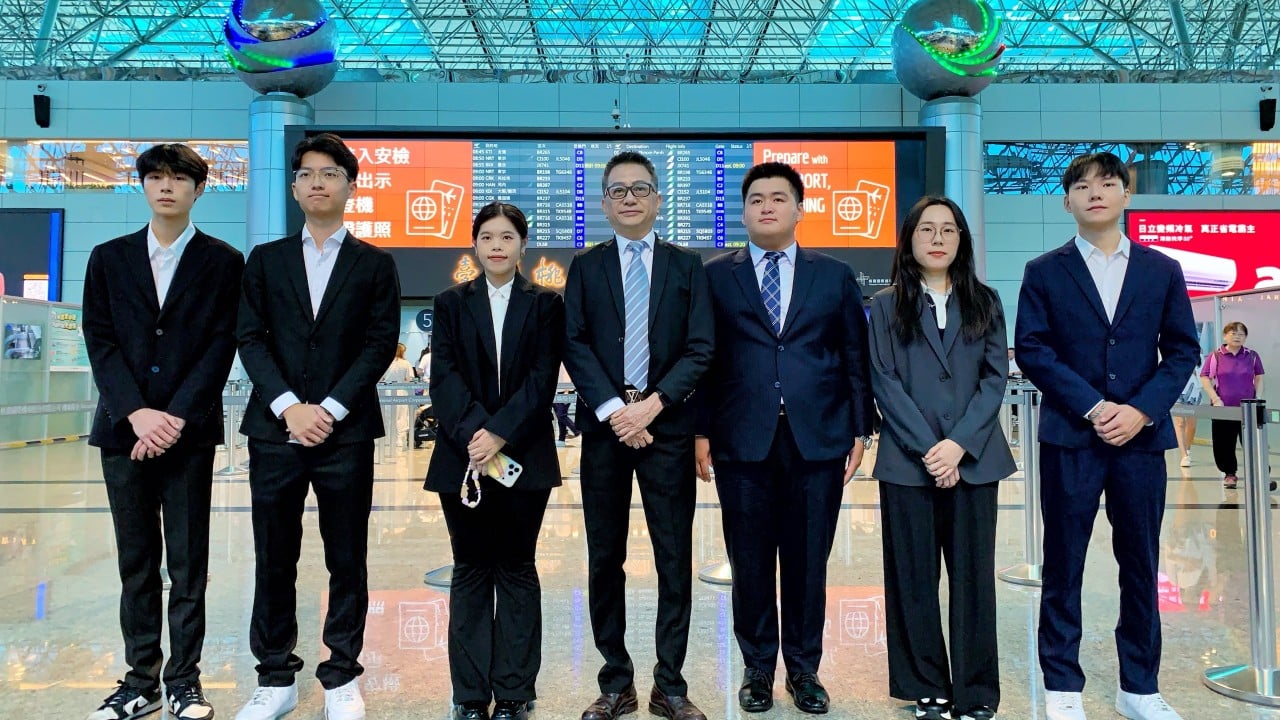
The mainstream political press is currently choking on its own hyperbole over the Taiwan People’s Party (TPP) sending its first official delegation to mainland China. They are calling it a "historic breakthrough." They are calling it a "bold alternative to the cross-strait stalemate." They are telling you that a fresh, pragmatic third force is finally stepping up to do the hard work of diplomacy where the ruling Democratic Progressive Party (DPP) failed and the Kuomintang (KMT) grew too stale.
Every single one of those assertions is flat-out wrong.
What we are witnessing is not a masterstroke of geopolitical strategy. It is a desperate, structurally flawed survival stunt by a political startup that has run out of runway. By sending a delegation to Beijing, the TPP is not carving out a "third way" for Taiwan. They are walking straight into a trap that will alienate their core supporters, strip away their unique political identity, and reduce them to a cheap public relations prop for the Chinese Communist Party (CCP).
Here is the brutal reality of what is actually happening behind the closed doors of this trip, and why the TPP’s big gamble is bound to fail.
The Fatal Flaw of the Fake Third Way
The entire value proposition of the TPP was built on being different. Founded by former Taipei Mayor Ko Wen-je, the party positioned itself as the "white" force—a clean, pragmatic, technocratic alternative to the endless, exhausting blue-green ideological war between the pro-unification KMT and the Beijing-skeptic DPP.
They promised Taiwanese voters, especially the disillusioned under-40 demographic, that they would focus on practical domestic issues: housing justice, stagnant wages, and efficient governance. They promised to leave the toxic, high-stakes geopolitical posturing to the old guard.
By flying to Beijing, the TPP has officially broken that promise.
They are no longer offering an alternative. They are actively mimicking the KMT’s exact playbook. For decades, the KMT has positioned itself as the only party capable of talking to Beijing, relying on personal relationships and vague frameworks like the 1992 Consensus. When the TPP boards a plane to China to hold talks with CCP officials, they are not acting as a "white" alternative. They are acting as KMT-lite.
For a young voter in Taipei who supported the TPP because they wanted to escape the old blue-green divide, watching TPP officials rub shoulders with Beijing apparatchiks is a betrayal. It signals that when the going gets tough domestically, the TPP collapses back into the exact same cross-strait paradigm they promised to disrupt.
The Math of the Taiwanese Electorate Does Not Lie
Let us look at the cold, hard demographic data that the TPP’s leadership seems to have completely ignored.
The TPP’s political survival depends entirely on Taiwan's youth. During the last presidential election, the party captured a massive share of the under-40 vote. These are voters who have grown up in a fully democratized, de facto independent Taiwan. They have zero emotional connection to the mainland. More importantly, they are deeply defensive of Taiwan’s democratic institutions and highly suspicious of Beijing’s intentions.
By attempting to play diplomat in Beijing, the TPP is committing marketing suicide.
- You alienate your base: Young, reform-minded voters do not want to see their political champions playing nice with an authoritarian regime that threatens Taiwan with military exercises on a weekly basis.
- You fail to win over the opposition: The deep-blue voters who want closer ties with China will always trust the KMT over the TPP. The KMT has decades of institutional relationships with Beijing. Why would a pro-China voter choose a volatile third-party startup when they can buy the organic, established brand?
- You feed the green narrative: The DPP has spent years painting the TPP as a Trojan horse for Chinese influence. This trip serves that narrative to the DPP on a silver platter.
The strategic payoff here is nonexistent. The TPP is trading its most loyal, energized voter base for a group of voters who will never trust them anyway.
Inside the Beijing Playbook: You Are the Prop, Not the Partner
To understand why this trip is a disaster, you have to understand how the CCP’s United Front Work Department actually operates.
Beijing does not engage in diplomacy with opposition parties out of respect or a genuine desire for compromise. They do it to execute a highly calculated strategy of domestic division within Taiwan.
When a TPP delegation sits down at the negotiating table in China, they believe they are representing a sovereign, democratic constituency. Beijing, however, views them as a useful tool to bypass and delegitimize the elected Taiwanese government.
[Beijing's United Front Strategy]
       │
       ├─► Step 1: Bypass the elected DPP government entirely.
       ├─► Step 2: Host friendly talks with eager opposition parties (KMT/TPP).
       └─► Step 3: Weaponize these meetings to tell Taiwanese voters:
                   "Peace is possible, but only if you vote out the DPP."
If you are a TPP negotiator, you are entering these meetings with zero leverage. You do not hold executive power. You cannot sign treaties. You cannot change Taiwan’s defense budget. You cannot alter official cross-strait policy.
Therefore, any "agreements" or "understandings" reached during this trip are purely theatrical. Beijing will use the TPP to project an image of cross-strait harmony to its domestic audience, while giving the TPP absolutely nothing of substance in return. The TPP gets the photo-op; Beijing gets the political leverage. It is an incredibly bad trade.
Dismantling the Mainstream Myths
Let us take a sledgehammer to the common questions and arguments being thrown around by political analysts who are validating this trip.
Will this trip reduce the risk of military conflict in the Taiwan Strait?
No. This is a dangerous delusion. Beijing’s military posture toward Taiwan is dictated by long-term geopolitical objectives, domestic economic pressures, and its strategic competition with the United States. It is not dictated by whether a minority political party from Taiwan flies over for tea and handshakes. Believing that a TPP visit will delay or prevent a military blockade is akin to believing that writing a polite letter will stop a typhoon.
Isn't open communication always better than silence?
Only when the communication is conducted by those with the constitutional authority to back up their words. When non-ruling opposition parties conduct their own rogue foreign policy, it fractures Taiwan’s national security posture. It allows Beijing to play different factions against one another, weakening Taiwan’s collective bargaining position on the global stage.
Does this trip prove the TPP is maturing into a serious political force?
It proves the exact opposite. Serious political parties build deep policy platforms, cultivate local administrative talent, and offer distinct structural reforms. Desperately chasing headlines in Beijing is a shortcut. It is the behavior of a party that is intellectually bankrupt at home and needs a massive, controversial distraction to prove it still exists.
The Playbook They Should Have Used
If the TPP actually wanted to disrupt the status quo and build a sustainable political brand, they should have doubled down on their original mission.
Instead of trying to be amateur diplomats, they should have focused on local governance. They should have spent their energy showing that they can run cities and counties more efficiently than the big two parties. They should have focused on fixing the real-world, grinding domestic crises that actually worry young Taiwanese voters every single day—skyrocketing rent, crumbling energy infrastructure, and an outdated labor market.
True strength in cross-strait relations does not come from begging for an audience in Beijing. It comes from building a highly resilient, economically dominant, and socially cohesive Taiwan.
By skipping the hard work of domestic building to seek a quick spotlight in China, the TPP has shown its hand. They are not the future of Taiwanese politics. They are just another group of politicians willing to sacrifice their principles for a moment of attention under the bright lights of Beijing. And in the unforgiving arena of Taiwanese democracy, that is a mistake they will not easily recover from.