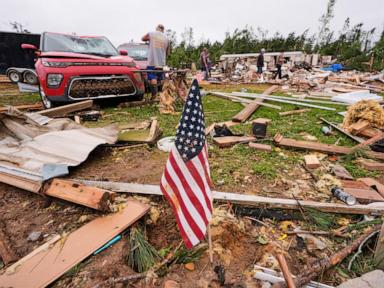
The survival of a neonatal feline during a tornadic event is not a matter of luck but a confluence of structural shielding, low-mass physics, and the efficacy of high-frequency distress signaling as a recovery mechanism. While standard reporting focuses on the emotional narrative of "rescue," a rigorous analysis reveals a specific sequence of mechanical and biological variables that allow a five-ounce organism to endure wind speeds exceeding 135 mph and subsequently trigger a human-led extraction through vocal optimization.
The Physics of Low Mass Displacement
In an EF-2 or higher tornado, the primary threat to life is blunt force trauma from debris or rapid deceleration. However, kittens possess a unique set of physical attributes that alter their risk profile compared to larger mammals.
- Terminal Velocity and Mass: The square-cube law dictates that as an object scales down, its surface area decreases by the square, but its volume (and mass) decreases by the cube. A kitten’s exceptionally low mass-to-surface-area ratio reduces its terminal velocity. During atmospheric lofting, the kinetic energy upon impact is significantly lower than that of an adult human or a canine, often falling below the threshold for catastrophic internal organ failure.
- Structural Flexibility: The skeletal system of a neonatal kitten is largely cartilaginous. This lack of complete ossification allows for a degree of "elastic deformation" during high-velocity impacts. Where an adult bone would fracture, the kitten’s frame absorbs and distributes the energy of the displacement.
- Micro-Refuge Utilization: Small organisms occupy a different spatial reality than humans. A gap of four inches—useless to a person—functions as a reinforced bunker for a kitten. Survival often hinges on the animal being swept into "dead zones" of air pressure within collapsed structures, where the architectural debris forms a protective void or "lean-to" pocket.
The Bioacoustic Recovery Loop
Once the meteorological event concludes, the survival clock shifts from mechanical endurance to metabolic and predatory risk. The transition from "surviving" to "being rescued" is driven entirely by the kitten’s ability to pierce the ambient noise floor of a disaster zone.
Frequency Modulation as a Survival Tool
Human hearing is most sensitive in the 2,000 to 5,000 Hz range. A kitten’s distress vocalization, or "isolation call," is evolutionarily calibrated to this spectrum. Unlike the lower-frequency barks of a trapped dog, which can be masked by the low-end rumble of heavy machinery or wind, the high-frequency "meow" of a kitten acts as a biological sonar beacon.
The acoustic structure of these calls typically involves a sharp "rising-falling" frequency sweep. This modulation makes the sound easier for the human ear to localize in a three-dimensional debris field. In the incident in question, the kitten’s ability to maintain a consistent duty cycle—repeatedly vocalizing at regular intervals—provided the searchers with a predictable signal-to-noise ratio that allowed for triangulation.
The Cost of Signaling
Vocalization is metabolically expensive. For a kitten that has likely suffered from dehydration and heat loss (hypothermia is a critical risk even in summer due to the cooling effect of wet fur and wind), every "meow" represents a calculated depletion of remaining glycogen stores. The rescue was not merely a result of the sound being heard; it was a race between the recovery team’s search grid efficiency and the kitten’s physiological "battery life."
The Hierarchy of Post-Disaster Extraction
The recovery of the kitten highlights a three-stage mechanical funnel that defines successful post-tornado extractions:
- The Shielding Phase: The animal must be located in a primary or secondary debris void. If the animal is in the open, the probability of survival approaches zero due to debris ballistic impact.
- The Quiescent Phase: Immediately following the event, ambient noise is at a maximum (sirens, gas leaks, shouting). Small-animal vocalizations are statistically invisible during this window.
- The Detection Window: This occurs when search teams shift from heavy machinery to manual "listening grids." The kitten’s survival was contingent on its ability to remain silent during the peak noise phase to conserve energy, then initiate high-decibel signaling once the human auditory environment reached a state of relative calm.
Limitations of the Biological Model
While the feline survived, this outcome is an outlier driven by the "Lilliputian Effect"—the phenomenon where smaller organisms survive falls and pressures that kill larger ones. This does not suggest a robust survival strategy for domestic pets in general.
- Thermal Regulation: Kittens cannot thermoregulate effectively. Without the heat of a mother or a litter, the post-event environment is often lethal within 12 to 24 hours, regardless of physical injury.
- Acoustic Masking: In urban environments, high-frequency signals are easily absorbed by soft materials like fiberglass insulation and heavy fabrics. If the kitten had been buried under "soft" debris rather than "hard" structural elements, its acoustic beacon would have been muffled, leading to a failure in the detection loop.
Strategic Framework for Domestic Pet Recovery in Disaster Zones
To move beyond the anecdotal and toward an operationalized approach to pet survival, emergency management should integrate the following variables:
The Void Mapping Protocol
Search and rescue teams must prioritize debris piles that show "void-forming" characteristics. These are typically composed of large-format rigid materials (drywall, plywood, roofing) rather than pulverized matter. These voids are the primary survival sites for low-mass mammals.
Auditory Frequency Filtering
Standard search protocols involve calling out and listening for human responses. However, utilizing parabolic microphones tuned specifically to the 3kHz-5kHz range can identify neonatal distress calls that are below the human threshold for detection over long distances or through dense rubble.
Metabolic Decompression
Upon extraction, the immediate priority is not caloric intake but thermal stabilization and glycemic correction. The physical stress of sustained high-frequency vocalization often leads to acute hypoglycemia. Field intervention must focus on rapid glucose elevation to prevent neurological decline.
The survival of the organism is a function of its mechanical scale and its ability to exploit human auditory biology. The rescue team's success was the result of a biological signal successfully triggering a predatory search response in a benevolent species. Future disaster response can optimize these outcomes by treating small-animal vocalizations as high-priority, locatable data points within a defined acoustic landscape.
Final strategic assessment: Survival in extreme wind events is maximized when mass is minimized and signaling frequency is optimized for the primary searcher’s auditory range. Recovery is a mechanical search problem, not a biological certainty.