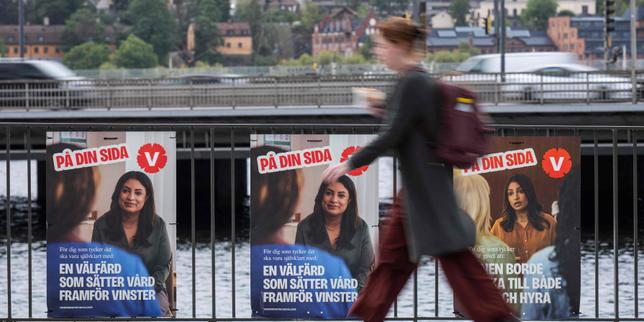
Every political scandal follows a predictable choreography. A media outlet drops an exposé detailing fringe elements infiltrating a mainstream party, commentators feign shock, party leadership issues a reluctant apology promising internal purges, and everyone pretends the system is working as intended. The standard narrative surrounding the Left Party in Sweden and its struggles with extremist fringe candidates treats the phenomenon as a simple filtration failure. The lazy consensus claims that if headquarters just ran tighter background checks or tightened candidate vetting protocols, the ideological purity of the organization would remain untarnished.
That perspective ignores how modern political movements actually function.
Parties do not accidentally attract radical elements because their HR department fell asleep at the wheel. Ideological fringe infiltration happens because the core architecture of modern political mobilization relies on grievance-based coalition building. When you construct a big tent fueled by anti-establishment fervor and intense ideological polarization, you inevitably roll out the welcome mat for actors who view mainstream democratic norms as a mere inconvenience.
Let us look at the mechanics. A political apparatus prioritizing radical ideological alignment over pragmatic governance creates structural vulnerabilities. The Swedish Left Party, historically rooted in the transition from Eurocommunism to modern democratic socialism, tries to walk a tightrope. It attempts to maintain credibility as a responsible parliamentary actor capable of propping up social democratic governments while simultaneously courting radical activist networks on the streets. You cannot drink from both wells indefinitely without getting sick.
When candidates with documented histories of antisemitic rhetoric or uncritical support for militant groups like Hamas slip onto candidate lists, mainstream analysts wring their hands about a lack of due diligence. This misdiagnoses the symptom as the disease. Vetting committees do not miss these red flags because they are blind; they miss them because the organizational culture encourages turning a blind eye to ideological allies who can mobilize votes in critical districts. The calculus is cynical and entirely routine across the political spectrum. Radical factions deliver boots on the ground, social media amplification, and aggressive street-level activism. In exchange, they demand representation and ideological latitude.
The Myth of the Clean House
The standard prescription offered by political pundits is straightforward: purge the extremists, tighten the vetting rules, and issue a clear condemnation of antisemitism and terrorism. Party leadership follows this playbook to the letter every single time a scandal breaks. Expulsions are announced, press releases are distributed, and everyone breathes a sigh of relief.
This approach solves nothing.
Expelling a handful of toxic candidates treats the cancer with a bandage. The underlying network that produced those candidates remains completely intact. The local riding associations that nominated them are still controlled by the same factions. The ideological grievances that normalized their rhetoric are still actively stoked by party literature and internal messaging.
If you cut off a hydra head, two more grow back, provided the body is still nourished by the same toxic soil. Political parties are organic systems, not corporate hierarchies. You cannot simply fire a rogue employee and fix the corporate culture. When a party tolerates casual antisemitism disguised as anti-imperialism for years, it creates an institutional permissive environment. It trains its members to view certain forms of bigotry as acceptable collateral damage in the pursuit of the greater ideological struggle.
I have watched political organizations spend millions on compliance consultants and rigorous auditing processes, only to watch the exact same ideological rot seep back in through the grassroots within six months. Bureaucracy cannot legislate away bad faith. When a movement builds its identity around tearing down existing structures, it inevitably attracts people who want to tear down liberal democratic guardrails entirely—including the prohibition against ethnic hatred and support for designated terrorist organizations.
The Cost of Strategic Ambiguity
Mainstream political survival in Europe currently depends on strategic ambiguity. Parties want the radical vote without the radical brand. They want the energy of the protest movement without the liability of its baggage. This balancing act is collapsing under the weight of geopolitical reality.
The conflict in the Middle East acts as an acid test for European political parties. It strips away the comforting abstractions of domestic politics and forces hard choices. For decades, radical left movements in Europe maintained an uncritical solidarity with Palestinian militant groups, wrapped in the comforting language of anti-colonial resistance. For a long time, party leadership could wink at the fringes, treating extreme rhetoric as youthful idealism or rhetorical excess.
That luxury expired. When fringe candidates celebrate violence against civilians or regurgitate ancient antisemitic conspiracy theories under the guise of geopolitical critique, the firewall between acceptable dissent and unadulterated bigotry shatters.
The Left Party’s crisis in Sweden is not an isolated incident of bad vetting. It is the inevitable result of a political strategy that refuses to define its boundaries. By trying to be everything to every faction on the radical left, the party surrendered its institutional integrity.
Fixing this does not require a new vetting checklist. It requires an existential divorce. Until mainstream political forces are willing to accept electoral shrinkage in exchange for moral clarity—until they are willing to tell radical activist networks that certain positions are permanently beyond the pale, regardless of how many votes they cost—these scandals will continue to erupt with clockwork regularity.
Every compromise made for the sake of tactical coalition building stores up interest on a debt that must eventually be paid in full. The Swedish Left Party is currently staring at the bill.