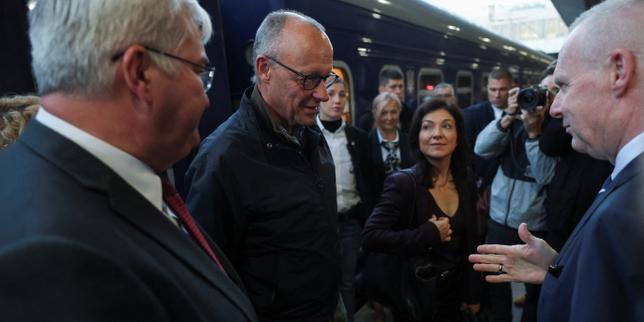
When German Chancellor Friedrich Merz arrives in Kyiv on an unannounced trip, the mainstream media coverage follows a predictable script. Headlines immediately frame the visit as a historic display of solidarity, a decisive turning point in European security, and an unmistakable warning to Moscow.
That consensus misses the actual mechanics of modern wartime diplomacy. While high-profile visits to a conflict zone generate compelling photo opportunities and reassuring soundbites, political analysts, defense economists, and diplomatic historians point out that surprise trips by heads of government often obscure the real bottlenecks in military and financial support. In fact, treating a leader’s physical presence in Kyiv as a substitute for structural industrial policy can actively distort public understanding of what sustains a prolonged war of attrition.
The Illusion of the "Surprise" Visit
The first misconception baked into standard coverage is the word "surprise." In reality, a head of state from a G7 nation does not simply board a night train into an active war zone on a whim.
Months of logistical coordination precede these trips. Intelligence services from Germany, Poland, Ukraine, and allied NATO members must clear air corridors, secure rail lines, and establish deconfliction protocols. According to diplomatic security experts, the element of surprise exists solely for the press corps and the general public—never for the intelligence apparatuses of the countries involved, and rarely for the adversary.
By framing the visit as a spontaneous act of personal courage, media narratives shift focus away from bureaucratic realities toward individual personalities. When observers focus on the drama of a German Chancellor walking through central Kyiv, they stop asking harder questions about procurement timelines, artillery shell production rates, and fiscal commitments in Berlin's federal budget.
Symbolism Versus Industrial Capacity
In modern industrialized warfare, political signaling carries far less weight than manufacturing output. Defense analysts at institutions such as the Kiel Institute for the World Economy, which tracks aid to Ukraine, have repeatedly highlighted a persistent gap between pledged assistance and actual deliveries.
Consider the structural realities facing Berlin and its European partners:
- Production Bottlenecks: European defense contractors spent decades operating on peacetime just-in-time manufacturing models. Expanding assembly lines for air defense interceptors, armored vehicles, and 155mm ammunition takes years of capital investment, multi-year contracts, and raw material sourcing. A handshake in Kyiv does not accelerate chemical propellant manufacturing.
- Budgetary Constraints: Germany’s constitutional debt brake (Schuldenbremse) and domestic coalition politics impose strict limits on how much capital can be allocated to foreign military aid without triggering domestic backlash or cuts to social spending.
- Maintenance and Logistics: Delivering advanced hardware—such as Leopard main battle tanks or IRIS-T air defense systems—is only the initial step. Sustaining those systems requires spare parts, specialized repair hubs in neighboring countries like Poland or Lithuania, and continuous training pipelines.
When political leaders rely on high-visibility trips to demonstrate commitment, they often satisfy domestic and international demands for "action" without resolving the underlying supply chain friction. As military strategist Lawrence Freedman has noted in his analyses of modern conflict, strategy is the art of creating power—not merely displaying the symbols of it.
The Domestic Audience Behind Foreign Trips
To understand why a German Chancellor travels to Kyiv, look at domestic politics in Berlin rather than the front lines in Donbas.
For any German leader, Ukraine policy sits at the center of intense internal debate. On one side, transatlanticists and Eastern European allies demand faster, heavier weapons deliveries and clearer security guarantees. On the other side, segments of the German electorate—particularly in eastern states—express deep anxiety over economic stagnation, energy prices, and the risk of direct escalation with a nuclear-armed Russia.
A carefully choreographed trip to Kyiv allows a Chancellor to thread this political needle:
- Reassuring Allies: It signals to Washington, Warsaw, and Brussels that Germany remains anchored to the Western coalition and intends to lead European defense efforts.
- Projecting Statesmanship at Home: Images of the Chancellor standing alongside Ukrainian leadership project authority and resolve to domestic voters who want Germany to appear influential on the world stage.
- Controlling the News Cycle: A major foreign policy event temporarily crowds out domestic disputes over infrastructure, taxation, or coalition infighting.
This dynamic is not unique to Friedrich Merz or to Germany. Former British Prime Minister Boris Johnson, French President Emmanuel Macron, and U.S. President Joe Biden all utilized Kyiv visits to project strength during periods of domestic political pressure. Recognizing this pattern does not diminish the risks involved in traveling to a country under regular missile bombardment; rather, it clarifies who the primary target audience actually is.
What Observers Should Actually Measure
If diplomatic visits are largely exercises in strategic communication, how should informed readers evaluate the real impact of a German Chancellor's policy toward Ukraine? Defense analysts suggest ignoring the press conference rhetoric and tracking four concrete metrics instead:
1. Multi-Year Framework Contracts
One-off aid packages drawn from existing military stockpiles are finite; European militaries have already depleted much of their readily available surplus. The true test of commitment is whether Berlin signs binding, multi-year procurement contracts directly with defense manufacturers like Rheinmetall or Diehl Defence. Long-term contracts give private companies the financial certainty required to build new factories.
2. Air Defense Interceptor Inventories
Ukraine’s energy grid and urban centers depend heavily on German-supplied Patriot and IRIS-T systems. However, an air defense battery without missiles is an expensive radar station. Analysts look closely at the specific number of interceptors committed per quarter, rather than the headline euro value of an aid package.
3. Secondary Sanctions Enforcement
Financial and diplomatic support loses effectiveness if adversary supply chains remain intact. Independent trade data frequently shows Western-made dual-use microelectronics reaching Russian defense plants via third-party intermediaries in Central Asia and the Caucasus. Real policy teeth appear in customs enforcement and corporate compliance crackdowns, not diplomatic communiqués.
4. European Defense Integration
Ultimately, Ukraine’s long-term security depends on whether European nations can standardize ammunition, share intelligence seamlessly, and pool procurement budgets without getting bogged down in national protectionism.
The Limits of Diplomatic Theater
There is a legitimate counterargument to this skeptical view: morale matters in war. For a population enduring blackouts, displacement, and constant casualties, seeing the leader of Europe’s largest economy stand in their capital provides tangible psychological reassurance that they have not been abandoned. Diplomatic isolation is one of Moscow's primary objectives, and every high-level visit directly counters that goal.
Yet acknowledging the value of morale does not justify mistaking symbolism for strategy. When journalists and commentators treat a diplomatic visit as a decisive shift in the war, they set unrealistic expectations. When those expectations inevitably collide with the slow, grinding realities of industrial warfare and legislative budget battles, public cynicism grows.
Real leverage in international security is built quietly in finance ministries, factory floors, and logistics hubs—long after the cameras leave Kyiv.