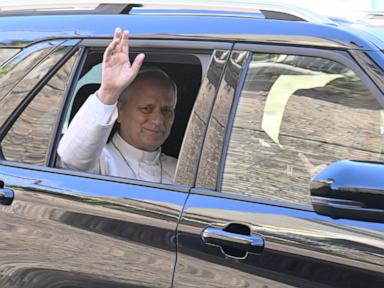
When Pope Leo XIV announced from the window of St. Peter’s Square that a localized pulmonary nodule necessitated immediate surgical excision, the Vatican broke decades of medical opacity. Historically, sovereign pontifical health issues—most notably during the final years of Pope Francis—were shrouded in administrative obfuscation, delayed bulletins, and speculative media cycles. The October 2026 intervention at Rome's Gemelli Hospital, conversely, demonstrates a calculated shift toward procedural transparency and tactical scheduling. By analyzing the clinical parameters of the operation, the operational constraints of the papacy, and the logistics of institutional recovery, one can deconstruct why this medical intervention was handled not as a crisis, but as a routine infrastructural maintenance project.
The Diagnostics and the Surgical Vector
The lesion in question was classified as a pulmonary nodule—a circumscribed opacity measuring under three centimeters, identified during routine clinical screening. Statistically, such incidentalomas present a diagnostic branching model: the probability of malignancy scales with patient age and smoking history, but early detection radically alters the clinical trajectory.
The medical team, led by chief thoracic surgeon Dr. Stefano Margaritora at Gemelli Hospital, executed a video-assisted thoracoscopic surgery (VATS) to perform a right lower lobectomy. The strategic rationale for a minimally invasive approach over open thoracotomy is rooted in postoperative physiological preservation. By utilizing small incisions and high-definition robotic or thoracoscopic visualization, the surgical team minimized chest wall trauma, preserved intercostal nerve function, and drastically compressed the pulmonary rehabilitation timeline.
Histopathological analysis subsequently confirmed the nodule to be an early-stage adenocarcinoma, the most common form of non-small cell lung cancer. Because the lesion was completely circumscribed and localized—with lymph node evaluations returning clear margins—the clinical protocol shifted immediately from curative intervention to restorative monitoring, bypassing the need for adjuvant systemic chemotherapy or radiation therapies.
The Cost Function of Papal Downtime
A reigning pontiff operates as both a spiritual head of state and the chief executive of a decentralized global enterprise. Consequently, any medical intervention introduces severe institutional drag. The cost function of papal incapacitation includes:
- The suspension of public audiences and ordinary governance workflows.
- The logistical friction of rescheduling international diplomatic itineraries.
- Market volatility in public perception driven by informational vacuums.
To minimize this friction, the Vatican engineered a compressed timeline. The operation occurred on a Tuesday, public engagements were cleared for a strict seven-day window, and discharge occurred on the following Saturday—four days ahead of the initial conservative projection. This rapid discharge is an indicator of baseline physical resilience. Prior to the diagnosis, Leo maintained an active physical regimen including swimming and tennis, factors that directly correlate with higher cardiopulmonary reserve and accelerated post-surgical recovery rates.
Geopolitical Scheduling and Institutional Momentum
The timing of the medical intervention was tightly coupled with an upcoming overseas transit schedule. The pontiff faced an ambitious pastoral and diplomatic tour of South America—an itinerary spanning over 31,000 kilometers across multiple nations, high-altitude environments, and compressed flight rotations.
Postoperative guidelines for pulmonary resections typically mandate a three-week aviation moratorium to allow thoracic cavity stabilization and prevent barotrauma complications at cruising altitudes. By executing the surgery in mid-October, the administration preserved a precise three-week buffer before the scheduled November departure date. This showcases an operational optimization loop: address a localized pathological risk factor immediately to eliminate the probability of an acute, unmanaged medical emergency mid-tour.
Strategic Operational Outlook
The management of Pope Leo's health event signals a maturation in Vatican operational risk analysis. By treating early-stage oncological findings with aggressive, minimally invasive surgical protocols rather than palliative observation, the administration mitigated long-term structural vulnerability. The precedent established here is clear: institutional continuity is best preserved through proactive disclosure and swift mechanical correction, replacing historical obfuscation with empirical risk management.