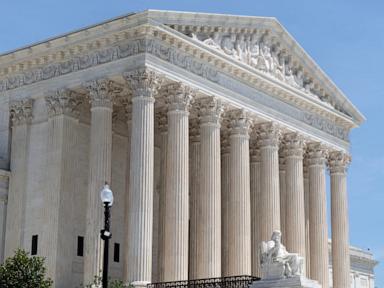
The mainstream media loves a high-stakes legal melodrama. Every time the Supreme Court hands down a major decision on affirmative action, gun rights, or federal regulatory power, commentators wring their hands over a "fraught and reflective" bench wrestling with the ghost of America’s past. They frame these rulings as an existential crisis of conscience, a deeply philosophical battle over the soul of the nation.
It is a comforting narrative. It is also completely wrong.
The Supreme Court is not having an identity crisis. Justices are not up late at night weeping over the historical weight of their pens. What we are witnessing is a cold, mechanical, and entirely predictable unwinding of fifty years of judicial overreach. The Court is not weaponizing history or rewriting race relations out of ideological malice. It is systematically returning political accountability to the only branch of government designed to handle it: a paralyzed, lazy, and deeply grateful United States Congress.
For decades, Congress has treated the Supreme Court like a convenient political shield. Lawmakers get to posture for cameras, raise campaign funds on polarizing issues, and pass intentionally vague statutes. Then, they let unelected judges make the hard choices. When the Court finally says "no more," the political class acts shocked.
Stop buying into the theater. The recent major rulings are not a radical departure from the law. They are a brutal return to structural reality.
The Fiction of the Deeply Reflective Jurist
Pundits paint portraits of the current conservative majority as radical historians inventing new doctrines out of thin air. They point to the heavy reliance on "history and tradition" in recent Second Amendment and abortion rulings as proof of an ideological crusade.
This view misunderstands the fundamental nature of appellate litigation. Judges do not spend their days digging through colonial archives to build cases. The adversarial system dictates that the parties before the Court supply the history. When the Court ruled on gun regulations, it did not embark on a deep, independent investigation into 1791 firearms statutes. It chose between the historical briefs presented by the litigants.
The shift toward history and tradition is not a mystical awakening. It is a pragmatic bureaucratic response to a structural problem. For half a century, the Court relied on balancing tests—vague frameworks where judges weighed societal interests against constitutional rights. Unsurprisingly, those tests allowed judges to insert their own policy preferences under the guise of legal analysis.
By demanding a historical analog, the Court is stripping away its own discretionary power. It is an act of judicial minimalism disguised as maximalism. The Court is telling the legal apparatus that if a right is not deeply rooted in the nation's legal traditions, five justices in robes cannot simply invent it because it feels modern or progressive.
The downside to this approach is obvious. History is messy, contradictory, and frequently ugly. Relying on ancient statutes to govern modern technologies or social structures creates massive friction. But pretending the Court is doing this to act as a shadow legislature misses the point entirely. They are doing it to stop being the legislature.
Race and the Illusion of Judicial Engineering
When the Court ended race-conscious admissions in higher education, the consensus view was that the judiciary had turned its back on racial progress. The ruling was framed as a seismic shift in how America addresses systemic inequality.
Let’s look at the actual mechanics of the decision. The Court did not declare racism solved. It applied a strict, literal reading of the Fourteenth Amendment’s Equal Protection Clause. The legal reality is that affirmative action was always on life support. In the 1978 Bakke case, and again in the 2003 Grutter decision, the Court explicitly stated that racial preferences were a temporary deviation from the constitutional norm. Justice Sandra Day O'Connor famously put a 25-year expiration date on the practice.
The university system chose to treat that explicit warning as a suggestion. They assumed the political winds would always blow in their favor and that the Court would never enforce its own deadlines.
The legal insider knows that affirmative action failed not because the Court changed, but because the justification for it collapsed under its own administrative weight. Universities could no longer defend a system that punished one minority group—Asian Americans—to benefit others, all while hiding behind inscrutable, subjective "holistic" review processes.
The Court did not destroy racial equity. It forced a dishonest administrative state to stop using higher education admissions as a band-aid for a broken K-12 public school system. If the state wants to fix racial disparities, it must do the hard work of funding and fixing early education, rather than asking elite universities to fix it via statistical engineering at age eighteen.
The Administrative State and the Death of Chevron
To understand how the Court is forcing accountability, look no further than the dismantling of Chevron deference. For forty years, federal agencies enjoyed the power to interpret ambiguous laws passed by Congress. If a statute governing the environment, labor, or finance was unclear, courts deferred to the bureaucrats.
The consensus media ignored this ruling because it lacked the emotional punch of culture-war topics. But it is the most significant structural shift in a generation.
Under Chevron, Congress had zero incentive to pass precise legislation. Why spend political capital negotiating the exact text of a clean air bill when you can write a broad, feel-good law and let the Environmental Protection Agency iron out the controversial details? If the public got mad about a regulation, the congressman could shrug and blame the deep state.
By killing Chevron, the Supreme Court did not launch a war on clean air or safe workplaces. It told Congress to do its job. If lawmakers want to regulate a specific industry or curb carbon emissions, they must debate, compromise, and vote on the exact text of the law. They can no longer outsource their constitutional duties to unelected agency heads who change their minds every time a new president enters the Oval Office.
Imagine a scenario where a corporate manager refuses to give clear instructions to their team, expecting the employees to guess the goals, and then fires them when the results do not match an unstated vision. That was the American legislative process under Chevron. The Court just handed the manager a pink slip.
Congress Wants the Court to Be Powerful
The ultimate irony of the ongoing outrage over the Supreme Court is that the legislative branch is perfectly content with the status quo.
Politicians excel at performative outrage. They fundraise on promises to pass federal abortion protections or codify voting rights, knowing full well they have no intention of doing the difficult legislative lifting required to break a filibuster or build a true consensus. It is far easier to let the Supreme Court handle the dirty work, then spend the next election cycle fundraising off the anger generated by the ruling.
If Congress truly believed the Supreme Court was a runaway train destroying American democracy, it possesses the constitutional tools to stop it tomorrow. Congress can alter the size of the Court. It can strip the Court of jurisdiction over specific categories of cases. It can pass targeted legislation to override statutory interpretations.
But Congress does none of these things. Why? Because a powerful, active Supreme Court is the greatest political insurance policy ever invented. It allows lawmakers to remain perpetual critics, absolved of the responsibility of actual governance.
The Supreme Court is not fighting a holy war over history, race, or the law. It is conducting a structural audit of a bankrupt political system. The rulings are not meant to be reflective or comforting. They are a stark reminder that in a constitutional republic, judges are not supposed to be your saviors, and they are certainly not supposed to be your legislature.
If you do not like the direction of the country, stop looking at the steps of the Supreme Court. Walk across the street to the Capitol. The people inside are hoping you stay distracted by the robes.