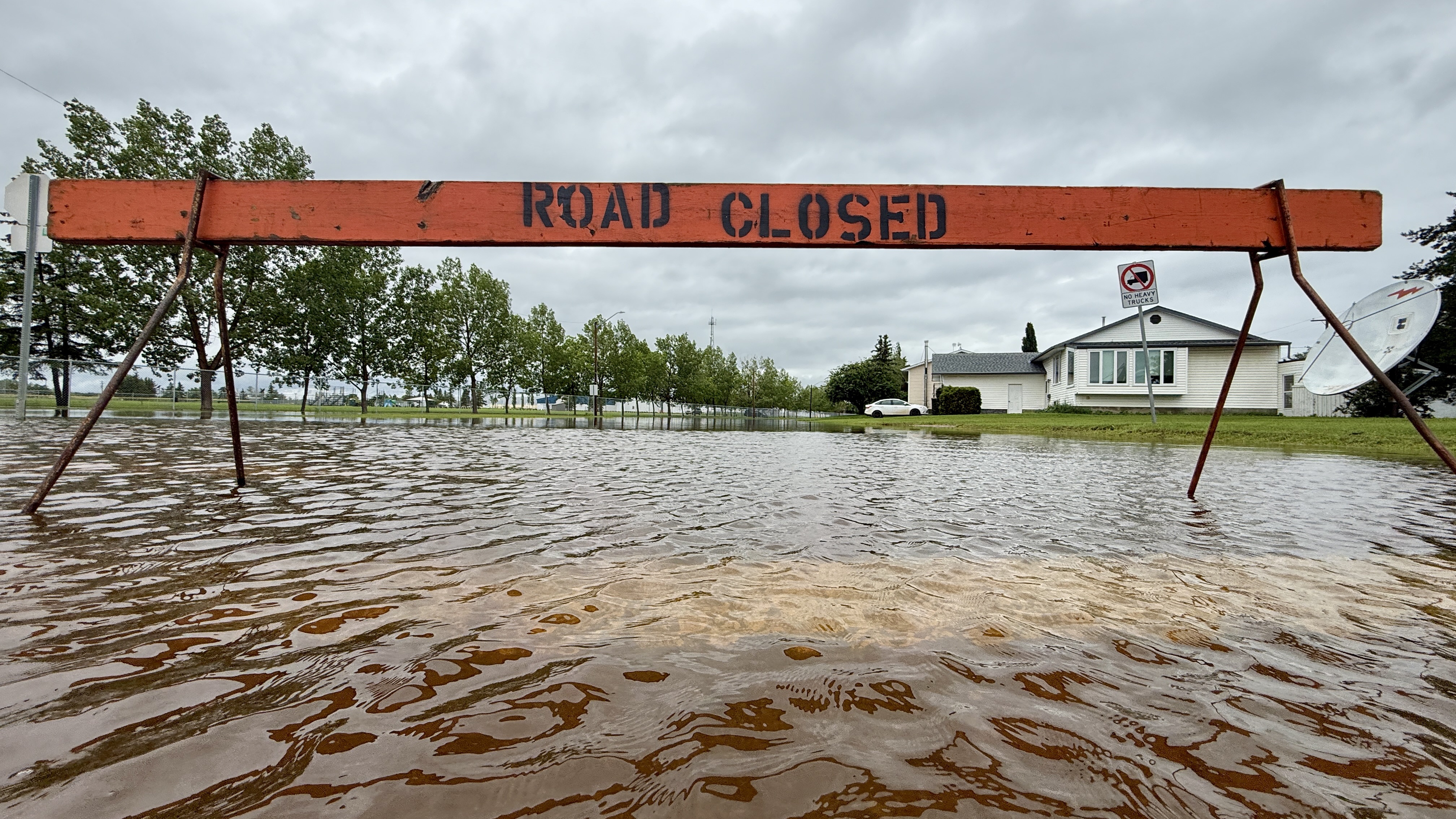
The media loves a predictable script. Rain falls. Rivers rise. The camera cuts to a reporter in a poncho pointing at a submerged playground. Then the clouds break, the sun comes out, and the narrative shifts to recovery. We treat blue skies as a sign that the worst is behind us.
This is a dangerous delusion.
The recent coverage of central Alberta's flooding follows this exact, flawed playbook. Newsrooms announce that sunny skies have returned as if the weather change means the crisis is evaporating. It is not. The water is still rising in downstream communities, and the infrastructure is still buckling.
We need to stop treating floods as temporary weather inconveniences. Weather is just the trigger. The actual disaster is built into our landscape by design.
The Myth of the Natural Disaster
There is no such thing as a purely natural disaster anymore. When a river breaches its banks and inundates a neighborhood, we blame the clouds. We look at historical charts, call it a one-in-a-hundred-year event, and shrug our shoulders at the unpredictability of nature.
This is lazy engineering and worse journalism.
A watershed is a complex, physical system. When you replace thousands of hectares of absorbent wetlands and forests with asphalt, concrete, and suburban strip malls, you change the math of that system. Rain that used to soak into the soil now hits an impervious barrier. It accelerates. It accumulates. It searches for the lowest point, which happens to be the basement of a home built on a known floodplain.
I have spent two decades analyzing municipal infrastructure budgets. I have seen cities pour hundreds of millions of dollars into widening storm pipes while simultaneously approving massive concrete developments right next to critical river arteries. It is a cycle of administrative insanity. We spend billions trying to out-engineer nature after we deliberately destroy the natural systems that were already doing the job for free.
The Sunny Day Trap
Why does flooding worsen when the sun comes out? The answer lies in hydrology, a discipline that mainstream reporting routinely ignores in favor of dramatic B-roll footage.
[Upstream Precipitation] -> [Saturated Soil & Runoff] -> [Delayed Peak Flow Downstream]
When a massive storm hits an upper watershed, the ground acts like a sponge. Eventually, that sponge reaches total saturation. Once it hits capacity, every additional drop of rain becomes instant surface runoff. This water enters tributary streams, which feed into major river systems.
This process takes time. The peak volume of a river—the moment of maximum destruction—often occurs days after the rain stops. While residents celebrate the return of the sun, billions of liters of water are still migrating downstream, gathering momentum.
By treating the end of a rainstorm as the end of the event, emergency management teams and local media lull the public into a false sense of security. The sun is out, so the danger must be passing. In reality, the hydrological clock is just hitting midnight.
The Flawed Premise of Flood Mitigation
Go to any town hall meeting about flood management and you will hear the same demands: build higher dikes, dig deeper channels, install bigger pumps.
This engineering philosophy is fundamentally broken. It relies on the assumption that we can contain a dynamic river system using static concrete walls.
The Levee Effect
When you build a levee to protect a town, you do two things:
- You increase the velocity of the water passing through that channel, making the problem significantly worse for the next town downstream.
- You create a false sense of absolute safety, which encourages developers to build even more high-density housing right behind the wall.
When that levee inevitably fails—because every structural defense has a failure point—the resulting damage is catastrophic. We have seen this play out from the Mississippi River basin to the Rhine in Europe. Static defenses do not solve flooding; they merely store up the energy of the water for a much larger, more destructive future failure.
Stop Trying to Control the Water
The solution is counter-intuitive, expensive, and politically unpopular. We need to stop fighting the water and start giving it room to fail safely.
We must adopt a philosophy of controlled room for the river. This means acknowledging that certain low-lying areas belong to the watershed, not to property developers. It means systematically buying out properties in high-risk zones, tearing down the structures, and reverting that land back into natural wetlands and floodplains.
Imagine a scenario where a city deliberately allows an entire suburban park system or agricultural zone to fill with three meters of water during a surge. By doing so, the city lowers the river's peak height by a crucial half-meter downstream, saving thousands of homes and critical infrastructure like water treatment plants.
This requires a massive shift in how we value land. It requires politicians to tell voters the brutal truth: we cannot protect your home forever, and we are not going to spend taxpayer money to rebuild your basement for the third time in a decade.
The Financial Reality of the Flood Insurance Crisis
The economic model supporting floodplain development is imploding. For decades, subsidized flood insurance and government disaster relief have shielded homeowners and developers from the true financial risk of building in harm's way.
This is a hidden subsidy for bad decisions.
Private insurers are quietly pulling out of high-risk zones entirely. They look at the climate data, look at the municipal zoning laws, and realize the math no longer works. When the private market refuses to price a risk, it means the risk is too high to exist.
Yet, provincial and federal governments step in with disaster financial assistance programs, rebuilding the exact same infrastructure in the exact same spots. This is not compassion; it is financial negligence. We are using public funds to rebuild assets that are mathematically guaranteed to be destroyed again.
Redefining the Question
When a flood happens, the public asks: How do we clean this up as fast as possible?
That is the wrong question.
The correct question is: Why did we allow this asset to be built here in the first place, and how do we permanently remove it from the path of the next surge?
We must change municipal zoning laws to prohibit any new development within the 200-year floodplain. We need to tie federal infrastructure funding directly to a city’s willingness to implement strict, nature-based watershed management strategies. If a city continues to pave over its wetlands, it should not receive a single dollar of disaster relief when the next storm hits.
The blue skies are back over Alberta. The mud is drying, and the political speeches about resilience have begun. But do not look at the sun. Look at the river gauges. Look at the zoning maps. The water will return, and as long as we keep relying on concrete walls and short memories, we will keep losing.
Stop rebuilding the floodplains. Pack up, move the line back, and let the river have its way.