The Sweet Illusion
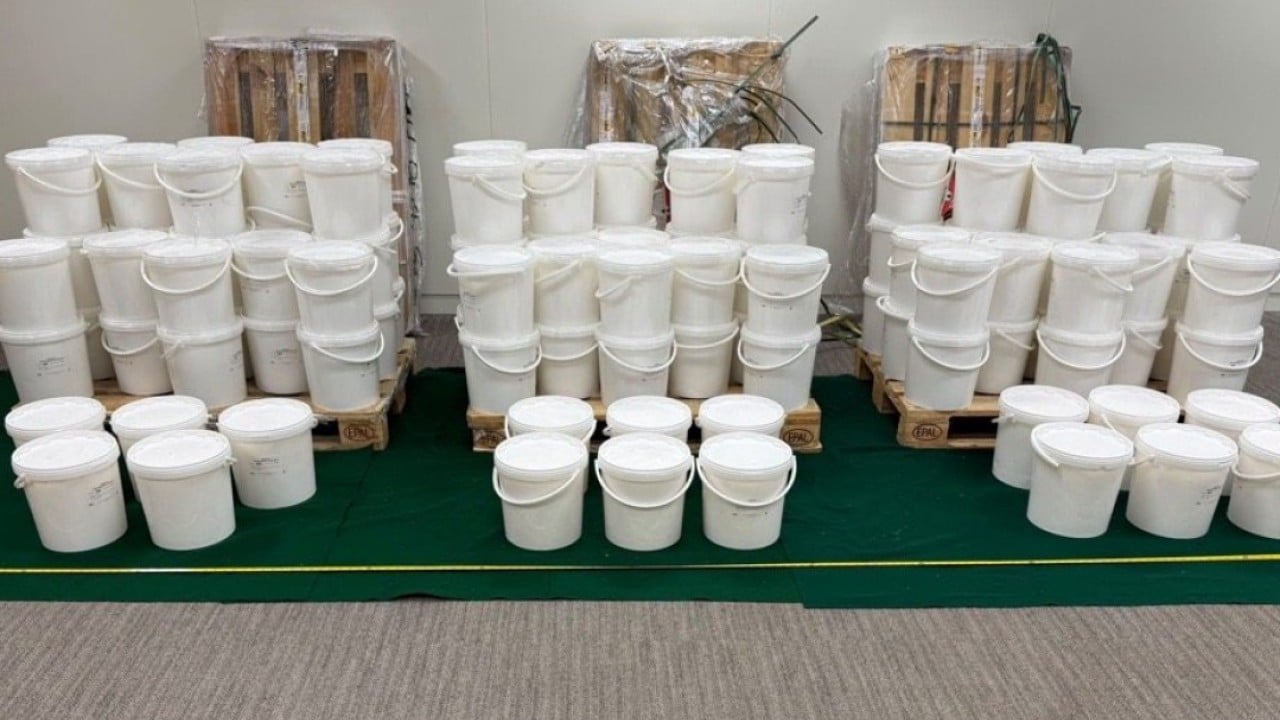
Three individuals are currently in custody following a major aviation security breach that highlights a growing vulnerability in international logistics. Border enforcement officials recently intercepted a massive 131-kilogram shipment of ketamine. The illicit cargo was not hidden in false bottoms or welded into machinery. Instead, it was meticulously pressed, shaped, and packaged to look identical to ordinary sugar cubes, moving directly through standard air freight channels.
This interception exposes a sophisticated shift in how international narcotics syndicates are exploiting global supply chains. Criminal networks are abandoning crude concealment methods. They are migrating toward industrial-scale chemical manipulation, turning synthetic drugs into everyday consumer goods to slip past standard customs screenings.
Anatomy of the Air Cargo Blindspot
Air freight moves on a relentless clock. Unlike maritime shipping, where containers might sit for days, air cargo relies on rapid transit times to justify its premium cost. Smugglers know this. They exploit the intense pressure on customs inspectors to clear pallets quickly, betting that the sheer volume of commerce will mask their cargo.
The choice of sugar cubes as a camouflage agent is brilliant in its simplicity.
- Density Match: Raw ketamine powder can easily trigger anomalies on standard X-ray scans due to its crystalline structure. By compressing the substance into dense, uniform cubes, the smugglers altered its visual profile on imaging screens, making it indistinguishable from a pallet of palletized food products.
- Olfactory Masking: Drug-sniffing K9 units are highly effective against organic narcotics like cocaine or heroin. Synthetic compounds like ketamine present a different challenge. When sealed inside industrial-grade, food-safe packaging, escaping scent molecules are minimized, neutralising one of law enforcement's best detection tools.
- Documentation Fraud: The shipment was backed by legitimate-looking commercial paperwork. Syndicates frequently set up front companies or hijack the identities of established exporters to generate clean bills of lading. To a busy customs agent, a manifest reading "Refined Sugar" matching a pallet of white cubes does not immediately raise a red flag.
This is a structural flaw in global trade. Security frameworks rely heavily on data analysis and manifest anomalies to flag high-risk shipments. When a criminal enterprise takes the time to perfectly align the physical reality of the cargo with a fraudulent paper trail, the system falters.
The Ketamine Boom Business Model
To understand why syndicates take such elaborate risks, look at the economics of the modern drug trade. Ketamine has transitioned from a niche veterinary anesthetic and underground club drug into a highly lucrative global commodity.
[Low-Cost Chemical Production] -> [Industrial Packaging] -> [High-Yield Air Transit] -> [Local Distribution]
The profit margins are staggering. Production of synthetic drugs requires no vast agricultural fields or vulnerable harvest seasons. It happens in industrial laboratories, often disguised as legitimate chemical manufacturing plants. A batch that costs a few thousand dollars to manufacture in a regional lab can command millions of dollars on the streets of major metropolitan areas once successfully imported.
This economic reality fuels the innovation in smuggling techniques. The loss of 131 kilograms hurts a syndicate, but it is rarely a fatal blow. It is factored into the cost of doing business. The fact that organizers were willing to invest in the machinery required to mold and package ketamine as sugar cubes proves they are operating with corporate-level research and development budgets.
The Failure of Current Screening Technology
Standard airport cargo screening relies heavily on dual-energy X-ray systems. These machines are excellent at identifying dense metals, weapons, and shielding materials. They are far less reliable at differentiating between various organic compounds of similar density.
A block of compressed sugar and a block of compressed ketamine look remarkably similar under standard spectroscopic analysis if the machine is not calibrated for specific molecular weights.
The Technology Gap
| Screening Method | Vulnerability to Chemical Camouflage | Operational Bottleneck |
|---|---|---|
| Dual-Energy X-Ray | High; struggles with similar organic densities | Low; fast processing |
| K9 Detection | Moderate; neutralized by airtight food packaging | High; dogs tire quickly |
| Automated Manifest Analysis | High; easily bypassed via clean front companies | Low; relies entirely on data integrity |
| Manual Physical Inspection | Low; destructive testing reveals the truth | Extremely High; grinds commerce to a halt |
To catch these sophisticated shipments consistently, border agencies must deploy advanced technology like Raman spectroscopy and Trace Detection Portals at scale. These tools can identify chemical signatures through packaging material. However, deploying them across every major cargo hub requires massive capital investment and introduces delays that commercial airlines and logistics giants fiercely resist.
Inside the Logistics Investigation
Arresting the couriers or the low-level logistics employees who pick up the cargo is a standard law enforcement response. It rarely disrupts the actual supply chain. The real work begins after the seizure, as investigators trace the digital and financial breadcrumbs left behind by the syndicate.
International syndicates do not use cash for multi-million dollar freight bookings. They use complex networks of shell corporations, trade-based money laundering schemes, and digital currencies. An investigator must look at who paid the freight forwarder, which IP addresses were used to track the shipment, and where the packaging materials were sourced.
The three arrests in this case are likely just the surface. True disruption requires identifying the chemical suppliers, the logistics insiders who facilitate the smooth passage through warehouse hubs, and the financiers backing the operation. Without that deep dissection, another shipment, perhaps disguised as a different household staple, will simply take its place next week.
Supply Chain Integrity Under Siege
Global shipping infrastructure is built on trust and volume. When that trust is weaponized, the implications ripple far beyond the criminal justice system. Legitimate businesses face increased scrutiny, longer customs delays, and rising insurance premiums as authorities tighten regulations to combat these new tactics.
The air cargo industry must adapt. Relying on paper manifests and basic visual scans is no longer sufficient when facing adversaries who operate with the sophistication of multinational consumer goods corporations. The sugar cube seizure is a stark warning that the boundary between legitimate commerce and illicit trafficking has dissolved into a game of molecular mimicry.