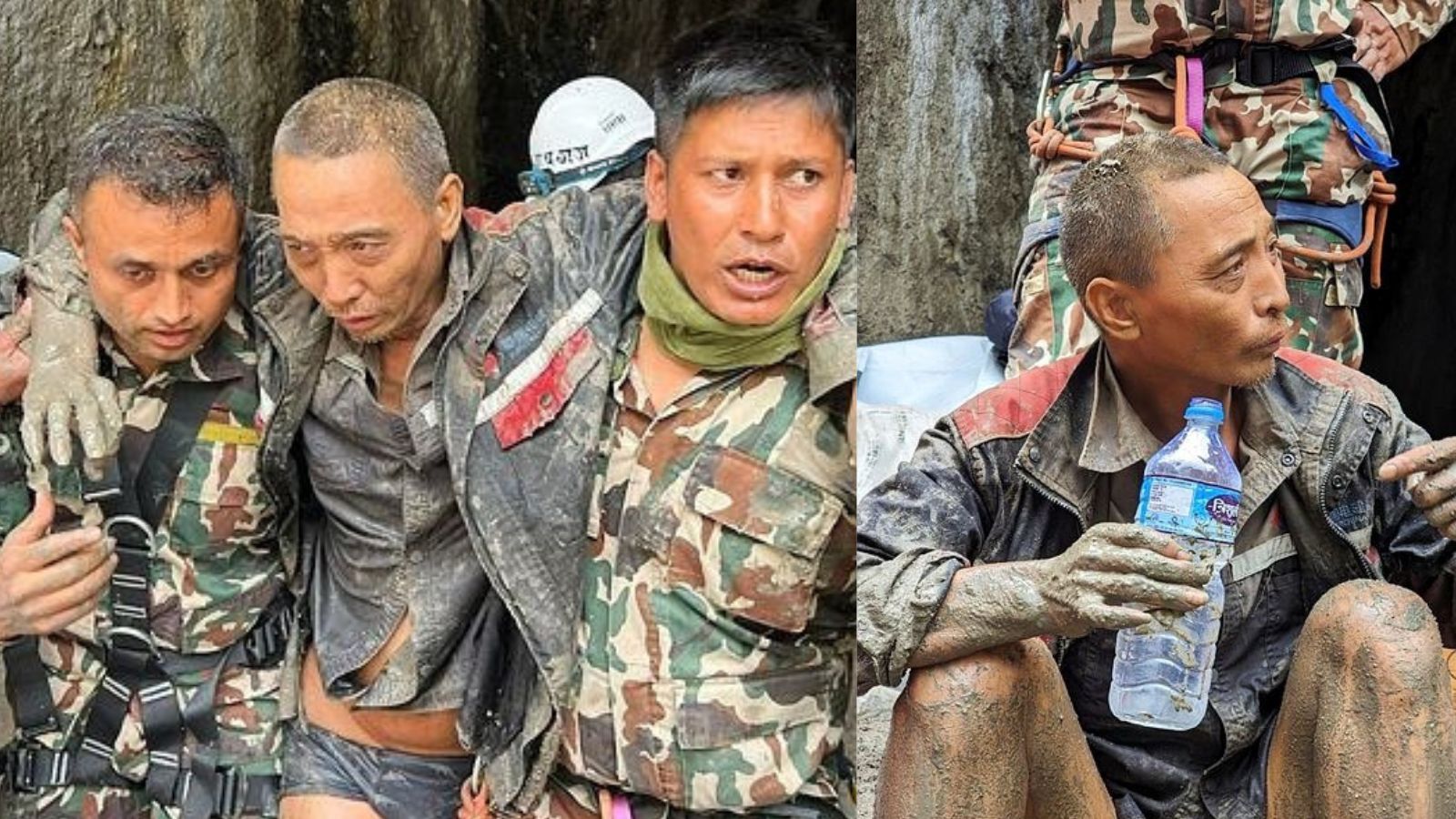
Subterranean search operations following glacial outburst floods are fundamentally logistics problems masked as rescue missions. When an ice and rock collapse along the Nepal-Tibet border triggers catastrophic debris flows through the Trishuli and Bhotekoshi river basins, underground infrastructure like the Chilime and Langtang hydropower projects cease to function as engineering assets and instead become high-pressure sediment traps.
Understanding the constraints of these operations requires analyzing the mechanics of subterranean blockages. Water, rock, and silt do not merely fill a tunnel; they compact under hydrostatic pressure into dense, concrete-like matrices. Standard heavy machinery stationed at surface level is functionally useless until a multi-variable engineering sequence clears the threshold.
The Three Operational Bottlenecks in Subterranean Disaster Response
The physics of subterranean flood recovery are dictated by three compounding variables that restrict rescue velocity.
The first bottleneck is hydraulic head management. When a tunnel network experiences massive inundation, water becomes trapped behind subterranean blockages or fills vertical shafts. In the Chilime operations, specialized teams cannot simply dig into the matrix because standing water obscures structural collapses and risks secondary liquefaction of the mud walls. Active dewatering must precede manual or mechanical excavation. The insertion of high-capacity pumps to drain water-logged passages is the prerequisite for structural stabilization.
The second bottleneck is logistical throughput regarding heavy equipment access. Hydropower projects are constructed in rugged, vertical terrain characterized by narrow gorges. Flash floods routinely obliterate access roads, bridges, and benches surrounding portal entrances. Before excavators and pneumatic tools can operate at the tunnel face, engineering detachments must construct temporary access tracks capable of supporting multi-ton machinery. Without a stable foundation at the portal, mechanical clearing rates drop close to zero.
The third bottleneck is atmospheric and structural integrity. Tunnels impacted by seismic or glacial flash floods experience shifting loads. Unlined or semi-lined sections become vulnerable to collapse as internal support structures buckle under dynamic fluid loads. Rescuers operating within these spaces must balance the velocity of extraction against the risk of roof falls, necessitating continuous shoring, timbering, or the installation of safety ropes before deeper probes can proceed.
Cross-Border Technical Integration
Bilateral disaster response frameworks are often evaluated through diplomatic metrics, but their efficacy is determined by technical interoperability. When a specialized tunnel rescue team integrates with a host nation defense force—such as the deployment of Indian specialists alongside the Nepali Army at Chilime—success relies on standardized protocols for confined space extraction.
Military engineering corps maintain distinct advantages in these scenarios due to structural similarities between combat engineering and disaster response. Both disciplines require rapid asset deployment, self-sustaining logistics lines, and the ability to operate in degraded environments without stable power or communication infrastructure.
The coordination mechanism operates on dual tracks: physical excavation at the primary portal and remote technical consultation. In complex subterranean incidents, institutional memory matters. Former plant operators and project design engineers possess structural layouts that dictate where trapped personnel are statistically likely to seek refuge during an inundation event, such as high-level service chambers or air pockets within penstock galleries. Distributing structural blueprints via real-time communication channels allows tactical teams to bypass blind probing and target high-probability survivability zones directly.
The Cost Function of Subterranean Probing
Every meter gained inside a flood-impacted tunnel carries an escalating cost in time, equipment wear, and physiological strain on the operator.
Total Operation Time = Access Restoration + Dewatering Rate + Mechanical Debris Clearing + Manual Probing
When access restoration is delayed by geography, the temporal window for locating survivors in sealed air pockets narrows exponentially. Mud infiltration reduces oxygen availability and increases carbon dioxide concentrations within confined spaces long before complete structural inundation occurs. Consequently, rescue operations must transition rapidly from surface clearance to internal stabilization.
The deployment of medical units directly to the staging area addresses immediate post-extraction trauma, but the upstream engineering metrics dictate whether those medical assets ever make contact with viable survivors. Establishing temporary tracks, maintaining continuous drainage, and securing roof stability remain the non-negotiable variables of subterranean survival engineering.
Construct a permanent, redundant early-warning telemetry network linked directly to automated portal sealing mechanisms in high-risk glacial lake outburst flood zones to minimize future subterranean inundation latency.