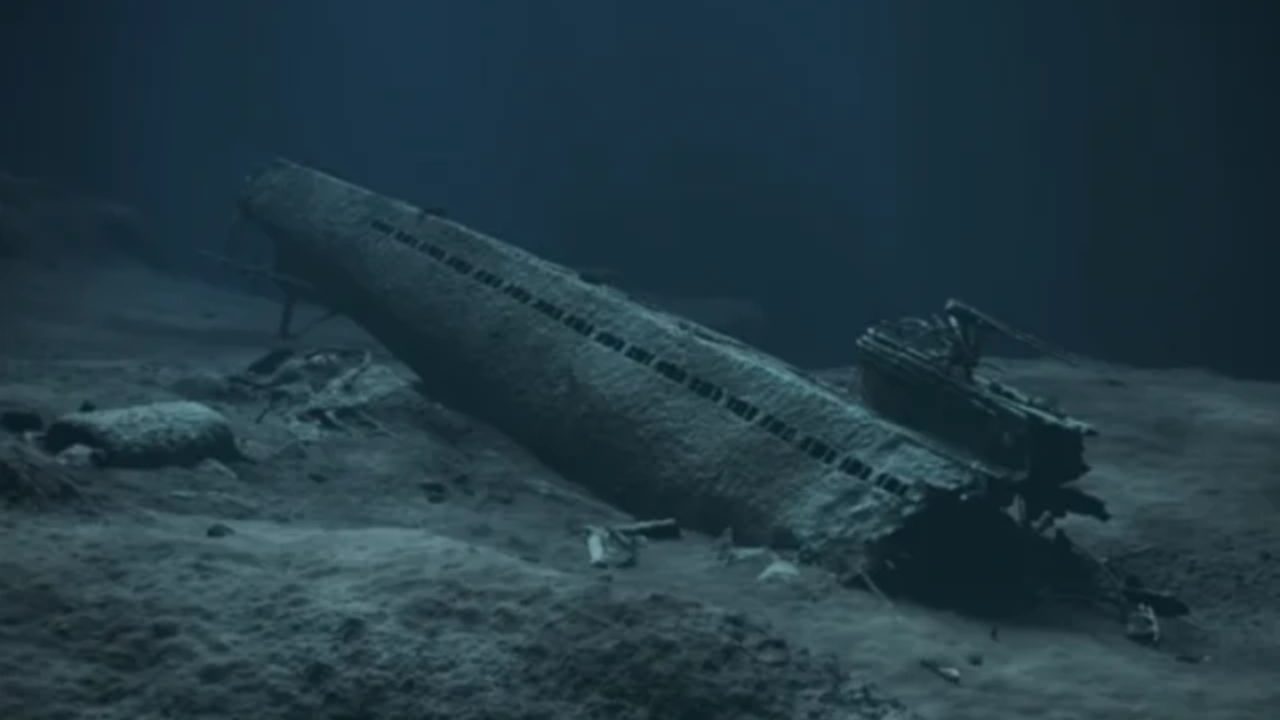
Environmental remediation in marine architecture is rarely limited by pure physics; it is constrained by the interaction between degraded ordnance, toxic industrial inputs, and localized sediment dynamics. The ongoing containment and selective recovery operations surrounding U-864, a German Type IXD2 U-boat sunk off the coast of Fedje, Norway, in February 1945, present a case study in high-consequence underwater risk management.
At a depth of approximately 150 meters, the fragmented hull rests with an estimated cargo capacity of up to 67 tonnes of metallic mercury, originally destined for the Imperial Japanese military supply chain via the Yanagi missions. Decades of structural decay have transformed an isolated military loss into an active geomorphological hazard, forcing marine authorities to balance the perils of active extraction against the risks of passive containment.
The Physical and Chemical Baseline
The baseline environmental threat is defined by the physical state of the cargo containers and the chemical behavior of liquid elemental mercury in a marine benthic environment. Historical documentation indicates that the mercury was stored in steel containers housed within the submarine's keel boxes. Over eight decades, seawater corrosion has breached the integrity of these containment vessels.
Field assessments by the Norwegian Coastal Administration (Kystverket) indicate that approximately 80 percent of the containers recovered or inspected show structural compromise, leading to free-flowing mercury pooling within the keel structure and migrating into the surrounding marine sediment.
The contamination footprint spans an estimated area exceeding 40,000 square meters of seabed. The primary vector for ecological integration is methylation. When inorganic mercury enters anaerobic marine sediment, sulfate-reducing bacteria convert it into methylmercury. This organometallic compound bioaccumulates through the trophic web, concentrating within lipid tissues of predatory fish species. This mechanism forced the implementation of long-term commercial and recreational fishing restrictions around the Fedje archipelago to mitigate human dietary exposure.
The Remediation Trade-Off
Engineering interventions in deepwater salvage operate under a rigid risk matrix: intervention versus disturbance. Two primary strategic frameworks have been evaluated for the U-864 site: comprehensive physical salvage and in-situ encapsulation.
Active Extraction versus Sediment Resuspension
The execution phase involving targeted recovery—such as the retrieval of damaged containers from the bow sections—illustrates the central engineering paradox. Extracting compromised vessels requires mechanical manipulation of a structurally unstable hull. This process carries an inherent probability of structural collapse or localized sediment agitation.
When mechanical arms or remotely operated vehicles (ROVs) disturb the seabed mud mixed with free-flowing mercury, a toxic plume can be mobilized into bottom currents. Consequently, every kilogram of mercury recovered through active salvage must be weighed against the immediate release of dissolved and particulate mercury into the water column during operations.
The Ordnance Variable
Compounding the chemical hazard is the presence of unexploded ordnance (UXO). The submarine was heavily armed with G7e torpedoes carrying high-explosive warheads, alongside its own fuel reserves. The energetic materials within these munitions have spent over eighty years exposed to high-pressure, corrosive saltwater. Chemical stabilization of propellants and primary explosives degrades over time, rendering the ordnance highly sensitive to mechanical shock, thermal shifts, or structural torque.
An unmitigated detonation during salvage would not only endanger surface personnel and support vessels but would instantly aerosolize and disperse the localized mercury inventory across a wide maritime radius, transforming a localized benthic problem into a regional catastrophe.
Engineering Protocols for Permanent Sealing
Given the prohibitive risks of complete hull extraction, regulatory bodies have increasingly turned toward heavy engineering isolation, often categorized as subsea capping or sarcophagus construction. This approach relies on isolating the hazard from the dynamic biosphere through multi-layered physical barriers.
The operational parameters of subsea capping require precise material layering to achieve structural and chemical equilibrium:
- Foundation Layer: Application of fine-grained sand or specialized geotextile mats directly over the wreck footprint to stabilize exposed sediment and arrest the migration of free-flowing mercury droplets without generating high-pressure displacement waves.
- Ballast and Armoring Layer: Placement of graded gravel and heavy rock armor designed to resist scouring from deep-sea bottom currents, commercial bottom-trawling gear impact, and anchor drops.
- Monitoring Array: Integration of acoustic sensors, geochemical sniffers, and periodic core sampling nodes within the perimeter to measure interstitial water pressure, pore-water mercury flux, and structural settling rates over a multi-decade horizon.
Similar encapsulation methodologies have been deployed globally for contaminated industrial sites and legacy marine hazards, demonstrating that passive containment frequently yields a lower cumulative environmental risk profile than invasive salvage when dealing with fragile, hazardous structures.
Strategic Forecast for Deepwater Hazard Mitigation
The management of the U-864 wreck sets a technical benchmark for dealing with industrial and military detritus from twentieth-century conflicts resting on continental shelves. As autonomous subsea robotics and high-precision imaging mature, maritime authorities possess greater capability to execute hybrid operations—extracting easily accessible, high-risk concentrated elements while permanently entombing structurally volatile sections.
The definitive resolution for such sites relies not on eliminating the hazard entirely, which thermodynamics and structural decay render impossible, but on establishing an engineered equilibrium that suppresses biological uptake and isolates toxic inventory from the marine food web indefinitely.