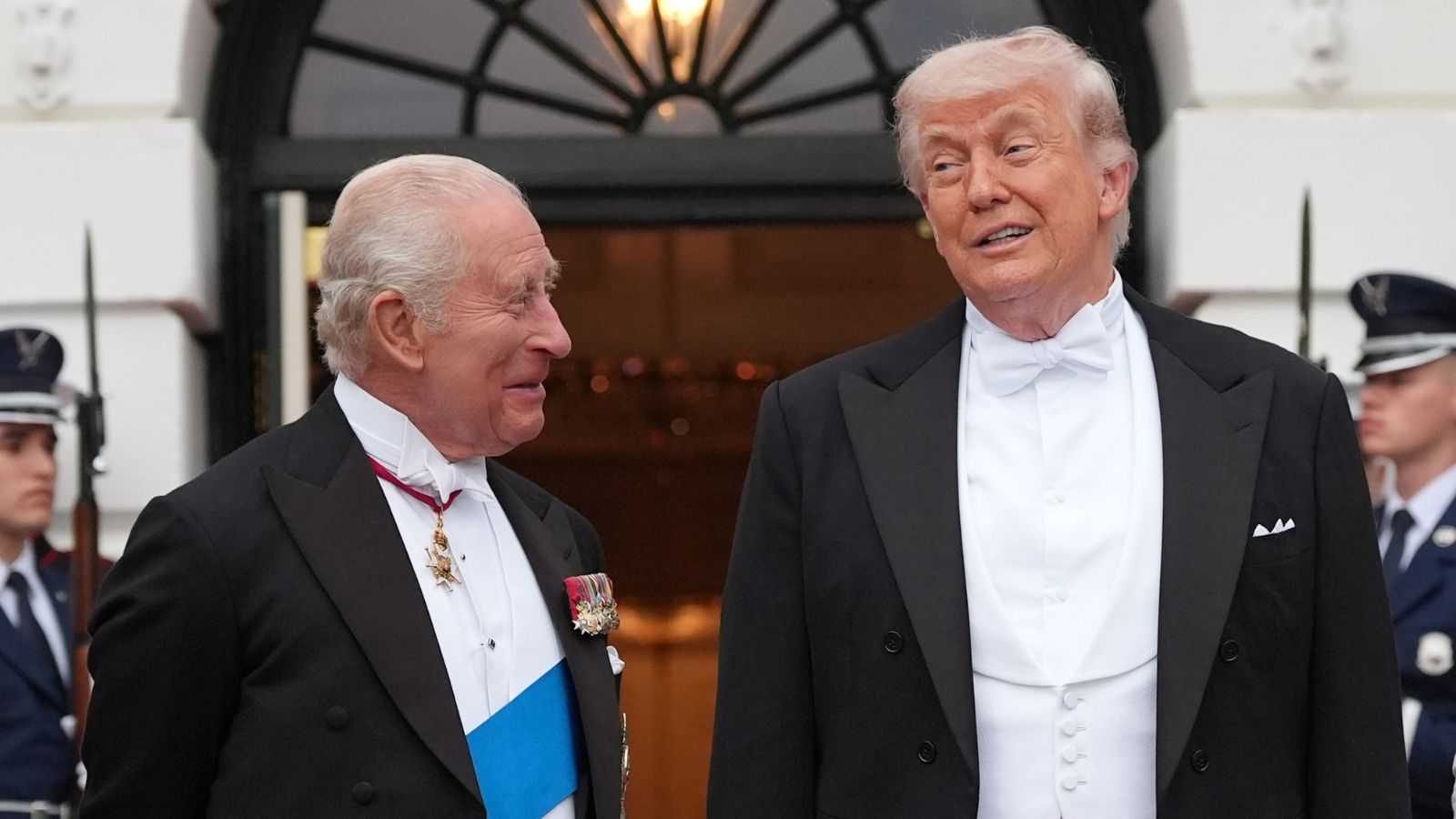
The press is currently swooning over a piece of brass. They’ve spent the last forty-eight hours dissecting the symbolic "depth" of King Charles gifting a historic submarine bell to Donald Trump during a State Dinner. The narrative is as predictable as it is lazy: it’s a "ringing endorsement" of the Special Relationship, a nod to shared naval supremacy, and a masterclass in soft-power diplomacy.
It is none of those things. It is a desperate, low-cost gambit by a British establishment that has forgotten how to actually negotiate.
While the media focuses on the polished surface of a maritime relic, they are ignoring the cold reality of the transaction. Gift-giving at this level isn't about friendship; it is about leverage. Or, in this case, the total lack of it. By handing over a literal alarm bell, the UK isn't signaling strength. It’s signaling that it has run out of actual chips to put on the table.
The Myth of Symbolic Capital
Mainstream pundits love to talk about "symbolic capital." They argue that a gift from the Royal Collection carries weight that transcends mere trade policy or defense spending. This is a comforting delusion for people who spend more time in ballrooms than boardrooms.
In the real world of geopolitical commerce, symbolic capital has a remarkably short half-life. I have watched governments and multi-billion-dollar firms attempt to "gift" their way out of structural disadvantages for decades. It never works. You don't trade a bell for a favorable tariff on steel. You don't trade a piece of history for a commitment to NATO spending.
When you lead with symbolism, you admit that you can no longer lead with substance. The competitor articles are busy romanticizing the "heritage" of the bell. They should be asking why the UK is raiding its museums to fill a gap in its foreign policy.
The Mechanics of the Gilded Distraction
Let’s look at the actual physics of this interaction. A State Dinner is a high-stakes performance designed to mask the friction of divergent national interests. The bell serves a very specific mechanical function: it provides a non-controversial talking point to drown out the silence where actual policy agreements should be.
- The Diversion: It shifts the conversation from the AUKUS nuclear submarine delays to a shiny object.
- The Flattery: It appeals to the recipient's known affinity for gold, brass, and traditional displays of authority.
- The Cheap Out: It costs the Treasury essentially nothing compared to the billions in defense concessions the UK actually needs.
If you are an investor looking at UK-US relations, do not look at the bell. Look at the fact that there was no joint statement on trade. Look at the diverging stances on agricultural standards. The bell is a smoke machine.
Why the "Special Relationship" Is a Bad Investment
The term "Special Relationship" is the most successful piece of marketing in the history of the 20th century. It suggests a bond that operates outside the laws of supply and demand. It’s a lie.
Nations do not have friends; they have interests. The UK’s insistence on using 19th-century diplomatic tools in a 21st-century transactional environment is a strategic failure. While the King is gifting bells, the rest of the world is securing lithium deposits and locking down semiconductor supply chains.
The "lazy consensus" says this gift strengthens the bond. The nuance they missed is that it actually highlights the UK’s growing irrelevance. When you are a junior partner, you provide the "vibes" while the senior partner provides the direction. The bell is the ultimate "vibes" play.
A Thought Experiment in Realpolitik
Imagine a scenario where, instead of a bell, the UK delegation arrived with a concrete proposal for a unified data-sovereignty framework or a specific carve-out for British fintech firms in the US market. The headlines would be drier. The dinner would be more tense. But the long-term ROI would be astronomical.
Instead, we got a bell. A bell rings once and then goes silent. A trade agreement pays dividends for fifty years.
The Expertise Gap: Why Diplomats Are Failing at Business
I have sat in rooms where "cultural exchange" was used as a band-aid for failing ventures. The pattern is always the same. When the numbers don't add up, the "experts" start talking about legacy, shared history, and mutual respect.
True expertise in negotiation requires the ability to walk away. By leaning so heavily into the pomp and circumstance of the Royal Family, the UK signals that it cannot walk away. It is doubling down on a relationship that is increasingly one-sided.
- Fact Check: The US trade deficit with the UK is widening in specific sectors.
- Fact Check: UK defense spending, while high for Europe, still relies heavily on American R&D and platform integration.
The bell doesn't fix this. It just makes the room louder while the house is being sold.
The Danger of Nostalgia as Policy
Nostalgia is a terminal illness for an economy. The gift of a submarine bell is a direct appeal to a maritime past that no longer exists. The UK is no longer the "workshop of the world," and its navy is a fraction of its Victorian peak.
When you gift a piece of your past, you are telling the world that your past is more valuable than your future. It is a confession of stagnation. If the UK wanted to impress a billionaire president who prides himself on "the deal," they should have gifted a stake in a fusion energy startup or a breakthrough in carbon capture technology. They should have gifted the future.
Breaking the Premise: The Question You Should Be Asking
The media asks: "What does this gift mean for the friendship between the two leaders?"
The real question is: "What is the cost of maintaining the illusion of this friendship?"
The cost is the continued delay of a comprehensive trade deal. The cost is the UK's inability to pivot its foreign policy toward the Indo-Pacific without asking for permission. The cost is the billions of pounds lost to the friction of being a mid-tier power trying to play at the top table with a gift shop inventory.
Actionable Advice for the Realist
If you are a business leader or a policy wonk, ignore the bells and whistles. Literally.
- De-index from the Hype: When you see "State Dinner" news, look for the quiet policy failures that happened on the same day.
- Watch the Military-Industrial Complex: The bell is a nod to naval history. Watch the actual contracts for the SSN-AUKUS program. If those aren't moving, the bell is just scrap metal.
- Invest in Substance: Stop buying the "soft power" narrative. Soft power is what you use when your hard power is at the mechanic.
The bell is a perfect metaphor for the current state of British diplomacy: it’s hollow, it’s loud, and it only makes a sound when someone else strikes it.
The competitor's article wants you to feel a sense of pride in this historic exchange. I am telling you to feel a sense of urgency. We are watching the liquidation of a nation’s history to pay for a temporary seat at a table where the menu is already decided.
Stop listening to the ringing. Look at the bill.