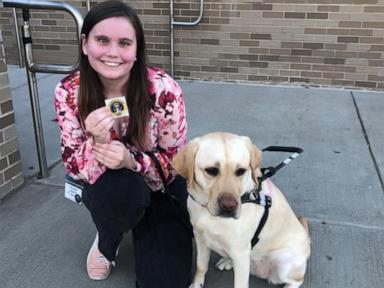
Crossing an ocean with a working dog sounds romantic until you are standing in an airport queue with damp paperwork, a ticking clock, and an unfamiliar transit system ahead of you. When a blind college student from Virginia heads to Scotland with her guide dog Beasley, the headlines focus on scenic adventures and heartwarming moments. Rightly so. Watching a working team take on Scottish streets and campuses reminds people that visual impairment doesn't cancel out ambition or curiosity.
Yet real life abroad isn't a montage. Cobblestones feel different under paws than suburban asphalt. Traffic flows on the left. Weather shifts in twenty minutes, and veterinary rules carry strict deadlines that leave zero room for guesswork.
If you're blind or low-vision and thinking about studying in Scotland with a guide dog, the good news is that it's completely doable. The catch is that success depends less on inspiration and more on logistics, orientation habits, and knowing how guide dog partnerships work when the harness comes off.
Why Studying Abroad With a Guide Dog Changes the Equation
Most study-abroad advice assumes you can figure things out on the fly. You get lost, you ask a passerby, you take a wrong bus, and you laugh about it later.
With a guide dog, getting lost isn't just annoying. It can put both of you in awkward or unsafe spots, especially around busy roads, construction zones, or crowded stations. You aren't merely learning a new university syllabus or housing setup; you're building a brand-new mental map of a foreign environment while keeping your dog calm, healthy, and tuned in.
In Scotland, historic towns and older campus buildings add their own quirks. You'll run into uneven stone paving, narrow sidewalks, tight historic closes, and sudden elevation changes. A well-trained guide dog adapts remarkably well to new terrain, but adaptation takes time and structured routes. Expect your first few weeks to feel mentally exhausting. That's normal, not a sign you picked the wrong program.
Organizations like Guide Dogs UK and educational advocates such as the Thomas Pocklington Trust emphasize early preparation for students with sight loss. From my experience looking at how international disabled students fare abroad, the ones who thrive treat mobility and housing logistics like a second class—starting months before departure rather than the week before flights open.
What People Get Wrong About Guide Dogs and Travel
One of the biggest myths around guide dogs is that the dog "knows where to go." Honestly, if you hand over total control and hope the dog figures out the route, you're setting yourself up for frustration.
A guide dog doesn't read street signs or campus maps. The handler stays in charge of navigation—using route memory, audio cues, tactile landmarks, and transit info—while the dog reads the immediate physical environment to steer around obstacles, stop at curbs or steps, and exercise intelligent disobedience when a command would lead into danger. Moving to Scotland means rebuilding your spatial cues from scratch, from the pitch of traffic to the layout of lecture halls.
Another myth is that working dogs are stoic machines who love being "on duty" all day. They aren't. Working hard requires real off-duty recovery. When a dog like Beasley gets out of harness and lets loose—whether that means zooming across grass or shaking off tension—that isn't misbehavior. It's essential decompression. A dog that never gets genuine downtime and play can burn out or lose focus when you actually need clear-headed guidance.
There's also a widespread assumption that international rules treat assistance dogs identically everywhere. They don't. While anti-discrimination laws and airline policies have specific provisions for assistance animals, entry rules into Great Britain still enforce strict animal health standards to protect against diseases like rabies and tapeworm.
Navigating UK Entry Rules Without Losing Your Mind
If you're flying into Scotland from outside the UK, don't treat pet and assistance-dog entry rules as a formality. According to official UK government guidance on bringing dogs to Great Britain, dogs entering Great Britain generally need a microchip, a valid rabies vaccination (with the required waiting period after vaccination), appropriate travel documentation, and—for most countries—tapeworm treatment given by a vet between 24 hours and 5 days before arrival.
Miss a window or get a date stamped wrong, and you risk delays, re-treatment, or quarantine headaches at arrival. Experienced travelers with guide dogs often mention how stressful airline check-in and border checks can feel when staff aren't familiar with every nuance of international certification or transit routing.
Keep these practical safeguards in mind before you book:
- Start vet paperwork early: Confirm microchipping, rabies history, and exact timing rules with a vet experienced in UK entry requirements well ahead of your trip.
- Watch the tapeworm clock: If tapeworm treatment is required for your route, double-check the exact 24-hour to 120-hour window against flight times and potential delays.
- Carry clean paper backups: Digital files are great, yet printed copies of vaccination records, health certificates, and school credentials save time when counters move slowly or connectivity drops.
- Notify airlines early: Contact your carrier's disability assistance desk well in advance to confirm cabin seating, bulkhead space, and transit support.
Campus Life, Public Transit, and Everyday Scottish Realities
Once you're settled in Scotland, daily life shifts from customs forms to practical routines. Scottish cities and university towns offer plenty of walkable areas and public buses or trains, which can be a huge plus for independent travel. Still, every campus has blind spots in its accessibility plans.
University disability offices often mean well, yet brochure promises don't always match real-world foot traffic. A route that looks simple on paper might have awkward outdoor stairs, bike lanes cutting across pedestrian paths, or crowded student hubs right between ten-minute lecture blocks. Walking—or riding—key routes before classes start lets you and your dog learn the rhythm without rushing.
Weather is another factor people underestimate. Rain and wind change how sounds carry, how surfaces feel underfoot, and how quickly a dog gets soaked or chilled. Having waterproof gear for yourself, a towel by the door, and a plan for drying off after walks makes everyday outings way smoother.
Practical Next Steps Before You Go
If you're planning a semester or full degree in Scotland with a guide dog, break the prep into concrete moves rather than worrying all at once:
- Email the university's disability or accessibility team early and ask specific questions about housing floor plans, grassy relief areas near accommodation, and campus orientation support.
- Map your core routes—dorm to main teaching buildings, nearest grocery or pharmacy stops, and regular transit stops—and practice them at quieter hours before peak rush times.
- Build a routine for both work and play, carving out safe, enclosed or approved spaces where your dog can drop the harness, shake off stress, and just be a dog.
- Set up local veterinary care early so you aren't scrambling for routine checkups, paw care, or parasite prevention once term gets busy.
Going abroad with a guide dog won't erase every hurdle, and it shouldn't have to look effortless to count as a win. Prepare carefully, give yourself and your dog room to adjust, and go enjoy the journey.
Blind student, guide dog enjoy adventures in Scotland on YouTube features an ABC News interview with a blind college student from Virginia studying in Scotland with her guide dog Beasley, directly illustrating the real-world student and guide dog experience in Scotland discussed above.