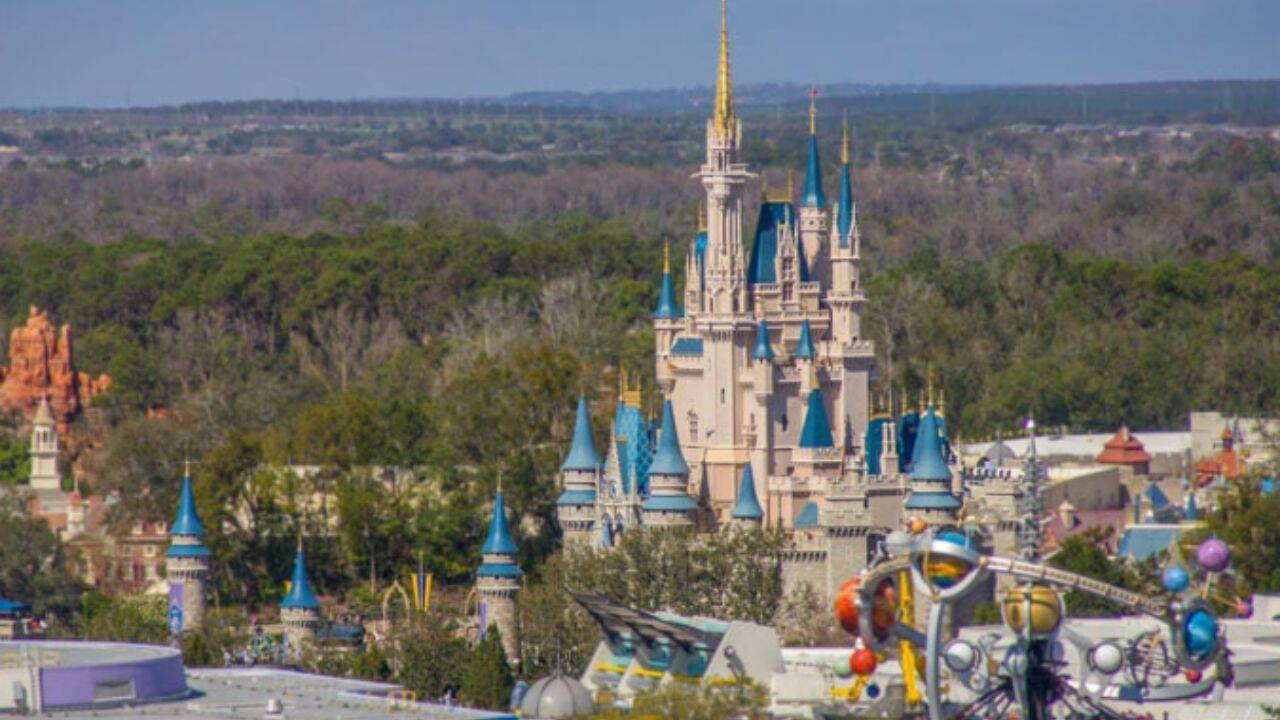
Long before the Anaheim skyline was swallowed by neon marquees and monorails, a patch of orange groves and stubborn resistance sat right in the middle of what would become the Happiest Place on Earth.
Urban legends love a clean narrative. Over decades, folklore surrounding Disneyland construction cast Walt Disney as an unstoppable corporate titan crushing all obstacles, while local holdouts stood as heroic defenders of working-class independence against capitalist expansion. The most persistent myth centers on a family farm that allegedly rejected an astronomical ninety million dollar offer to sell their land, forcing Walt Disney to build his entire magic kingdom completely around their stubborn property.
It makes for a fantastic campfire story. It is also entirely historically false.
When Walt Disney Productions began secretly acquiring thousands of agricultural acres in Orange County through various dummy corporations during the early nineteen-fifties, land was cheap and farmers were eager to cash out of citrus. The Ronquillo family, the Knudsen property, the Dominguez estate, and dozens of other local agrarian landowners sold their acreage for modest sums averaging between three thousand and ten thousand dollars per acre. No multi-million dollar holdout demands occurred because nobody possessed that kind of leverage before the dirt was broken. The multi-million dollar figure floating around modern social media feeds is a complete fabrication born from internet folklore, conflating modern real estate valuations with mid-century agricultural economics.
Yet the real estate acquisition strategy behind Disneyland remains a masterclass in covert corporate maneuvering, ruthless zoning manipulation, and municipal collusion. Understanding how Walt Disney actually secured his empire requires stripping away the fairy dust and looking at the raw ledger of postwar California expansion.
The Secret Agent Land Grab of Nineteen Fifty-Four
Walt Disney did not roll into Anaheim with sacks of cash and an open checkbook. By the time he conceptualized Disneyland, his studio was drowning in post-World War Two debt, heavily leveraged against animated features like Alice in Wonderland and Peter Pan.
Building a massive amusement park required vast contiguous acreage that local speculators could not sniff out. If word leaked that the creator of Mickey Mouse wanted hundreds of acres of orange groves, land prices would instantly skyrocket out of reach. Disney deployed a network of secret agents, including Harrison "Buzz" Price, a brilliant engineer and economist from the Stanford Research Institute, to scout locations completely anonymously.
Price analyzed traffic patterns, regional population growth, and highway infrastructure across Southern California. He identified a sprawling, flat expanse of walnut groves, orange trees, and lima bean fields in Anaheim centered around West Street and Katella Avenue. The location sat directly adjacent to the newly minted Santa Ana Freeway, providing a vital artery for vehicular traffic streaming out of Los Angeles.
Disney formed a front company called WED Enterprises—using his own initials—alongside various shell corporations to purchase parcels quietly. Farmers believed they were selling to local developers interested in light industrial parks or housing subdivisions. By the time the local press realized that a major entertainment enterprise was buying up the county, Disney had locked down over one hundred and sixty individual parcels of land without triggering a single major speculative price spike.
How Local Politics Bypassed Eminent Domain
Acquiring the land was only the first battle. Turning agricultural zones into an industrial amusement complex required navigating municipal zoning boards, water rights, and highway access points.
Anaheim in nineteen fifty-four was a sleepy farm town governed by local citrus growers and conservative city council members who viewed rapid urbanization with deep suspicion. Disney did not rely on grassroots charm alone. He aligned himself tightly with key local power brokers, including the Anaheim Chamber of Commerce and local newspaper editors, framing the park as a civic salvation that would rescue the local economy from falling citrus yields.
City officials cooperated by quietly rezoning agricultural land into commercial entertainment districts almost overnight. Infrastructure upgrades, including water lines, electrical grids, and highway off-ramps, were expedited with municipal support that would make modern environmental review boards shudder.
The idea that a lone family farm could stand in the middle of this steamroller apparatus and demand ninety million dollars ignores the legal realities of municipal power during the Eisenhower era. Cities possessed vast condemnation powers, and agricultural land slated for major economic development could easily face eminent domain pressures if a private landowner proved genuinely uncooperative. But coercion was rarely necessary because the sheer velocity of rising land values made cash offers irresistible to most working farmers.
The Evolution of the Corporate Land Monopoly
What happened to the actual families who farmed the Disneyland footprint offers a sobering look at postwar economic shifts. Most of these farmers were not wealthy landowners sitting on generational fortunes; they were working-class laborers struggling against frost, pests, and fluctuating citrus markets. Selling out to Disney allowed them to retire or relocate to cheaper agricultural valleys in the Central Valley.
They did not hold out for millions. They took their five thousand dollars an acre, paid off their debts, and watched their former orange trees get bulldozed to make way for Main Street, United States.
The myth of the multi-million dollar holdout persists precisely because we prefer David versus Goliath parables to the gritty reality of corporate consolidation. We want to believe that an ordinary family can extract a ransom from a multi-national conglomerate through sheer stubbornness.
Disneyland was never built around a defiant homestead. It was engineered through meticulous financial espionage, aggressive political lobbying, and the quiet death of California's agrarian past. The castle stands today on flat ground cleared not by magic, but by the relentless march of modern real estate development.