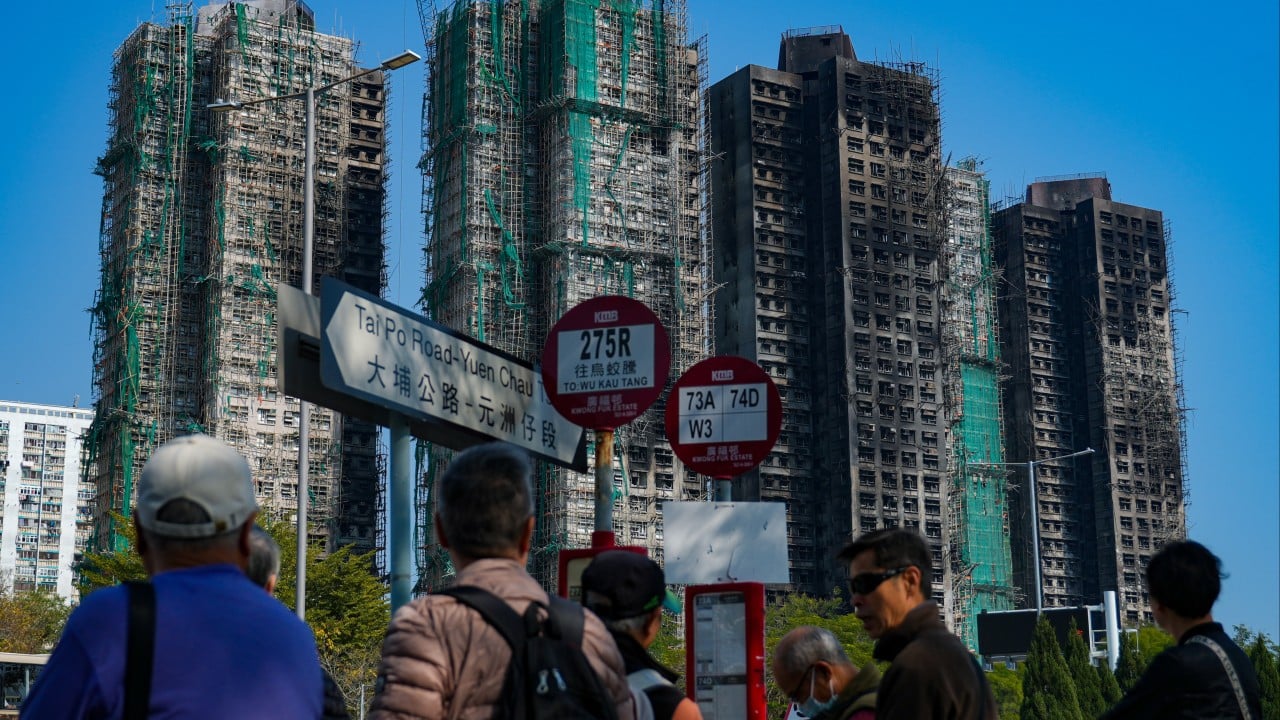
The fatal residential fire in Tai Po exposes a structural failure not of physical materials, but of regulatory architecture. When emergency incidents occur in specialized housing sectors, the immediate political reflex is to demand the merger of the Independent Checking Unit (ICU) with the Buildings Department (BD). This demand, however, conflates organizational proximity with operational efficiency. A clinical analysis of Hong Kong's dual-track building control system reveals that the division between these entities creates systemic friction, fragmented data silos, and enforcement voids that directly compromise public safety. The solution requires a fundamental restructuring of regulatory oversight, shifting from bureaucratic consolidation to a unified data and enforcement framework.
The Dual Track Architecture of Building Control
Hong Kong’s building regulatory framework operates on two parallel tracks divided by property ownership and historical administrative mandates. The Buildings Department exercises statutory powers under the Buildings Ordinance (Cap. 123) over all private developments. Conversely, the Independent Checking Unit, currently positioned under the Housing Department, administers building control over public housing estates, former Housing Authority estates sold under the Tenants Purchase Scheme, and Home Ownership Scheme developments. Meanwhile, you can explore related developments here: Why the Henry Nowak Case Overturned Everything We Think We Know About Justice.
This division introduces a structural asymmetry in enforcement velocity and legislative application. While the ICU adopts the standards set by the Buildings Ordinance as its benchmark, its operational mandates are governed by administrative directives and delegated authority rather than direct statutory enforcement under Cap. 123.
[Private Developments] ---------> Buildings Department (Statutory Enforcement: Cap. 123)
[Public/Divested Estates] ------> Independent Checking Unit (Administrative/Delegated Control)
This dual-track system creates three distinct systemic failure modes: To see the full picture, check out the detailed analysis by NPR.
- Jurisdictional Friction in Mixed-Ownership Estates: In developments where public housing units coexist with privatized retail spaces or divested residential blocks, the physical boundary lines of structural responsibility do not align cleanly with departmental jurisdictions. A single retaining wall or fire separation barrier can fall under split oversight, delaying enforcement actions during critical structural alterations.
- Asymmetric Data Distribution: The BD and the ICU maintain separate building plan databases, inspection logs, and enforcement histories. When unauthorized building works occur, the lack of a centralized, real-time repository prevents cross-departmental risk profiling.
- Enforcement Velocity Variance: The legal mechanisms required for the BD to issue a statutory order under Cap. 123 differ substantially from the administrative notices issued by the ICU. This variance results in uneven compliance timelines for identical physical infractions.
The Friction Function of Split Oversight
The operational inefficiency of maintaining two distinct regulatory bodies can be quantified through the friction function of split oversight. This function determines that as institutional separation increases, the velocity of enforcement decreases, while the probability of regulatory arbitrage increases.
Regulatory arbitrage occurs when property owners or tenants exploit the jurisdictional gaps between the ICU and the BD to delay remediation of hazardous conditions. For instance, sub-divided units (SDUs) inside mixed-ownership buildings frequently escape standard BD sweep operations because the building registry flags the structure under partial Housing Authority purview, deflecting primary inspection responsibility to the ICU.
The latency in identifying and penalizing unauthorized structural alterations stems from a three-stage structural bottleneck:
1. The Verification Lag
When a complaint regarding an unauthorized alteration is lodged, it undergoes an internal review to determine geographic and jurisdictional boundaries. Because the digitized mapping systems of the Land Registry, the Buildings Department, and the Housing Department are not natively interoperable, the verification phase can consume weeks before an inspection is scheduled.
2. The Enforcement Disconnect
The ICU lacks direct prosecution powers under Cap. 123 for certain classes of historically managed public property. It must instead refer persistent non-compliance cases to the BD or rely on lease enforcement mechanisms held by the Housing Authority. This referral chain introduces an administrative handoff that dilutes accountability.
3. The Resource Dilution Factor
Operating separate inspection pools for adjacent structures leads to geographic redundancy. BD inspectors and ICU inspectors routinely cover identical districts, doubling the aggregate administrative overhead required to monitor sub-divided flats and unauthorized building works within the same municipal zone.
The Data Silo Penalty
Modern municipal risk mitigation relies entirely on predictive data analytics. By separating the ICU data ecosystem from the Buildings Department’s BRAVO system (Building Records Access and Viewing System), the government loses the ability to deploy predictive machine learning models to identify high-risk fire vectors across the territory.
A unified risk profile requires the aggregation of multiple variables:
- Age of the structure and material degradation metrics.
- Historical records of unauthorized building works and illegal partitioning.
- Volumetric analysis of occupancy density vs. original fire escape design capacity.
- Proximity to commercial cooking facilities or high-voltage infrastructure.
Because these data points are split across disparate IT infrastructures, neither department possesses a complete overview of systemic vulnerabilities. The Tai Po fire demonstrates that an isolated view of a building’s status is insufficient; a structure categorized as low-risk by administrative standards can rapidly transform into a high-risk environment through unmonitored internal modifications.
Structural Integration Framework
Resolving this systemic vulnerability requires a phased integration strategy that prioritizes operational unified command over mere organizational re-charting. Merging the staff of the ICU into the Buildings Department without reforming the underlying legal and technological framework would simply create a larger, more unwieldy bureaucracy.
PHASE 1: Legal Simplification (Statutory Alignment under Cap. 123)
       │
       ▼
PHASE 2: Data Unification (Consolidated BRAVO System Architecture)
       │
       ▼
PHASE 3: Operational Deployment (Unified Geographic Task Forces)
The execution blueprint must follow a strict structural sequence:
Statutory Alignment
The Legislative Council must amend the applicable schedules of the Buildings Ordinance to eliminate the statutory exemptions granted to properties managed or developed by the Housing Authority. This alignment ensures that a single legal standard applies to every square meter of constructed space in Hong Kong, granting inspectors identical entry, inspection, and summary enforcement powers regardless of property tenure.
Unified Data Architecture
The internal records of the ICU must be forcefully migrated into an expanded architecture of the BD’s BRAVO platform. This unified database must feature real-time cross-referencing with the Fire Services Department’s incident logs. By linking building plans, alteration histories, and fire safety compliance certificates into a single ledger, field inspectors can instantly assess the structural history of a property during routine checks or emergency responses.
Unified Geographic Task Forces
Instead of maintaining separate inspectorate corps, the territory should be divided into unified municipal zones. Cross-functional teams composed of personnel from both the BD and the legacy ICU should be deployed within these zones, eliminating redundant transit times and establishing clear, localized accountability for structural safety.
Strategic Limitations and Operational Risks
Structural consolidation is not a flawless solution. A complete merger carries distinct operational risks that must be managed to prevent a temporary drop in enforcement capacity during the transition phase.
The primary constraint is scale elasticity. The Buildings Department is already burdened by a backlog of thousands of outstanding mandatory building inspection notices and removal orders for unauthorized building works. Absorbing the entire public and semi-public housing portfolio expands the BD’s regulatory footprint by hundreds of thousands of residential units. Without a proportional increase in trained engineering and surveyor headcount, the influx of responsibilities will dilute the department's operational focus, leading to longer processing times for private sector building plan approvals.
The second limitation involves cultural divergence. The ICU operates within the framework of public housing administration, which prioritizes tenant management, social equity factors, and estate maintenance. The Buildings Department operates strictly as a law enforcement body focusing on statutory compliance. Forcing these two distinct institutional cultures into a singular entity without a rigorous retraining program will lead to internal friction and inconsistent enforcement priorities in the field.
The Enforcement Priority Shift
The structural integration of these departments must serve a broader shift in strategy: moving from reactive, complaint-driven inspections to proactive, risk-insulated enforcement. The current model relies heavily on public reports or catastrophic failures to trigger inspections. In high-density environments, this reactive posture guarantees that enforcement will always lag behind structural modifications.
Resource allocation must be driven by algorithmic risk scoring rather than administrative classification. Buildings identified as possessing a high probability of unpermitted sub-division must be subjected to automated audit cycles. This approach optimizes the utility of the combined inspectorate, ensuring that high-risk mixed-ownership structures receive immediate intervention irrespective of whether they fall under historical public or private designations.
The expansion of enforcement capabilities must also be supported by strict financial penalties that outpace the economic incentives of illegal partitioning. Current fines for non-compliance with removal orders are frequently absorbed by operators as a standard cost of business. To alter this dynamic, the prosecution framework under an integrated department must tie penalty scales directly to the gross rental yields generated by the unauthorized modifications, stripping the economic incentive from regulatory evasion.
The consolidation of the Independent Checking Unit and the Buildings Department should not be executed as a political reaction to a singular tragedy, but as a calculated optimization of municipal administration. By dismantling the dual-track system, unifying the data architecture, and expanding statutory powers across all property classifications, the government eliminates the structural blind spots that compromise public safety. The optimal strategic play is the immediate preparation of a legislative amendment to Cap. 123, paired with the structural absorption of the ICU’s inspectorate into a single, digitally unified building control authority.