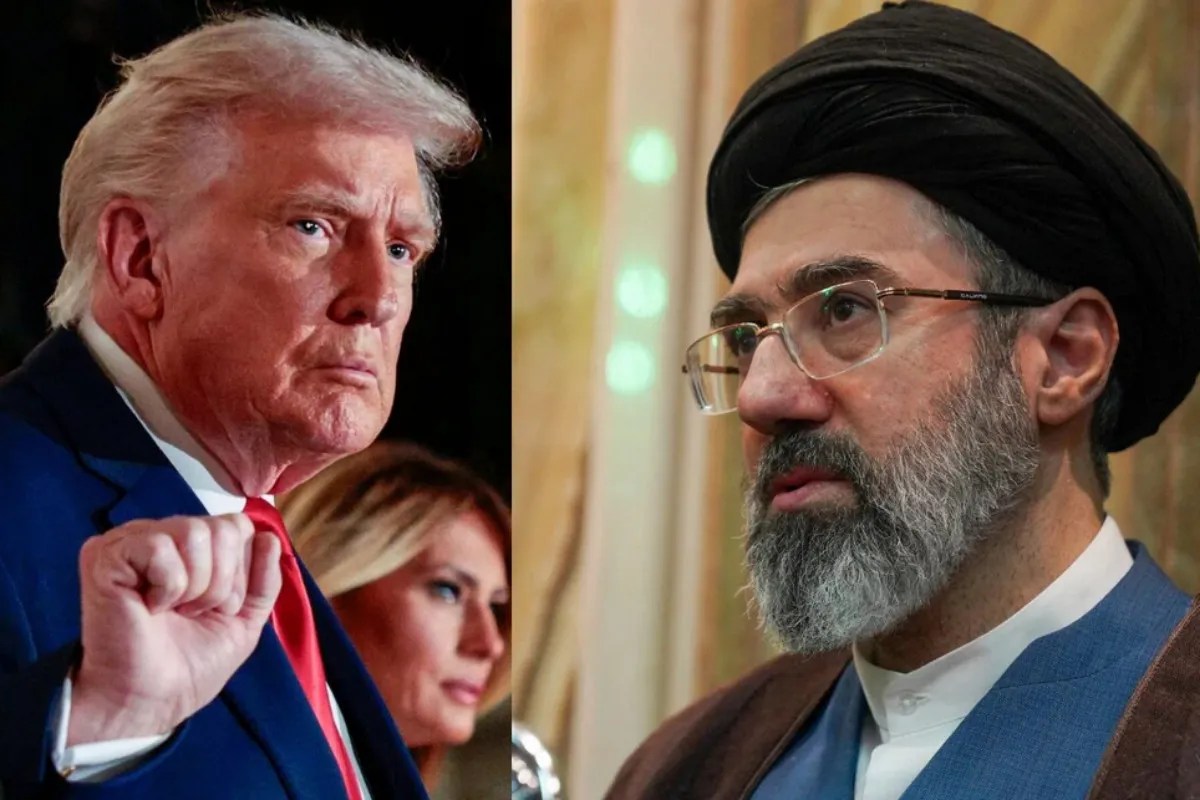
Geopolitical deterrence operates on a threshold model where military signaling, domestic political survival, and economic endurance intersect. When operational pauses or targeted suspensions of strikes occur between the United States and Iran, observers often misinterpret these tactical adjustments as permanent diplomatic breakthroughs. In reality, these pauses represent equilibrium-seeking behaviors within a protracted friction loop. Deconstructing the mechanics of a potential ceasefire requires evaluating the incentive structures driving both Washington and Tehran, identifying the structural bottlenecks that prevent lasting resolution, and mapping the cost functions that dictate when each actor chooses escalation over restraint.
The Dual-Key Dilemma of Deescalation
A functional ceasefire between asymmetric adversaries requires a verifiable mechanism to halt reciprocal provocations. In the case of United States military actions and Iranian-backed proxy networks, the primary structural failure lies in the lack of a centralized command channel that can guarantee compliance across distributed non-state actors.
Washington evaluates deescalation through the lens of force protection and regional stability containment. The United States Central Command optimizes for minimizing casualties among deployed service members while maintaining freedom of navigation in critical maritime chokepoints like the Strait of Hormuz. When the United States halts specific strike packages, the decision rarely stems from a desire for broad diplomatic normalization. Instead, it functions as a calibrated signal designed to test Iranian command-and-control willingness to rein in proxy factions operating in Iraq, Syria, and Yemen.
Conversely, Tehran views temporary halts in kinetic exchanges through the framework of asymmetric resilience. The Iranian security apparatus relies on a forward-defense doctrine that projects power via regional militias. For a ceasefire to hold from the perspective of Iran, the arrangement must alleviate crippling economic sanctions or provide strategic breathing room for nuclear enrichment advancements. When Washington pauses kinetic retaliation without offering substantive economic relief, the structural incentive for Tehran to maintain restraint degrades rapidly. This divergence in objectives creates an unstable equilibrium where temporary pauses function merely as tactical regrouping phases rather than durable peace processes.
Quantifying the Cost Function of Conflict
To understand why temporary halts occur and why they frequently collapse, analysts must examine the expenditure versus utility ratio for both actors.
The United States incurs significant financial and strategic drag during prolonged regional escalations. Deploying carrier strike groups, expending high-end interceptors like the Standard Missile-3 against relatively low-cost uncrewed aerial vehicles, and maintaining heightened alert states strain defense logistics. The cost asymmetry is stark: intercepting an inexpensive projectile with a multi-million-dollar missile creates an unsustainable fiscal imbalance over long operational timelines. Therefore, Washington faces internal pressure from defense economists and strategic planners to calibrate kinetic responses precisely, opting for targeted pauses to re-evaluate ammunition stockpiles and deterrence thresholds.
Iran faces a vastly different cost function dictated by domestic economic fragility and severe currency depreciation. The secondary sanctions enforced by the United States financial system restrict oil exports and isolate domestic banking from global liquidity. For Tehran, prolonged kinetic engagement accelerates domestic inflation and social unrest, threatening regime stability. However, backing down entirely without securing sanctions relief signals weakness to domestic hardliners and compromises the foundational anti-Western legitimacy of the state. Consequently, Iranian leadership calculates that intermittent pauses combined with low-intensity proxy friction maximize leverage while avoiding total systemic collapse or direct, devastating military confrontation with the United States mainland forces.
The Information Asymmetry Bottleneck
Diplomatic breakthroughs stall because both capitals operate under severe information asymmetries regarding red lines and retaliatory thresholds. Deterrence fails when one party misinterprets a defensive posture as an offensive preparation or mistakes a tactical pause for a permanent strategic withdrawal.
In Washington, intelligence assessments regarding proxy command structures often underestimate the operational autonomy of regional militias. Policymakers may assume that a directive from Tehran can immediately halt attacks on commercial shipping or military outposts. When proxy groups defy directives or launch unauthorized strikes during a supposed ceasefire window, United States leadership interprets the action as bad-faith non-compliance by the Iranian state, triggering immediate kinetic retaliation and collapsing the diplomatic framework.
In Tehran, domestic political filtering creates an insular decision-making environment where Western diplomatic overtures are frequently viewed as covert psychological operations designed to foment internal dissent. Without direct, secure, and institutionalized communication channels, both nations rely on third-party intermediaries such as regional Gulf states or European diplomats. This introduces transmission loss, misinterpretation, and delayed signaling, turning rapid military escalation cycles into a series of unintended collisions.
Strategic Trajectory and Operational Realities
Evaluating the durability of any prospective ceasefire requires tracking specific leading indicators rather than relying on diplomatic rhetoric. Sustainable deescalation is contingent upon measurable shifts in three distinct variables:
- Proxy Resource Flows: A genuine reduction in kinetic activity must be preceded by observable constraints on the logistical supply chains, financial routing, and material transshipment supporting regional proxy networks.
- Proportionality Calibration: The speed and scale of kinetic responses by United States forces must align predictably with the severity of provocations, establishing a clear and credible cost for violations.
- Sanctions Enforcement Modulation: Any long-term diplomatic stabilization necessitates a transparent, phased framework for economic recalibration that ties specific behavioral changes to verifiable relief measures.
Without structural adjustments across these three vectors, temporary halts in military operations remain fragile interludes. The underlying systemic drivers of conflict—divergent regional security goals, asymmetric power distribution, and the absence of direct bilateral communication channels—ensure that the cycle of tension will persist until a binding architecture replaces intermittent tactical pauses.


/i.s3.glbimg.com/v1/AUTH_1f551ea7087a47f39ead75f64041559a/internal_photos/bs/2025/P/p/LLF10DRp2WoUISXryrUQ/whatsapp-image-2025-12-02-at-20.06.57.jpeg)