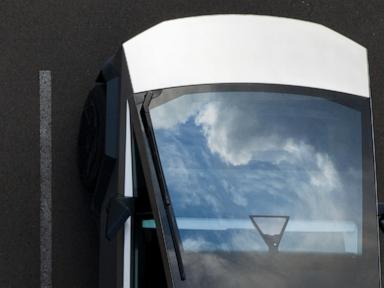
Tesla’s recent recall of approximately 2,400 Cybertrucks and 200,000 Model S, X, and Y vehicles exposes a critical friction point between aggressive hardware iteration and the reliability of software-defined subsystems. The issues—a physical defect in the Cybertruck’s drive inverter and a software malfunction affecting rearview camera visibility—represent two distinct failure modes in modern automotive engineering: mechanical fatigue within power electronics and logic errors in the user interface layer. While the Cybertruck issue requires a physical hardware replacement, the larger fleet recall is being managed via Over-the-Air (OTA) updates, highlighting the asymmetric cost structures between hardware-centric and software-centric maintenance.
The Inverter Failure Matrix
The Cybertruck recall focuses on the drive inverter, a component responsible for converting DC power from the battery into AC power for the motors. The failure mechanism is identified as a loss of torque caused by a specific gate driver component failing to provide the necessary current. This is not a superficial "glitch"; it is a fundamental breakdown in the power delivery architecture.
The reliability of a drive inverter is governed by thermal cycling and the integrity of its MOSFET (Metal-Oxide-Semiconductor Field-Effect Transistor) or SiC (Silicon Carbide) power modules. When an inverter fails to provide torque, the vehicle enters a "limp mode" or loses propulsion entirely, creating an immediate safety risk. The logic of this failure follows a binary path:
- Sub-component Degradation: The gate driver, which acts as the bridge between the vehicle's low-voltage control signals and high-voltage power flow, ceases to function.
- Torque Cessation: Without valid gate signals, the inverter cannot switch the power modules, resulting in an open circuit to the motor.
- Hardware Requirement: Unlike sensor calibration or braking logic, a failed gate driver cannot be repaired via software. The physical replacement of the inverter assembly is the only path to restoration, necessitating a traditional service center visit.
This hardware failure underscores the "early-life mortality" phase of the bathtub curve—a reliability engineering concept where new products see a spike in failures due to manufacturing defects or unforeseen stress loads before stabilizing into a period of steady-state reliability.
Software-Defined Latency and the Camera Stack
The second, larger recall involves 200,000 vehicles where the rearview camera feed fails to display within the federally mandated timeframe. In the United States, Federal Motor Vehicle Safety Standard (FMVSS) No. 111 requires the rear-view image to be visible within 2.0 seconds of the driver selecting reverse. Tesla’s failure here is a classic example of "resource contention" within the vehicle's central computing unit.
The rear-view camera is not a direct analog feed to a screen; it is a data stream processed by the Autopilot/FSD computer and then rendered by the Media Control Unit (MCU). The delay occurs when the system’s kernel prioritizes background tasks or high-compute processes over the camera feed’s render cycle.
The technical bottleneck typically involves three variables:
- I/O Priority: How the Linux-based operating system handles the interrupt request from the gear selector.
- Buffer Management: The efficiency of the video buffer in clearing old data to make room for the live feed.
- CPU Overhead: The total load on the processor during the cold-start or "wake-up" phase of the vehicle's computer.
Tesla’s ability to resolve this via an OTA update demonstrates the "Software-Defined Vehicle" (SDV) advantage. By rewriting the prioritization logic in the firmware, Tesla can bypass physical inspections entirely, effectively zeroing out the labor costs associated with a 200,000-unit recall.
The Economic Divergence of Recalls
There is a massive delta between the financial impact of a hardware recall and a software update. Traditional automotive analysts often conflate the two, but from a balance sheet perspective, they occupy different universes.
Hardware Recall Cost Function ($C_h$):
$$C_h = n \times (p + l + s)$$
Where:
- $n$ = Number of units.
- $p$ = Part cost (Inverter assembly).
- $l$ = Labor hours at dealer rates.
- $s$ = Logistics and shipping.
Software Update Cost Function ($C_s$):
$$C_s = D + B$$
Where:
- $D$ = Fixed cost of engineering development.
- $B$ = Bandwidth/Cloud distribution costs.
For the Cybertruck, the cost scales linearly with every vehicle produced. For the Model S/X/Y camera issue, the cost is largely front-loaded in the engineering phase; once the fix is written, the marginal cost of deploying it to the 200,000th vehicle is near zero. This explains Tesla’s strategic preference for "solving in software" whenever physics allows it.
Systemic Risks in Vertical Integration
Tesla’s vertical integration allows for rapid iteration, but it also creates single-point-of-failure risks. In a fragmented supply chain, a faulty inverter might be blamed on a Tier 1 supplier like Bosch or Continental, allowing the OEM to recoup costs through indemnification clauses. Because Tesla designs and manufactures a significant portion of its own power electronics, it bears the full brunt of the R&D failure and the subsequent recall costs.
The Cybertruck, specifically, utilizes a high-voltage architecture (800V) that is relatively new to the Tesla ecosystem. Moving from 400V to 800V increases efficiency and reduces weight but puts significantly higher dielectric stress on components. The inverter issue suggests that the "margin for error" in component tolerances is thinner at these higher voltages.
Operational Safety and Human-Machine Interface
The failure of a rearview camera or a drive inverter represents a breach of the "safety contract" between the machine and the operator. In human-machine interface (HMI) design, predictability is the primary metric of trust.
When a camera fails to load, the driver’s mental model of the car is disrupted. If the driver begins to move backward, expecting the screen to flick on, they are operating in a state of "perceptual blindness." The delay in the camera feed is not just a technical lag; it is a temporal mismatch between human expectation and machine execution.
Structural safety requires that the most critical functions (steering, braking, propulsion, and visibility) be decoupled from non-critical functions (infotainment, HVAC, navigation). The fact that a software update was needed for the camera suggests these systems are more tightly coupled than is ideal for high-integrity safety systems.
Quantifying the Reliability Debt
The "Reliability Debt" of a vehicle fleet is the accumulated risk of future failures due to accelerated development cycles. Tesla’s strategy has always favored "Shipping and Patching." While this works for the MCU, it is high-risk for the powertrain.
The Cybertruck’s inverter issue indicates that the "beta" phase of this specific hardware platform is occurring in the hands of the consumer. This creates a feedback loop where:
- Data is gathered from field failures.
- Engineering changes are implemented in the production line.
- Retroactive fixes (recalls) are applied to the existing fleet.
While this loop is fast, it is expensive when the fix requires physical intervention. The long-term viability of the Cybertruck platform depends on whether these inverter failures are isolated to a specific batch of gate drivers or if they are symptomatic of a broader thermal management issue within the 800V architecture.
Strategic Execution Plan
Tesla must pivot from a "Software-First" mentality to a "Rigid Subsystem Isolation" architecture to prevent future fleet-wide recalls of this nature. The following three-step logic should be applied to future production:
Hardware Decoupling: Isolate the rearview camera feed from the main infotainment bus. Implementing a low-level, real-time operating system (RTOS) specifically for safety-critical visuals would ensure that no amount of MCU lag could delay the camera feed. This removes the "Software-Defined" risk from a federally mandated safety feature.
Inverter Stress-Testing: Increase the "Burn-in" time for power electronics. Given the inverter failures, Tesla should implement a high-load stress test for every inverter unit before it leaves the factory to catch "infant mortality" defects before they reach the customer.
Predictive Diagnostics: Use the existing telemetry to monitor gate driver performance in real-time. By analyzing the current-voltage (I-V) characteristics of the inverter during standard operation, Tesla’s fleet-wide neural net could potentially predict an inverter failure days before it occurs, allowing for a proactive, non-emergency service appointment rather than a catastrophic loss of torque on a highway.
The transition from a high-growth startup to a mass-market manufacturer requires moving away from the "patch" culture. The cost of physical recalls for a vehicle as complex as the Cybertruck is too high to be sustained through traditional software-style iteration. Reliability must be treated as a hard constraint, not a variable to be optimized post-launch.