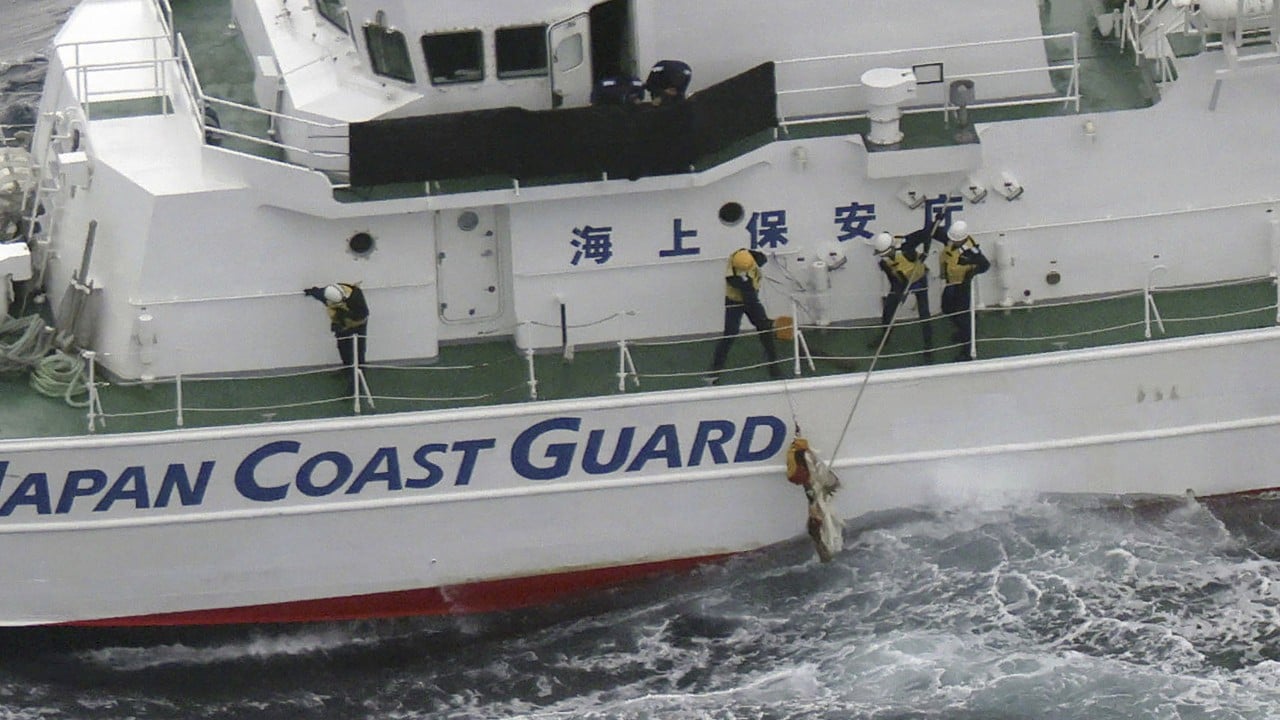
Japan is scaling its Official Security Assistance framework to encompass approximately twelve nations, backed by an unprecedented fiscal allocation of 18.1 billion yen. This maneuver marks a structural break from decades of post-war self-imposed defense minimalism, transitioning Tokyo from an economic aid donor into an active architect of regional security architecture.
The Institutional Divergence: ODA Versus OSA
To understand the mechanics of this policy shift, one must examine the operational boundary separating traditional Official Development Assistance from the newer Official Security Assistance framework. Established under the 2022 National Security Strategy, the ODA charter historically barred the transfer of military hardware or direct support to foreign armed forces. It prioritized civilian infrastructure, humanitarian aid, and non-military economic development.
The Official Security Assistance instrument bypasses these statutory barriers by targeting the armed forces and security organizations of aligned states directly. However, the program remains bounded by specific legal guardrails. It restricts transfers to non-combat operational domains:
- Maritime and airspace monitoring and surveillance
- Counter-terrorism and anti-piracy operations
- Humanitarian assistance and disaster relief capacity building
- Military infrastructure development, including dual-use port and airfield upgrades
By institutionalizing this mechanism, Tokyo has engineered a dual-track foreign aid model. Economic development assistance handles macro-level socio-economic integration, while the security assistance framework addresses acute regional deterrence imbalances.
The Financial Scaling Vector and Procurement Shifts
The evolution of the program's fiscal baseline reveals its rising strategic priority within the national budget. Launched in fiscal 2023 with a modest allocation of 2 billion yen across four initial countries, the initiative expanded to 5 billion yen, and now reaches 18.1 billion yen for the 2026 fiscal cycle.
This capital expansion alters the sophistication of the transferred assets. Initial allocations were restricted to low-complexity goods such as basic coastal radar systems and small patrol craft. With the 2026 expansion, the funding magnitude permits recipient states to request advanced platforms, including higher-performance radar architectures and unmanned aerial vehicles.
This shift alters the defense industrial export dynamic for Tokyo. By subsidizing the acquisition of domestic military hardware for Indo-Pacific partners, the policy builds long-term interoperability between regional defense networks and Japanese manufacturing ecosystems.
Strategic Geography and Recipient Selection Criteria
The expansion to twelve recipient nations reflects a calculated geographic focus on maritime choke points along critical sea lines of communication. Tokyo evaluates candidate countries through a rigorous risk-exposure matrix, prioritizing nations situated along primary trade corridors facing asymmetric security pressures.
The selection pattern demonstrates a clear concentration within Southeast Asia and the Pacific Island Forum. Core recipients such as the Philippines, Malaysia, and Indonesia occupy vital positions flanking the South China Sea and the Luzon Strait. Simultaneously, integration of Pacific island states like Fiji, Papua New Guinea, and Tonga addresses maritime domain awareness gaps across vast oceanic expanses.
[Systemic Regional Pressure]
       │
       ▼
[Bilateral Risk Assessment] ──► Maritime Choke Points (Luzon Strait, South China Sea)
       │
       ▼
[Targeted Asset Deployment] ──► Unmanned Aerial Vehicles, Coastal Radars, Patrol Assets
       │
       ▼
[Strategic Integration]     ──► Interoperable Regional Defense Architecture
This geographic targeting mechanism addresses a specific vulnerability: the inability of developing littoral states to maintain continuous domain awareness across their exclusive economic zones. By funding surveillance infrastructure, Tokyo constructs an integrated information-sharing network without deploying active combat units abroad.
Implementation Bottlenecks and Strategic Limitations
Despite its rapid scaling, the initiative faces distinct operational frictions. The primary constraint involves administrative absorption capacity within recipient nations. Transferring high-performance defense equipment requires complex maintenance protocols, specialized training pipelines, and secure logistics chains that local ministries of defense may struggle to absorb rapidly.
Furthermore, Tokyo must navigate the delicate diplomatic balance of expanding security ties without triggering escalatory counter-responses or alienating non-aligned regional actors. Because high-income regional economies like Singapore and Brunei do not qualify for grant-based assistance, Tokyo must structure alternative cooperative frameworks, such as joint third-country capacity building projects in emerging economies like Timor-Leste.
The expansion of the security aid budget to 18.1 billion yen signals that Tokyo views this instrument not as a temporary diplomatic signal, but as a permanent pillar of its foreign policy. Future efficacy will depend on whether recipient states can successfully integrate advanced surveillance hardware into their operational command structures, turning fragmented bilateral donations into a cohesive regional deterrent.