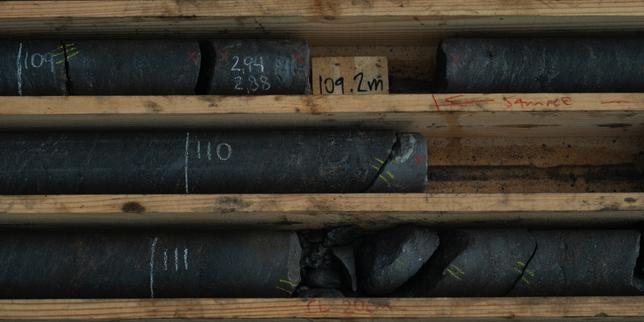
The global pivot toward electrification and advanced defense systems has exposed a structural vulnerability in industrial supply chains: the physical availability of critical minerals no longer matches the velocity of downstream manufacturing demand. While public discourse frequently frames this bottleneck as a simple resource scarcity problem, operational reality points to a more complex market failure driven by refining concentration, geographic asymmetry, and extreme capital expenditure lead times. Understanding how to navigate or invest in this resource race requires stripping away speculative sentiment and examining the underlying economics of extraction, processing, and jurisdictional control.
The Tripartite Architecture of Mineral Processing
Raw material extraction is only the initial tier of a three-stage industrial sequence. The true economic and strategic value resides downstream in processing and component fabrication. Treating mining output as a proxy for market power produces severe analytical errors. If you found value in this post, you should check out: this related article.
The primary tier involves extraction or mine-site production. This phase is characterized by capital-intensive, long-cycle greenfield investments. Bringing a new hard-rock lithium, cobalt, or rare earth element project from initial discovery to commercial nameplate capacity routinely requires eight to twelve years. This timeline is dictated by geological drilling verification, environmental baseline studies, permitting friction, and complex metallurgical plant construction.
The secondary tier, and the primary bottleneck in the global chain, is chemical refining and purification. Raw ores are rarely usable in battery cells or permanent magnets without being processed to strict chemical purity grades, often exceeding ninety-nine percent. Refining capacity is heavily centralized. For instance, single-nation dominance in rare earth element separation and graphite sphering creates a structural chokepoint. Even if western jurisdictions scale up raw extraction, the absence of domestic solvent extraction and pyrometallurgical refining facilities forces raw materials to transit geopolitical rivals for processing. For another perspective on this event, refer to the latest coverage from MarketWatch.
The tertiary tier is component manufacturing, including cathode active material synthesis, anode production, and sintering. Margin capture is not distributed evenly across these tiers. Extraction yields commodity-like cyclical returns exposed to commodity super-cycles, whereas specialized refining and precursor synthesis capture higher economic rent due to proprietary chemical know-how and stringent quality control constraints.
The Capital Expenditure Lag and Elasticity Mismatch
Capital allocation in the mining and refining sector operates on multi-year planning horizons, whereas downstream original equipment manufacturers function on quarterly volume adjustments and rapid product iteration cycles. This structural mismatch generates extreme price volatility.
When downstream demand accelerates—driven by vehicle fleet electrification or grid-scale energy storage deployments—spot prices for lithium carbonate, cobalt sulfate, or neodymium-praseodymium rise sharply. However, high prices do not trigger immediate supply responses. A high spot price immediately benefits low-cost incumbent producers but cannot instantly summon new physical production capacity.
[Demand Acceleration]
       │
       ▼
[Spot Price Surge]
       │
       ▼
[Financing & Permitting (8-12 Years)]
       │
       ▼
[Capacity Realignment]
This structural inelasticity causes persistent market deficits. Junior mining companies struggle to secure project financing during early-stage exploration because debt markets demand long-term off-take agreements and proven reserve audits. Consequently, capital markets tend to underinvest in supply during periods of surplus, setting the stage for structural deficits when demand growth outpaces historical baseline trends.
Geopolitical Risk Premiums and Asset Valuation
Assessing asset valuation in the critical mineral sector requires integrating a non-market variable: jurisdictional risk. Traditional discounted cash flow models assume stable regulatory frameworks and predictable asset security. In the context of critical resources, these assumptions break down.
Resource nationalism manifests through export quotas, mandatory domestic processing thresholds, equity ownership restrictions for foreign entities, and sudden tax regime modifications. These interventions alter the net present value of extraction assets overnight.
Furthermore, trade policy instruments such as targeted tariffs, domestic content requirements, and friend-shoring subsidies artificially segment global pricing benchmarks. A localized market driven by preferential trade blocs can sustain a permanent price premium over uncoordinated global spot markets. Analysts must evaluate projects not merely on operating expenditure per metric ton, but on their integration within secure, allied supply corridors.
Substitution Friction and Technological Hedge Limits
Market participants frequently assume that technological innovation will rapidly substitute away from constrained materials. While substitution is a valid long-term thermodynamic principle, the operational friction of implementing substitutes in commercial-grade industrial processes is high.
Transitioning a battery chemistry from a nickel-cobalt-manganese cathode to a lithium-iron-phosphate formulation, or exploring sodium-ion alternatives, requires years of re-tooling, safety validation, and supply chain redesign. Each alternative brings performance trade-offs, such as lower energy density per kilogram or degraded low-temperature performance, which limits substitution viability in high-performance applications like aerospace, heavy-duty commercial transport, or dense urban energy storage.
Similarly, rare earth permanent magnets utilized in direct-drive wind turbines and electric vehicle traction motors face severe engineering hurdles when attempting to remove dysprosium or terbium without sacrificing high-temperature coercivity and magnetic field strength. Innovation softens long-term demand ceilings, but in the medium term, engineering inertia locks industrial consumers into established mineral dependencies.
Strategic Capital Allocation Framework
Deploying capital into the critical mineral sector requires abandoning traditional broad-index commodity strategies. Success demands adherence to three structural principles.
First, prioritize vertical integration or processing capability. Companies that control both the extraction node and the chemical conversion refinery insulate themselves from margin compression occurring when raw ore prices diverge from refined product prices.
Second, underwrite projects based on jurisdictional resilience. Assets located within stable, cooperative legal frameworks command a structural premium because they face lower probabilities of expropriation, sudden export bans, or uninsurable geopolitical disruption.
Third, evaluate off-take quality and balance sheet durability. Junior developers with unfinanced assets face severe dilution risk during capital market downturns. Prioritize entities with binding off-take agreements backed by investment-grade industrial consumers or sovereign support mechanisms.
The structural squeeze within critical mineral supply chains is not a temporary aberration; it is the predictable consequence of scaling physical industrial infrastructure faster than geological and chemical extraction networks can expand. Navigating this environment demands relentless focus on processing chokepoints, jurisdictional security, and the hard economic realities of capital deployment lead times.