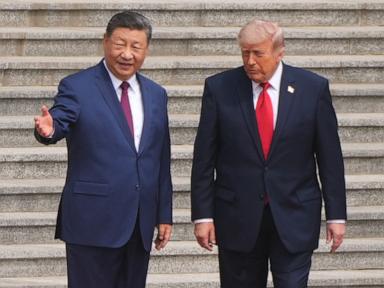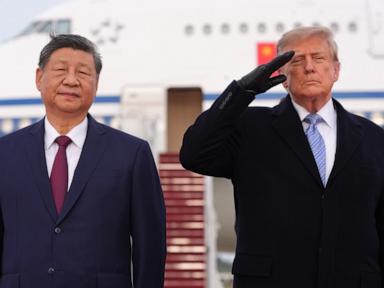
Bilateral accommodations between Washington and Beijing generate immediate systemic shocks across the Indo-Pacific. When dominant superpowers negotiate bilateral truces, frontline states face a distinct security dilemma. A temporary freeze on tariffs or export controls signed at a presidential summit does not resolve structural friction; instead, it compresses strategic maneuver room for regional capitals that depend on American security guarantees while remaining economically intertwined with China. The anatomy of great power bargaining reveals a persistent friction point: bilateral deals struck above the heads of allied nations often externalize the costs onto regional actors who lack veto power over superpower trade-offs.
Analyzing the mechanics of these diplomatic resets requires dismantling the assumption that great power stability trickles down to secondary states. When leaders in Washington and Beijing extend tariff suspensions or manage export curbs on critical minerals, financial markets react to the headline reduction in immediate volatility. Yet, for capitals in Tokyo, Seoul, Canberra, and Southeast Asian nodes, a truce functions merely as a stay of execution rather than a durable architectural settlement. The core structural variable is not the duration of a temporary trade pause, but the permanence of structural technological bifurcation and maritime security competition.
The Asymmetrical Bargaining Problem
The primary structural flaw in bilateral detente is the asymmetry of concessions. Superpowers bargain across multiple domains simultaneously, allowing them to trade concessions in one sector for gains in another. A bilateral package might trade agricultural export quotas for semiconductor equipment restrictions, or intellectual property enforcement mechanisms for rare earth mineral quotas.
For secondary states, this multi-issue bundling creates severe policy distortions. Regional allies cannot easily compartmentalize their security alignment from their commercial reality. South Korea and Japan operate within advanced manufacturing ecosystems that rely on Chinese intermediate goods and raw material inputs while depending on American nuclear deterrence and intelligence-sharing architecture. When Washington and Beijing negotiate bilateral armistices, they frequently establish bilateral quotas or managed trade targets that erode market shares for third-party exporters.
Consider the mechanics of managed trade arrangements. If a superpower summit establishes bilateral purchase mandates to correct bilateral trade deficits, those volumes are frequently diverted from other trading partners. Japanese machinery, Taiwanese semiconductors, and Australian agricultural goods face indirect displacement when superpowers partition market access via state-directed directives. The truce is bilateral in name, but its economic externalities are multilateral.
The Dual-Pillar Dilemma of Frontline States
Frontline capitals manage an institutional contradiction: economic integration with China runs counter to strategic alignment with the United States. This contradiction manifests across two distinct operational pillars.
The first pillar is commercial exposure. China remains the primary trading partner for nearly every major economy in East Asia. Supply chains for electronics, automotive assembly, and chemical synthesis are deeply anchored in mainland industrial clusters. Decoupling or de-risking carries immediate marginal costs that corporate balance sheets absorb through higher input prices and redundant capital expenditure. When Washington pressures regional allies to restrict advanced node semiconductor exports or tighten inbound investment screening, it imposes a direct economic penalty on domestic firms.
The second pillar is security dependence. The architecture of deterrence in the Western Pacific rests upon the American hub-and-spokes alliance system, reinforced by bilateral security treaties and forward-deployed military assets. Regional states cannot substitute American naval presence with indigenous capabilities without triggering massive fiscal reallocations and regional arms races. Consequently, when superpower tensions flare, allies must align with American strategic directives to preserve deterrence credibility. When tensions recede via a temporary truce, allies are left exposed to Chinese economic coercion without the protective cover of acute systemic crisis.
This dynamic generates a cyclical vulnerability. During periods of high tension, allies justify export controls and security cooperation under the banner of crisis management. During periods of detente, Beijing pressures those same allies to normalize trade relations and distance themselves from American containment strategies, weaponizing access to domestic consumer markets and supply chains.
Technology Bifurcation and the Chokepoint Mechanics
The most acute point of friction in any bilateral superpower reset centers on advanced technology control regimes, specifically artificial intelligence hardware, semiconductor fabrication equipment, and foundational software stacks. Technology policy is no longer governed by commercial efficiency; it operates as an instrument of national power.
Washington seeks to freeze Chinese technological advancement at critical nodes, restricting access to extreme ultraviolet lithography, advanced packaging, and high-performance computing chips. Beijing responds by restricting exports of critical minerals and processed rare earths—gallium, germanium, graphite, and heavy rare earth elements—which form the physical bedrock of global electronics and defense manufacturing.
When summit diplomacy produces a temporary extension of export control truces, it freezes the regulatory baseline rather than resolving the underlying technological competition. For advanced manufacturing economies in Asia, this creates operational paralysis. Companies cannot plan multi-year capital expenditures when the regulatory parameters governing semiconductor tool shipments or intellectual property transfers shift with every presidential meeting.
Furthermore, enforcement mechanisms create extraterritorial compliance burdens. American export administration regulations apply secondary sanctions to foreign firms utilizing American-origin technology, compelling non-American corporations in Asia to institute stringent compliance programs. When Washington and Beijing negotiate exemptions or conditional waivers behind closed doors, regional firms are often forced to navigate opaque administrative channels without clear legal certainty. The result is a persistent compliance tax on international trade within the region.
The Risk of Condominium Politics
The deepest fear among Asian strategists is not merely a temporary trade war, but the emergence of a great power condominium—an informal or formal arrangement where Washington and Beijing manage regional order by carving out spheres of influence, effectively bypassing the sovereignty and agency of secondary states.
Historical precedents demonstrate that when dominant powers reach a modus vivendi, smaller states often pay the price. If a superpower accord were to establish tacit acceptances of territorial adjustments, maritime claims, or exclusive economic zones, regional security architectures would fracture. The Association of Southeast Asian Nations faces particular vulnerability to this dynamic. Lacking a unified military command structure or a collective deterrent capability, ASEAN members rely on diplomatic centrality and multilateral forums to prevent bilateral great power deals from determining regional outcomes.
When bilateral summits produce broad communiques addressing regional flashpoints without meaningful allied consultation, the perception of abandonment grows. Allies must continuously signal their resolve to avoid being sidelined, leading to preemptive defense spending increases and diplomatic diversification strategies that complicate superpower management.
Strategic Adaptation and Hedging Frameworks
Faced with structural volatility, regional governments are deploying sophisticated hedging strategies designed to maximize autonomy while minimizing direct exposure to superpower retaliation.
Diversification of supply chains represents the first operational line of defense. Governments are actively subsidizing the relocation of critical manufacturing nodes away from concentrated industrial centers toward alternative jurisdictions in South and Southeast Asia. This "China plus many" strategy aims to build structural redundancy into components manufacturing, reducing single-point-of-failure risks associated with unilateral export curbs or sudden customs blockades.
The second adaptation involves minilateral institutional architecture. Recognizing the limitations of broad multilateral forums that suffer from paralysis, regional capitals are constructing flexible minilateral coalitions—such as trilateral security frameworks, intelligence-sharing compacts, and targeted economic partnerships. These configurations allow middle powers to pool diplomatic and economic weight, creating collective bargaining leverage that individual states cannot muster alone.
The third adaptation is domestic technological self-reliance. Governments are investing heavily in domestic research and development subsidies, aiming to secure indigenous capabilities in critical domains such as advanced materials, quantum computing, and secure communications. By retaining proprietary technological assets, regional states ensure they remain indispensable partners rather than interchangeable vassals in the global technology ecosystem.
Strategic Forecast and Operational Playbook
Superpower truces will remain fragile, cyclical instruments rather than permanent resolutions. The structural drivers of competition—technological supremacy, maritime territorial control, and ideological divergence—preclude a comprehensive grand bargain. Bilateral summits will continue to produce temporary freezes that manage symptoms while leaving underlying structural pathologies unaddressed.
Frontline states must prepare for a prolonged era of strategic friction characterized by sudden regulatory shifts, weaponized supply chains, and periodic diplomatic shocks. Strategic survival for regional actors depends on systemic resilience rather than diplomatic dependence. Capital allocation must prioritize supply chain redundancy over short-term cost minimization. Regulatory compliance frameworks must be engineered to adapt instantaneously to shifting export control regimes. Intelligence and defense architectures must be diversified across multiple minilateral partnerships to insulate national security from the volatility of bilateral superpower summits. The primary objective is absolute preservation of strategic autonomy in an international system increasingly dictated by bipolar competition.