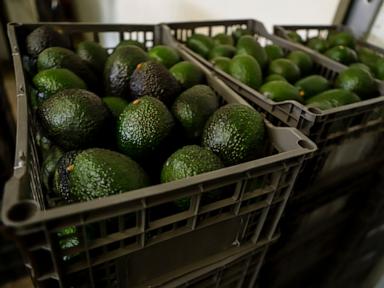
The suspension of United States Department of Agriculture avocado inspections in the Mexican state of Michoacan exposes a critical vulnerability in transnational supply chain governance. When the Animal and Plant Health Inspection Service halts operations due to localized security threats, billions of dollars in agricultural commerce face immediate disruption. This dynamic illustrates how geopolitical and criminal friction points can instantly paralyze tightly integrated international markets, transforming localized law enforcement actions into macro-economic bottlenecks.
The Economic Magnitude of the Michoacan Corridor
Michoacan functions as the primary engine for the North American avocado trade, supplying an overwhelming majority of imports into the United States. The scale of this economic pipeline is defined by stark financial metrics:
- Annual trade volume reaches billions of dollars, anchored by $3.65 billion in recorded exports to the U.S. market in the previous year.
- Rapid market expansion characterized by double-digit volume growth in the early months of the calendar year.
- Employment dependencies exceeding 200,000 localized agricultural and packing jobs within the state of Michoacan alone.
This high concentration of supply creates an asymmetric dependency. While U.S. consumers absorb roughly 80% of Michoacan's total export output, regional producers rely entirely on continuous border-crossing clearance to prevent catastrophic spoilage of perishable inventory.
The Regulatory Bottleneck Mechanics
The regulatory framework governing this trade relies on physical verification. USDA inspectors are stationed directly within Mexican orchards and packinghouses to certify that produce meets phytosanitary standards and remains free of pests. This creates a strict procedural dependency: physical presence equals market access.
When security threats emerge—often triggered by state crackdowns on organized crime syndicates engaged in regional extortion—the operational risk equation for foreign government employees shifts. The suspension mechanism operates through a precise sequence:
- A security alert or direct threat against regulatory personnel is logged by embassy officials.
- Federal agencies instantly withdraw field personnel to eliminate physical liability.
- Packinghouses lose the mandatory oversight required to stamp commercial shipments for export.
- Supply lines freeze at the packing stage, stranding raw inventory that cannot legally cross international borders.
Unlike manufactured goods that can be stored indefinitely in warehouses during a logistics dispute, fresh produce degrades rapidly. The economic loss compounds hourly, shifting the financial burden directly onto local producers and packers who bear the cost of perishable depreciation.
The Organized Crime Extraction Model
The underlying driver of these regulatory halts is the financial architecture of regional cartels. In Michoacan, criminal organizations have diversified revenue streams beyond traditional narcotics trafficking, systematically embedding themselves into legal agricultural value chains.
Extortion operates as a private tax on agricultural output. Cartels extract capital from every tier of the production cycle: orchard owners, transportation handlers, and packing facility operators. High-profile law enforcement actions—such as the capture of regional cartel leadership backed by substantial bounty incentives—routinely trigger retaliatory instability or defensive security clampdowns.
This dynamic establishes a perverse equilibrium. Successful state intervention against criminal syndicates destabilizes the localized security environment, which forces foreign regulators to withdraw, which in turn chokes off the legal economy that the cartels were originally exploiting for extortion rents.
Strategic Exposure and Risk Mitigation
Importers, distributors, and retail grocers operating within this supply chain face severe systemic exposure. Relying on a hyper-concentrated geographic origin leaves corporate procurement strategies vulnerable to regular shocks.
Mitigating this structural risk requires a complete re-engineering of sourcing geography and regulatory compliance models. Supply chain resilience in perishable agriculture depends on three operational adjustments:
- Diversifying procurement channels into alternative domestic or international growing regions with lower security volatility, such as Jalisco or non-Mexican jurisdictions.
- Investing in localized private-public security frameworks that insulate technical regulatory staff from regional cartel dynamics.
- Accelerating the adoption of remote verification technologies and digital phytosanitary tracking to reduce absolute reliance on continuous physical embassy presence for every individual shipment.
The recurring suspension of inspections demonstrates that traditional agricultural trade agreements are fundamentally tethered to regional public safety. Until the security apparatus within producing states achieves structural stability, supply chain disruptions will remain a permanent, recurring cost of doing business in the region.