The Diagnostic Failure of the Engagement Model
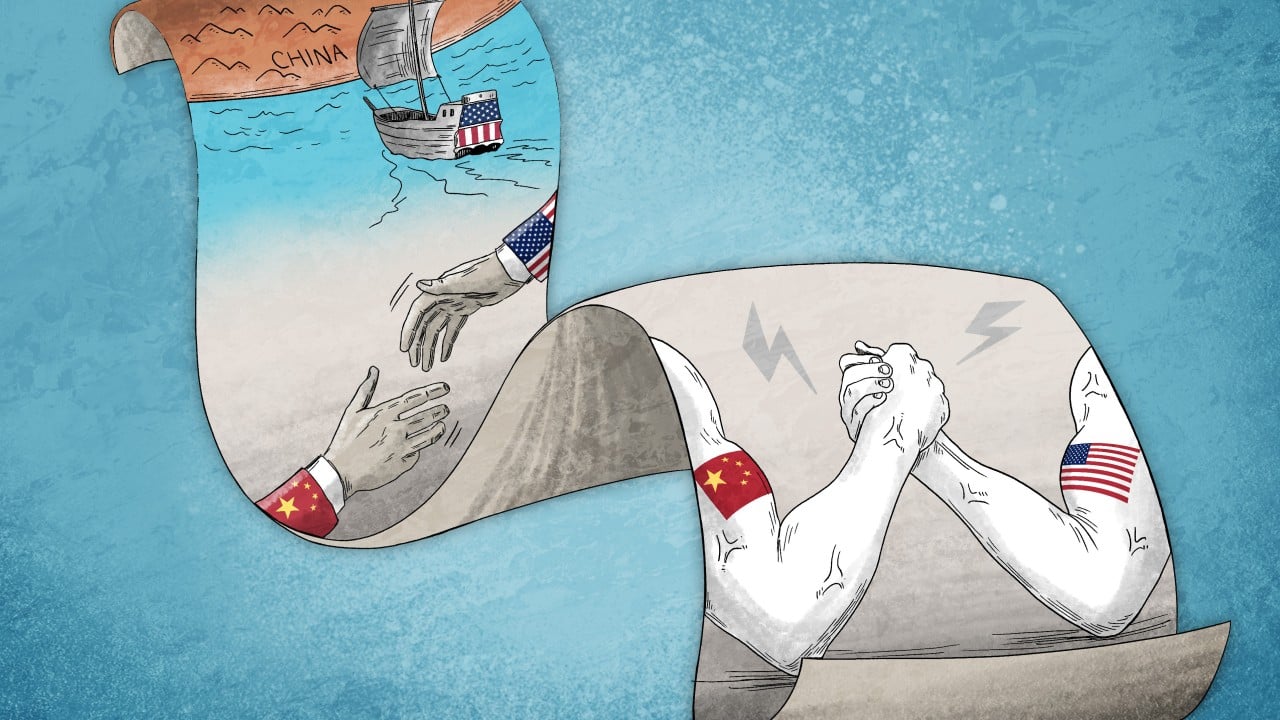
For two and a half centuries, foreign policy formulation regarding China relied on a singular core hypothesis: economic liberalization inherently forces political democratization. This projection mechanism assumed that market integration, foreign direct investment, and trade participation would generate an irreversible vector toward institutional convergence with Western models. This mechanism failed. The underlying diagnostic error stemmed from a fundamental misreading of state capacity and regime preservation incentives.
A regime optimizing for continuity does not evaluate market integration through the lens of ideological assimilation. Instead, it processes external capital and technology transfers as instrumental variables for state strengthening. When American capital entered the Chinese market beginning in the late 1970s, policymakers calculated that the gravitational pull of global commercial networks would alter domestic governance structures.
Instead, the institutional architecture of the host state absorbed foreign inputs while aggressively shielding its political core from structural modification. The misalignment between Western projection and structural reality generated a cumulative strategic deficit. By treating trade as a substitute for containment and engagement as a proxy for alignment, strategic planners systematically underpriced the adaptability of a state-capitalist model capable of scaling industrial capacity without adopting liberal constraints.
The Three Pillars of State-Directed Mercantilism
To understand the mechanics of the current strategic challenge, we must deconstruct the operational model that replaced expected convergence. This system operates through three distinct structural pillars: asymmetric market access, industrial policy targeting, and dual-use technology absorption.
1. Asymmetric Market Access
The foundational pillar relies on maintaining protective barriers for domestic champions while demanding open access to external markets. Foreign entities operating within the jurisdiction face mandatory technology transfer provisions, joint-venture requirements, and localized data storage mandates. This architecture extracts intellectual property at scale.
Capital inflow is welcomed, but control over critical supply chain nodes remains centralized. The cost function for external firms involves a trade-off: surrender proprietary knowledge for short-term revenue access, or forfeit participation in the fastest-growing consumer market. Most firms choose extraction over exclusion, compounding the erosion of Western industrial advantages.
2. Industrial Policy Targeting
State-directed capital allocation bypasses short-term capital market returns to subsidize strategic sectors. Through vehicles such as the National Guideline for the Development of Medium and Long-Term Science and Technology, state financial institutions funnel liquidity directly into foundational technologies. These include semiconductors, advanced robotics, aerospace, and green energy infrastructure.
[State Capital] ---> [State-Owned Banks] ---> [Subsidized Input Costs] ---> [Global Market Dominance]
Western firms competing against this structure face an uneven playing field. Private equity and public markets demand profitability and risk-adjusted returns; state-backed capital accepts prolonged unprofitability to achieve monopolistic control over critical supply chain segments.
3. Dual-Use Technology Absorption
The fusion of commercial research and military modernization represents the third pillar. The policy framework known as Military-Civil Fusion explicitly mandates that commercial advancements in artificial intelligence, quantum computing, and biotechnology must serve both economic and defense objectives.
Because multinational corporations share research facilities and data streams within the domestic ecosystem, boundaries between civil innovation and military application dissolve. This mechanism accelerates defense modernization without requiring the state to bear the entire R and D burden internally.
The Cost Function of Decoupling
As the strategic reality became impossible to ignore, policy shifted from engagement to mitigation. However, mitigation introduces a steep, non-linear cost function. Decoupling or de-risking is not a binary switch; it is a complex reconfiguration of global economic geography characterized by severe friction, capital destruction, and operational redundancy.
+--------------------------+------------------------------------------+
| Strategic Objective      | Operational Trade-Off                    |
+--------------------------+------------------------------------------+
| Supply Chain Resiliency  | Increased baseline costs and inflation   |
| Technology Restrictions  | Reduced R&D funding from lost revenue    |
| Alliance Consolidation   | Friction with secondary trading partners |
+--------------------------+------------------------------------------+
The friction points manifest across three primary vectors:
- Capital Destruction: Decades of physical and intellectual capital investment concentrated in single-node manufacturing hubs cannot be relocated without massive write-offs. Replicating established semiconductor fabrication plants or chemical precursor supply chains requires years of lead time and billions in unhedged capital expenditure.
- Input Cost Inflation: Relocating production to allied nations or reshoring to domestic markets eliminates the deflationary pressures that characterized global commerce for thirty years. Higher labor costs, regulatory compliance overhead, and fragmented logistics networks translate directly into persistent macroeconomic inflation.
- Technological Bafurcation: Export controls and investment screening create parallel technological ecosystems. When different jurisdictions establish incompatible standards for telecommunications, data governance, and artificial intelligence, the transaction costs for multinational commerce multiply. Innovation slows globally as researchers are walled off from shared datasets and cross-border collaboration.
The Mechanics of Strategic Dependency
The vulnerability that policymakers now scramble to reverse is rooted in asymmetrical dependencies. Modern industrial production relies on rare earth elements, active pharmaceutical ingredient precursors, and processed critical minerals. The extraction and refinement of these inputs were intentionally offshored due to environmental externalities and low margin profiles, concentrating processing capacity within a single geopolitical orbit.
This concentration creates a strategic choke point. When processing capacity is monopolized, control over downstream manufacturing is absolute. Restricting the export of processed gallium, germanium, graphite, or antimony immediately halts foreign production lines in defense, automotive, and electronics sectors.
The mechanism relies on weaponizing interdependence. Standard trade theory assumes that mutual dependence deters economic conflict. In practice, when one actor values geopolitical objectives above commercial optimization, mutual dependence becomes a coercive instrument. The actor willing to absorb short-term economic pain gains disproportionate leverage over the actor beholden to quarterly earnings and consumer price stability.
Structural Limitations of Current Mitigation Frameworks
Current legislative and executive responses attempt to counter these vulnerabilities through industrial legislation, export restrictions, and tariff adjustments. Yet, these frameworks suffer from internal contradictions and implementation bottlenecks.
Domestic subsidy programs stimulate capital expenditure for domestic manufacturing, but they collide with severe labor shortages in specialized engineering and technical trades. Throwing capital at physical infrastructure without an accompanying pipeline of skilled labor creates project delays and cost overruns. Furthermore, allies and partners often view unilateral industrial policies with skepticism, interpreting them as protectionist measures disguised as national security imperatives. This friction complicates the formation of a unified front among trading partners whose economies remain deeply entangled with the target state.
Export controls designed to freeze technological progress at a specific generational threshold face the challenge of circumvention through third-party intermediaries and indigenous innovation pressures. Denying access to extreme ultraviolet lithography machines, for instance, initially disrupted advanced node production. However, it simultaneously catalyzed massive state mobilization to solve domestic engineering bottlenecks around older-node optimization and packaging innovations.
Strategic Allocation of Capital and Talent
To alter the trajectory of this strategic challenge, resource allocation must shift from reactive defense to proactive technological dominance.
Capital must be directed away from broad-spectrum subsidies and concentrated into foundational infrastructural monopolies where the adversary remains structurally dependent. This includes securing absolute sovereignty over advanced packaging technologies, synthetic biology platforms, and secure cryptographic networks.
Simultaneously, talent immigration and retention policies must be overhauled. The comparative advantage of open societies lies in their ability to attract global human capital. Securing long-term strategic resilience requires dismantling administrative barriers for elite researchers in critical domains, transforming national scientific output from a domestic endeavor into an international alliance of technical expertise.