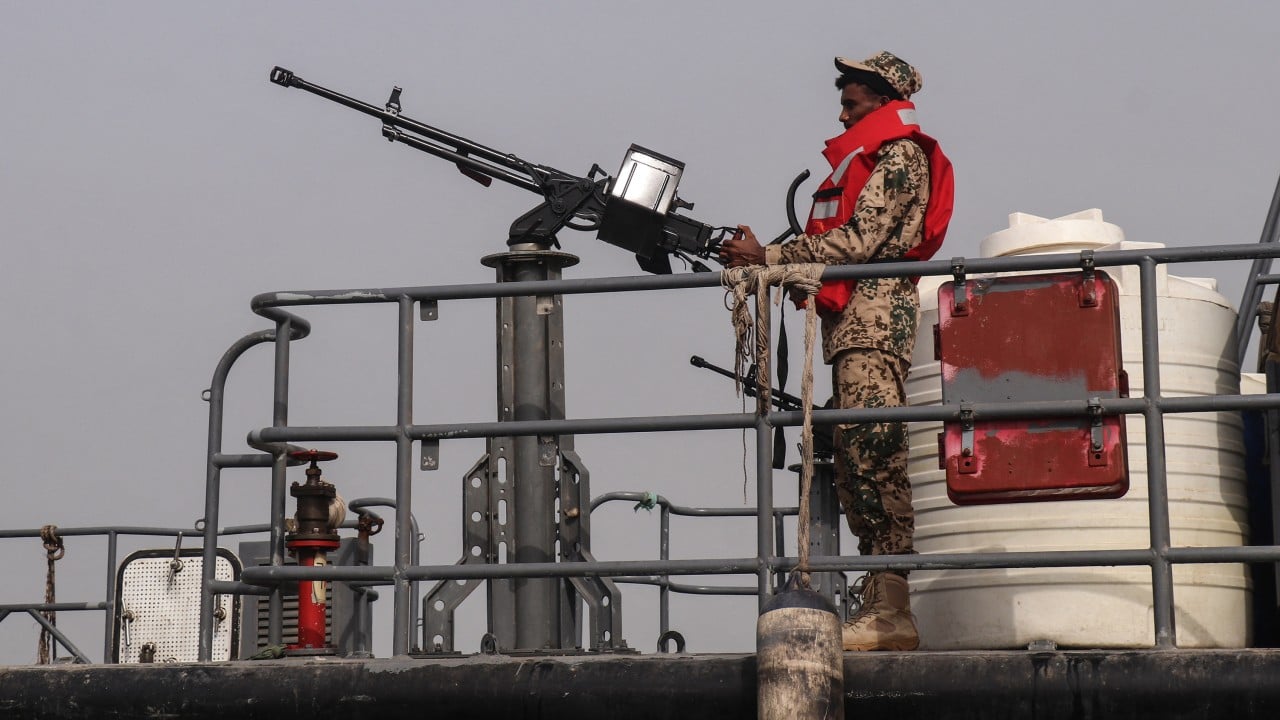
Yemen stands at the structural threshold of total military reversion, driven by the systematic erosion of the 2022 de facto ceasefire architecture. Recent ballistic and drone volleys targeting Marib and Hadramawt, combined with simultaneous maritime interdictions in the Red Sea and Gulf of Aden, signal that the containment equilibrium has failed. To understand why this deterioration happened so rapidly, one must deconstruct the fragile incentive structures that maintained the frozen conflict for four years.
The Anatomy of Truce Decay
The 2022 UN-brokered arrangement was never a political settlement; it was a negative feedback loop of military exhaustion and economic redirection. Three primary pillars sustained that equilibrium, and all three have experienced structural failure:
- The Localization of Combat: For years, hostilities were artificially capped at localized friction points. When Houthi forces launched precision strikes against Sahn al-Jinn camp in Marib and targeted government positions, resulting in dozens of casualties, they broke the spatial containment rule that kept the civil war from boiling over nationally.
- The Maritime Containment Buffer: The Red Sea corridor operated under a localized rules-based logic. Once maritime blockades shifted from asymmetric harassment to declared economic interdictions against regional shipping lanes, the cost function for external actors changed entirely.
- The Asymmetric Deterrence Balance: Internationally recognized government forces, previously bound by defensive postures, have transitioned to active kinetic retaliation along contact lines. This eliminates the buffer zone that previously absorbed low-level provocations before they triggered systemic escalation.
The Regional Transmission Mechanism
Domestic flare-ups inside Yemen are no longer isolated to internal governance disputes. The theater is tightly coupled with broader Middle Eastern kinetic networks, acting as a force multiplier for regional instability.
When state actors anticipate coordinated multi-front operations involving external revolutionary guards and aligned militias, local ceasefires lose their utility. The primary driver of the current escalation is the feedback loop between external theater wars and domestic frontlines. Houthi military actions in Marib function simultaneously as domestic territorial assertion and synchronized regional signaling.
This dual-use military strategy creates an escalatory trap. The internationally recognized government, backed by coalition partners, cannot absorb high-casualty base strikes without responding kinetically. Each retaliatory cycle validates the necessity of mobilization for the opposing side, effectively closing the window for diplomatic off-ramps managed by UN special envoys.
Economic Asphyxiation and the Logic of Blockade
At the core of the breakdown lies a fiscal war of attrition. The declaration of naval blockades and counter-blockades reflects an economic zero-sum calculation. When physical territory cannot be easily captured due to entrenched frontlines, strategy shifts to resource denial.
- Import Chokepoints: Restricting commercial traffic through vital straits shifts the economic burden onto civilian populations, triggering localized inflation and supply chain shocks.
- Infrastructure Targeting: Strikes on civil airports and logistic hubs systematically degrade the administrative capacity of the state, ensuring that any return to governance remains structurally impossible.
Diplomatic appeals for maximum restraint fail because they ignore these hard economic incentives. For combatants engaged in systemic blockade strategies, restraint carries a higher immediate opportunity cost than continued escalation.
Strategic Execution Path
Reversing this trajectory requires shifting from generalized calls for peace to a targeted framework of consequence management. International mediators must alter the risk calculus for individual factions by enforcing verifiable costs on supply lines and maritime harassment. Without a redesign of the enforcement mechanisms underpinning local ceasefires, the de facto truce will remain completely unrecoverable, paving the way for a multi-front theater war far larger than the original 2014-2022 conflict cycle.