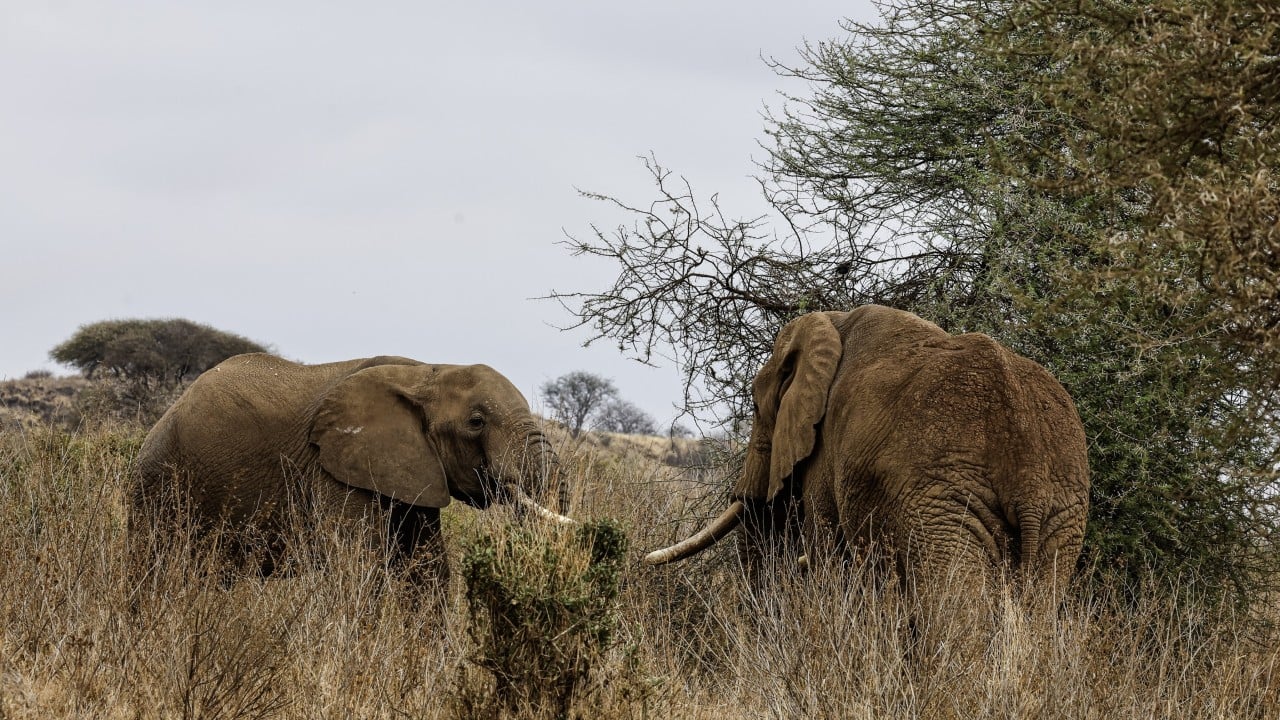
Wildlife management crises rarely stem from single isolated failures. When systemic protections collapse, the breakdown typically reveals a multi-tiered vulnerability across economic incentives, jurisdictional enforcement gaps, and ecological carrying capacities. The recent mortalities of eighteen elephants in the Amboseli ecosystem, accompanied by the swift apprehension of four primary suspects, offer a case study in how conservation security models face stress tests. Rather than viewing such events as anomalies, strategic analysts must deconstruct them as predictable stress points where rural economic pressures collide with enforcement friction. Understanding this dynamic requires moving past surface-level reporting to examine the structural mechanics of wildlife crime, the operational costs of anti-poaching surveillance, and the macro-level indicators that precede mass mortality events in protected zones.
The Economic Drivers of Wildlife Degradation
Poaching operations do not operate in a vacuum; they function as illegal supply chains driven by high-margin illicit markets. When anti-poaching units detect spikes in mortality, the underlying cause is invariably an alignment of economic incentives that outweigh the perceived risk of capture. In regions bordering high-value wildlife sanctuaries like Amboseli, local communities often experience human-wildlife conflict without adequate compensatory mechanisms. This creates a friction point where marginalized populations view wildlife not as an ecotourism asset, but as an economic liability or a resource for extraction.
The supply chain operates through three distinct functional tiers:
- Field Execution: Local operatives responsible for tracking, targeting, and dispatching the animals. These individuals often possess deep ecological knowledge of the terrain but occupy the lowest rung of the economic ladder, capturing a fraction of the end-market value.
- Logistics and Transport: Middle-tier handlers who manage the movement of contraband across administrative boundaries, evading regional checkpoints through bribery, concealment, or exploitation of poorly monitored transit corridors.
- International Syndicates: Financiers and brokers who connect rural supply nodes with global black markets, utilizing sophisticated trade networks and trade-based money laundering to obscure revenue streams.
When law enforcement agencies execute rapid arrests, such as the apprehension of the four suspects in the Amboseli investigation, they typically disrupt the field execution tier. However, unless intelligence operations trace the upward vector toward logistics and syndicates, the structural network remains intact. The primary vulnerability in current conservation strategies is an over-allocation of resources to reactive ground patrols rather than proactive financial and communications surveillance targeting the higher tiers of the supply chain.
Jurisdictional Friction and Enforcement Bottlenecks
Protecting migratory species across porous borders presents a profound logistical challenge. Amboseli ecosystem dynamics extend beyond strictly fenced parks into community lands and international boundaries, creating administrative seams where enforcement accountability dilutes.
When wildlife moves outside designated core reserves, jurisdiction shifts between national wildlife services, local county governments, and community conservancies. Each entity operates under distinct budgetary constraints, legal authorities, and response protocols. This fragmentation creates operational lag. For instance, when intelligence regarding suspicious movements or poisoned bait surfaces at the community level, bureaucratic reporting chains can delay tactical deployment by hours or days. In wildlife security, a delay of this magnitude transforms a prevention opportunity into a forensic investigation.
Furthermore, the investigative phase following high-mortality events exposes vulnerabilities in forensic science integration. Traditional tracking methods rely heavily on visual footprint analysis and informant networks. Modern conservation security, by contrast, requires biological telemetry, ballistic fingerprinting, and digital forensics to build ironclad evidentiary files that survive judicial scrutiny. The transition from field apprehension to successful prosecution depends entirely on the rigorous preservation of the chain of custody for environmental DNA and chemical residues, particularly in cases involving suspected poisoning rather than ballistic trauma.
The Ecological Toll and Habitat Carrying Capacity
Beyond the immediate loss of individual high-value specimens, the death of eighteen elephants in a contiguous ecosystem creates cascading ecological deficits. Elephants act as keystone species, functioning as ecosystem engineers through seed dispersal, bush clearing, and the creation of water access points during dry cycles.
When a cluster mortality event occurs, the local population suffers more than a numerical reduction. It often disrupts matriarchal leadership structures. Elephant social organization relies on the accumulated ecological memory of older females who recall historical drought patterns, migration corridors, and predator avoidance strategies. The loss of prime adults fractures these social units, leading to heightened stress levels, erratic behavior, and increased vulnerability to subsequent environmental or anthropogenic shocks.
The carrying capacity of the Amboseli ecosystem is perpetually bounded by water availability and land-use competition. As human settlements expand along traditional migratory corridors, the spatial footprint available to wildlife compresses. This compression concentrates animals into smaller ranges, increasing frequency of contact with human infrastructure and elevating the baseline stress of the population. Consequently, animals become more predictable targets for poachers who exploit these fixed spatial bottlenecks around shrinking water sources and remaining forage tracts.
Strategic Interventions for Systemic Resilience
Mitigating future mass mortality events requires a pivot from tactical enforcement to structural deterrence. Conservation agencies must integrate multi-source intelligence platforms that combine acoustic monitoring, thermal imaging, and community-sourced tip lines into a centralized command architecture. By treating wildlife protection as an intelligence-led security operation rather than a purely reactive policing function, authorities can anticipate incursions before lethal outcomes occur.
Simultaneously, the economic architecture surrounding protected areas must evolve. Community-based conservation models fail when the opportunity cost of preserving wildlife exceeds the tangible benefits returned to local landowners. Strengthening wildlife value-chain returns through direct employment, transparent revenue-sharing mechanisms, and rapid-response livestock compensation funds will alter the calculus of local populations, turning them from indifferent observers or coerced accomplices into active stewards of the landscape.
The immediate task of prosecuting those responsible for the Amboseli mortalities addresses the symptom. The permanent solution demands the systemic hardening of the economic and administrative environments that allowed the operation to proceed in the first place.