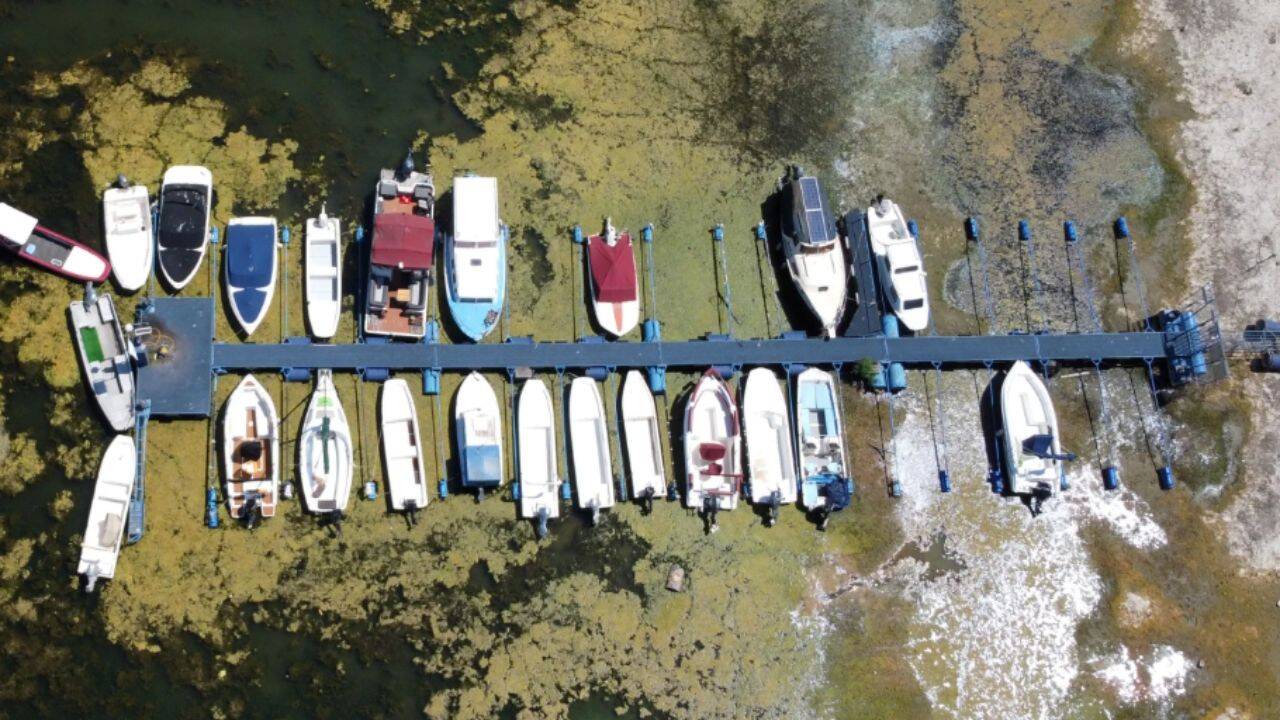
European inland waterways function as an invisible logistics backbone, moving hundreds of millions of tons of freight annually between interior industrial centers and North Sea maritime hubs like Rotterdam and Antwerp. When hydrological baselines drop due to persistent precipitation deficits and accelerated glacial melt exhaustion, the economic impact is immediate, non-linear, and systemic.
Water depth limitations do not merely slow transport down; they alter the fundamental cost function of trade by introducing strict capacity ceilings. A standard Class Vb push convoy operating on the Rhine or the Danube cannot carry a full load when the equivalent water depth at critical bottlenecks like Kaub drops below operational thresholds. Barges must shed up to sixty percent of their cargo weight to clear shallow sections. This operational constraint instantly shifts marginal volume onto parallel road and rail networks, which lack the surplus capacity to absorb heavy industrial bulk freight like coal, chemicals, and steel. The resulting pricing spike reflects a severe capacity mismatch rather than a standard inflationary adjustment.
Industrial supply chains dependent on continuous riverine inputs face a stark binary: curtail production or absorb exponential logistics overhead. Chemical complexes situated along the Upper Rhine rely on direct barge intake for raw materials and cooling inputs. When logistics channels constrict, facility operators must either stockpile reserves during high-water windows—incurring significant working capital costs—or accept throughput reductions that ripple through downstream manufacturing ecosystems.
The Energy and Thermal Feedback Loop
The cascading failure modes extend directly into the power sector, dividing energy vulnerability into three distinct mechanical constraints.
First, thermal and nuclear generation assets require massive volumes of river water for cooling cycles. As ambient water temperatures rise and overall discharge volumes decline, environmental regulations frequently mandate output curbs to prevent thermal pollution in downstream ecosystems. Power plants cannot discharge water exceeding specific thermal thresholds without violating environmental statutes, forcing operators to throttle generation precisely when regional energy demand peaks during dry summer heatwaves.
Second, the fuel supply chain for coal-fired generation relies entirely on the same barge fleet choked by low water. Transporting thermal coal via rail requires specialized rolling stock and terminal access that cannot be rapidly scaled. During severe hydrological events, coal inventories at key inland generation sites dwindle rapidly, creating regional electricity pricing volatility and forcing grid operators to dispatch higher-cost peaking units.
Third, hydroelectric systems suffer from upstream storage depletion. Run-of-the-river installations experience direct generation drops proportional to lower volumetric flow rates, while reservoir-backed facilities must ration stored water to balance multi-season grid stability against immediate irrigation and municipal demands. The intersection of low river discharge and high cooling water temperatures creates a compounding energy deficit that elevates regional industrial operating costs.
The Tourism and Regional Economic Compression
Passenger navigation on European rivers represents a multibillion-euro sub-sector characterized by high fixed capital assets and rigid scheduling constraints. River cruise vessels operate on tight draft tolerances, typically requiring a minimum operational depth that exceeds commercial freight barges due to passenger deck weight distributions and propulsion design.
When low water shuts down stretches of the Main-Danube Canal or the Middle Rhine, operators face massive logistical failures. Passengers must be transferred to buses for multi-leg overland transits, degrading the product experience and generating catastrophic cancellation rates. Because cruise vessels are specialized assets optimized for specific river dimensions, operators cannot easily redeploy idle fleets to alternative geographic markets. The financial burden falls heavily on local economies along historical river corridors—municipalities dependent on excursion spending, heritage tourism, and hospitality infrastructure experience sharp revenue contractions without any offsetting macroeconomic buffer.
The Logistics Reallocation Vector
Mitigating structural river vulnerabilities requires a shift away from reactive crisis management toward systematic network redesign. Industrial operators are increasingly deploying shallow-draft pusher craft designed specifically to maintain positive buoyancy at lower water levels, though these vessels sacrifice payload volume per transit.
Infrastructure owners are evaluating targeted dredging operations and geometric restructuring of known pinch points, balanced against the ecological necessity of maintaining natural river morphology. Supply chain architects are embedding hydrological monitoring data directly into enterprise resource planning platforms to trigger automated inventory buffers weeks before a projected low-water threshold hits critical mass. Diversifying modal mix away from sole-source river reliance toward resilient rail-water intermodal hubs remains the primary long-term operational adjustment for industrial zones exposed to recurring hydrological volatility.
Capital expenditure must prioritize terminal offloading speed and multi-modal storage buffers over raw fleet expansion. Logistics providers should price long-term freight contracts with dynamic hydrological index adjustments to hedge against volume-to-weight penalties during seasonal drought windows. Regional planners must decouple industrial cooling dependencies from single-source river extraction through closed-loop recycling and alternative heat-exchange arrays.