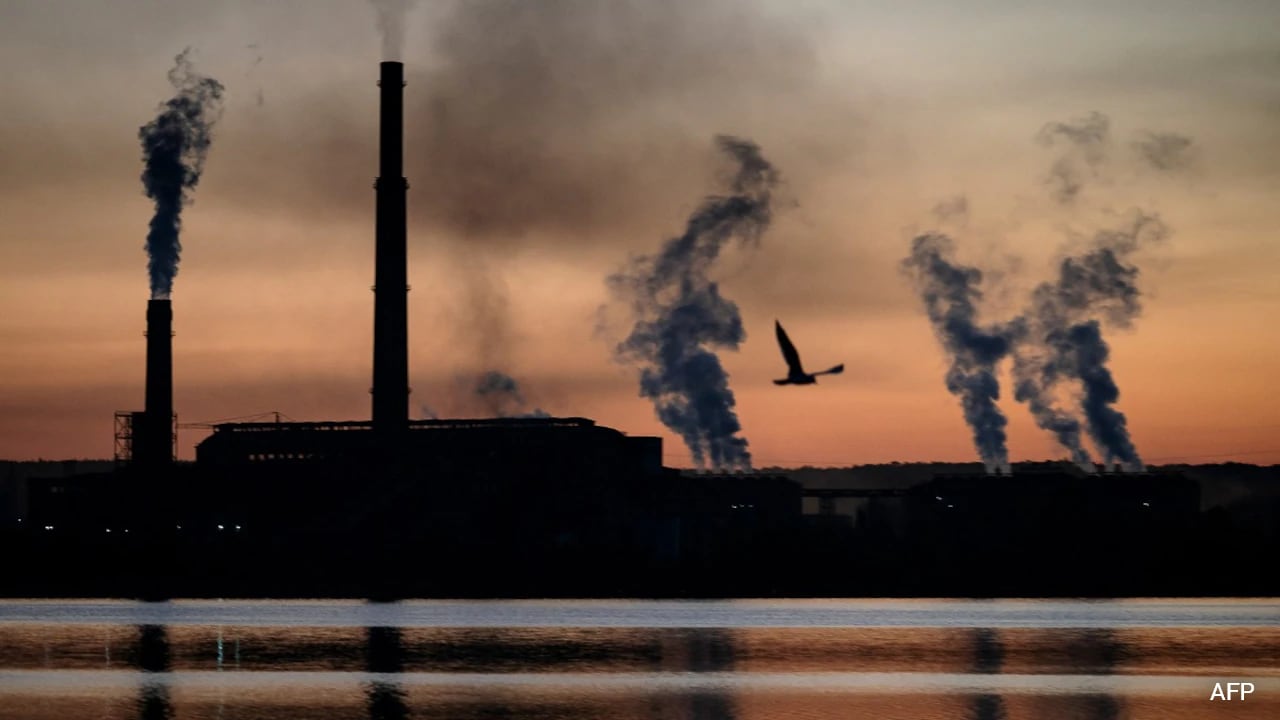
The room smelled faintly of old paper and ozone, the scent of a bureaucracy preparing to unmake a decade of work.
Outside, the autumn air carried the crisp promise of change, but inside the headquarters of the Environmental Protection Agency, the change was entirely backward. With a series of decisive administrative strokes, federal officials dismantled the scaffolding that kept a check on America’s largest industrial smokestacks. The limits on carbon dioxide emissions from coal and gas-fired power plants—the hard-fought boundaries meant to slow an overheating atmosphere—were officially wiped away. Recently making news recently: Why the Sacramento Stalking Tragedy Exposes a Broken Protection System.
To read the policy briefs is to enter a sterile theater of numbers. The agency argued that erasing these rules would save the energy sector billions of dollars, freeing up capital in an era when artificial intelligence data centers and sprawling manufacturing plants demand an insatiable amount of electricity. It is a logic built on immediate utility. Turn on the lights. Keep the servers humming. Feed the grid at any cost.
Yet numbers rarely capture the weight of an invisible ceiling being lifted. Additional insights regarding the matter are covered by Reuters.
Consider what happens when the legal anchor holding back millions of tons of greenhouse gases is cut. Imagine a power station tucked into the rolling hills of the Ohio River Valley, a concrete behemoth that has churned electricity into the local economy for half a century. Under previous frameworks, its operators weighed the heavy expense of installing carbon capture technology or pivoting toward cleaner inputs. Now, those guardrails are gone. The economic friction vanished. The path of least resistance leads straight back to the burner.
This is not merely a legal adjustment buried in the Federal Register. It is an invitation.
For the communities living downwind, the revocation hits differently. They are the ones who measure industrial policy not in projected compliance savings, but in the frequency of code-blue asthma attacks on humid July afternoons, or in the creeping realization that the local creek never quite freezes over the way it used to when they were children.
The administration’s argument rests on a profound philosophical pivot. By building on earlier decisions to rescind the foundational scientific determination that greenhouse gases endanger public health, the agency essentially declared that the federal government lacks the jurisdiction—and the will—to police the sky. The atmosphere is once again treated as an infinite, free dumping ground.
But the physical world does not negotiate with regulatory text.
Atmospheric carbon does not care about administrative relief or projected compliance savings. It accumulates silently, molecule by molecule, trapping the sun’s fury closer to the earth’s crust. Every gigaton released from an unfettered combustion chamber compounds a mortgage that future generations will inherit without their consent.
Market defenders will tell you that the story does not end with a stroke of a pen. They point out that economics have their own gravity. Renewable energy sources like solar and wind have grown fiercely competitive, and many utility companies have already baked long-term decarbonization into their portfolios because the math simply makes sense. Coal remains an expensive relic for many regions, constrained by aging infrastructure and cheaper natural gas alternatives.
Even so, removing federal limits removes the floor. It tells the worst actors that restraint is optional and ambition is a fool's errand. It creates a regulatory fracture where states that choose to protect their air must now fight a lonely battle against neighbors who race to the bottom for cheap power.
History is filled with moments where convenience triumphed over caution, where the urgency of the present moment blinded societies to the slow-moving freight train of consequences.
The ink on the repeal is dry. The power plants will continue to hum, burning the remnants of ancient forests turned to stone, venting an invisible legacy into the clouds. The ledger books in corporate offices show immediate relief. But out on the horizon, where the weather grows sharper and the seasons lose their predictable rhythm, the true cost remains entirely unbilled.