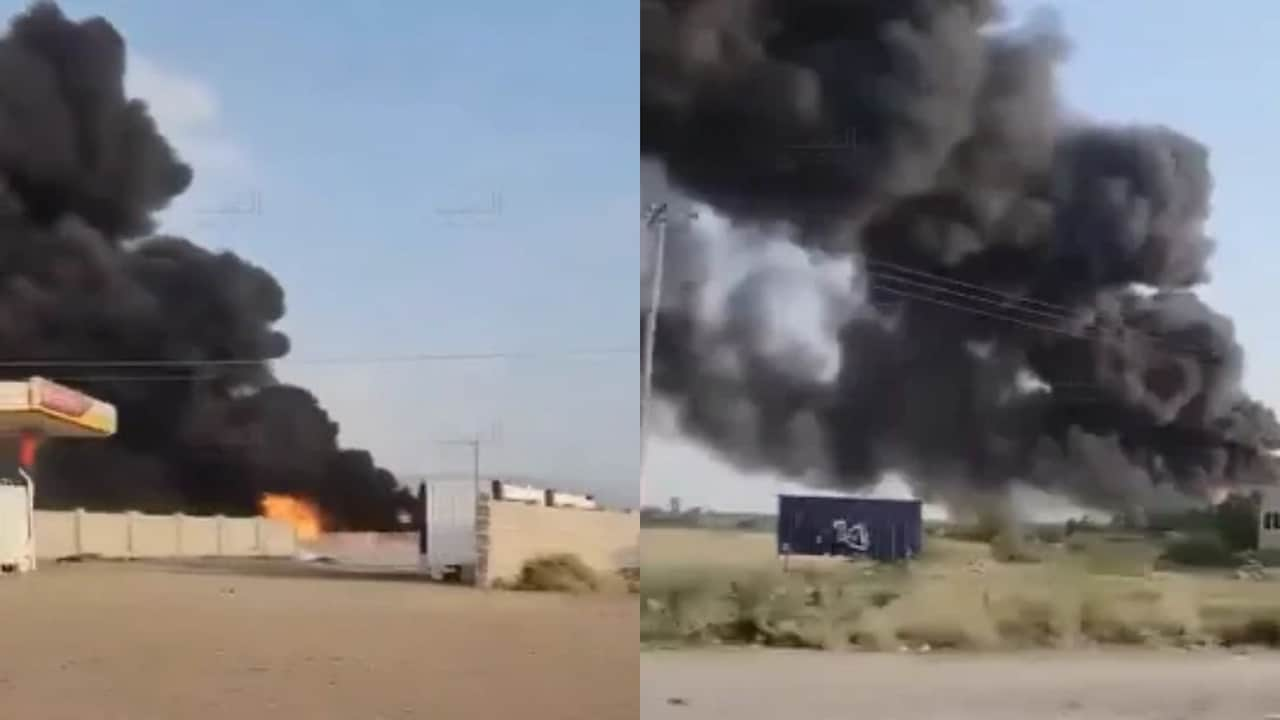
Thick black smoke rising over a Yemeni oil facility makes great television. It also makes terrible market intelligence.
Every time a strike hits energy infrastructure in Yemen, the headline machine cranks up the exact same script. Smoke billows. Social media clips circulate. Commentators predict imminent supply shocks, spiking prices, and a crisis at the pump.
That reaction is lazy. Worse, it is analytically sloppy.
A plume of smoke does not automatically equal a global oil shock. Yemen is not Saudi Arabia. A strike on a Yemeni terminal or processing site is not the same thing as taking Ras Tanura or Abqaiq offline. Treating every regional headline as an equivalent threat to global crude barrels confuses dramatic optics with physical market math.
I have watched desks and corporate risk teams blow money chasing smoke clouds when the real variable sits somewhere far less photogenic. If you want to read energy conflict properly, you have to strip away the theater and look at flows, chokepoints, spare capacity, and strategic intent.
The Lazy Consensus Around Every Strike Video
When a video shows black smoke curling into the sky over Yemen, the standard takeaway goes something like this: a strike hit an oil site, therefore supply is threatened, therefore energy markets face immediate disruption.
There is a kernel of truth in there, which is why the narrative survives. Strikes on oil infrastructure can disrupt local operations, damage storage tanks, halt exports from a specific terminal, and rattle regional shipping nerves. Nobody serious denies that kinetic strikes carry real physical consequences.
The mistake is jumping straight from "a facility was hit" to "global balances just broke."
Energy markets price physical barrels delivered to refineries, not dramatic camera angles. A facility can burn for hours or even days while having a tiny footprint relative to daily global oil demand—which sits north of 100 million barrels per day. Even when a local export terminal is sidelined, the global impact depends on how much crude actually moves through that node, whether alternative grades can substitute, and how producers with spare capacity respond.
Optics Versus Balance Sheets
Visual evidence is seductive because it feels immediate and undeniable. You see fire; you assume damage; you assume scarcity.
Yet energy analysts—figures like Daniel Yergin in his histories of oil crises and global supply chains—have repeatedly shown that markets react not just to physical loss, but to uncertainty, chokepoint risk, and response capacity. A small physical loss in a peripheral producer can move prices temporarily if traders fear escalation against larger exporters or shipping lanes like the Bab el-Mandeb Strait or the Strait of Hormuz. Conversely, a dramatic visual from a constrained or already-disrupted site may barely register once traders check actual cargo data.
Conflating the video with the balance sheet is how smart people make expensive mistakes.
You Are Asking the Wrong Question
Most readers searching about a strike on a Yemeni oil site want to know one of two things: Is oil going to spike? or How bad is the damage?
Both questions miss the sharper point.
The better question is: Does this strike change the flow of barrels through critical chokepoints, or alter the calculation of major producers?
When analysts ask that question, the focus shifts immediately from a single smoking site to the surrounding system:
- Throughput vs. headlines: How many barrels per day were actually moving through the affected site prior to the strike?
- Chokepoint exposure: Is the strike a one-off hit on infrastructure, or part of a broader campaign threatening maritime transit?
- Spare capacity: Do major producers have enough slack to offset localized losses if tensions widen?
- Insurance and routing: Are tankers rerouting, paying higher war-risk premiums, or delaying transits?
A strike with zero impact on major export arteries can still matter politically and humanely. Militarily, it can signal escalation or degrade an adversary's revenue and logistics. Economically, though, its weight depends on system-level mechanics, not how dark the smoke looks on a phone screen.
How Energy Markets Actually Price Strikes
Let's separate the mechanics that actually move prices from the noise that merely fills airtime.
1. Local Infrastructure vs. Systemic Chokepoints
In energy terms, infrastructure refers to specific physical assets—wells, pipelines, refineries, storage farms, and export terminals. Chokepoints are narrow maritime or pipeline corridors through which massive volumes of seaborne trade must pass.
Damaging a specific facility hurts that facility and potentially the local economy or faction relying on it. Threatening a chokepoint—or striking assets tied to major export flows—threatens global trade directly. Yemen sits adjacent to one of the world's most sensitive shipping lanes, the Bab el-Mandeb, which links the Red Sea and Suez Canal route to the Gulf of Aden. Because of that geography, any strike in the wider conflict environment forces shipping operators and insurers to weigh spillover risk.
Still, proximity to a chokepoint is not the same as closing it. Traders look at vessel tracking, freight rates, and insurer notices before pricing a full-blown transit crisis.
2. The Role of Spare Capacity and Inventories
Spare capacity is the volume of oil production that can be brought online relatively quickly—typically within weeks or a few months—and sustained for a period of time. Commercial and strategic inventories act as shock absorbers when disruptions occur.
If a localized strike removes a modest stream of supply and spare capacity exists elsewhere in the market, the physical deficit can often be cushioned. Even when spare capacity is tight, markets look at inventory draws and builds to judge whether a disruption is biting into real stockpiles or just creating temporary friction.
Imagine a scenario where a strike hits a secondary oil storage and export facility in a conflict zone already operating far below its historical peak output. Video clips spread rapidly online. At first glance, the footage looks severe. Yet when traders check export manifests and see that actual shipped volumes from that site were already heavily constrained, while alternative supplies remain accessible, the initial price jump can fade quickly once the headline shock wears off.
That thought experiment highlights a recurring trap: assuming a facility's pre-war nameplate capacity equals its real-world market impact today. Years of conflict, underinvestment, and operational hurdles often leave conflict-zone infrastructure running at a fraction of nominal capacity.
Dismantling the "People Also Ask" Traps
When news of a strike breaks, search engines fill up with predictable follow-up questions. Most of them rest on shaky assumptions.
"Does a strike on a Yemeni oil site mean global oil prices will surge?"
Not automatically. A sustained surge in global crude requires a meaningful tightening of global supply relative to demand, or a credible, prolonged threat to major supply routes or large producers. A strike on a Yemeni oil site can trigger a brief risk premium if markets worry about wider regional retaliation. It does not, by itself, guarantee a lasting price spike.
"How can you tell if the damage is serious from videos?"
You can't—not reliably. Smoke tells you combustion is happening. It does not tell you whether a non-critical tank caught fire, a pipeline was bypassed, or a core processing unit was permanently knocked out. Satellite imagery, verified damage assessments, and physical flow data matter far more than social media clips.
"Why do oil sites get targeted in regional conflicts anyway?"
Because energy infrastructure is both economic and symbolic. Strikes can aim to deny revenue, disrupt fuel distribution, degrade logistics, signal resolve, or retaliate for prior attacks. Military logic and commodity market logic overlap, but they are not identical. A strike can succeed militarily or politically while leaving global oil balances largely intact.
Where My Contrarian Read Can Backfire
Being contrarian for its own sake is just another form of laziness. If you treat every strike video as pure noise, you can get blindsided when the exception actually arrives.
Here is where this skepticism can fail you:
- Escalation spirals: A seemingly limited strike can trigger retaliation against much larger energy assets or key shipping lanes. What starts as a contained incident can become the spark for a wider shock.
- Information lag: Right after a strike, verified facts are scarce. Markets can move violently on rumor and fear long before accurate damage assessments emerge.
- Regional fuel pain: Even when global crude barely budges, local populations and regional operators can face acute fuel shortages, power disruptions, and higher local prices. "Not a global shock" does not mean "no impact."
Ignoring escalation risk just to sound clever is a fast way to get run over.
What Serious Analysts and Operators Do Instead
I have seen teams waste hours debating whether a viral clip shows a "massive" fire while ignoring the only numbers that pay the bills. If you want an edge over headline-chasers, change your checklist.
- Check the baseline first. Before reacting to a strike on any energy site, find out how much crude or refined product that site was actually moving before the attack. Zero in on actual throughput, not old peak numbers.
- Track maritime and insurance signals. Watch whether commercial vessels are altering routes, pausing transits, or facing steep war-risk insurance changes in nearby waters. Money in shipping and insurance moves fast when real danger rises.
- Separate tactical hits from systemic threats. Ask whether the strike alters major export flows or chokepoints. If the answer is no, treat initial price spikes with healthy skepticism.
- Watch for retaliation windows. After any strike in an active conflict, look closely at the days immediately following—not just the day of the attack—to see if adversaries escalate against higher-impact targets.
- Audit your own bias. Notice when you are reacting to dramatic visuals versus verifiable physical data. If you cannot point to a concrete change in supply, demand, transit, or spare capacity, you are trading on emotion.
Stop mistaking smoke for a supply shock. Look at the barrels.