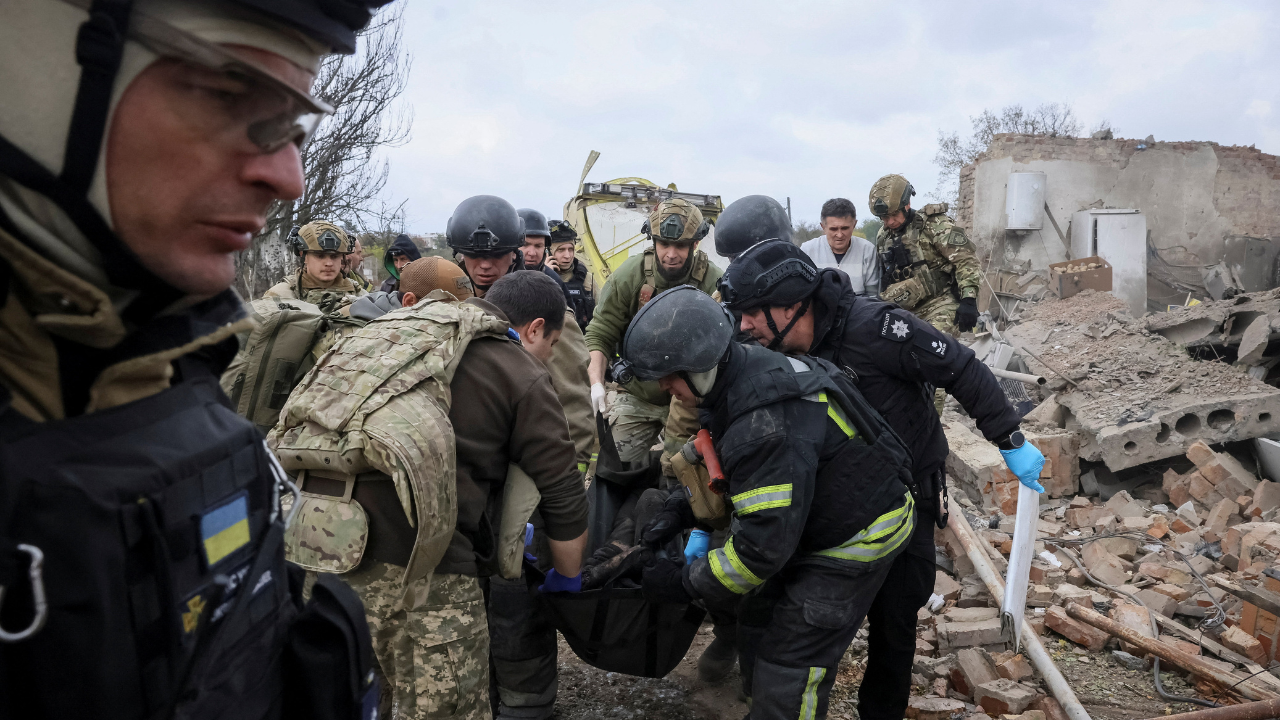
Twenty-six people were killed when Russian strikes hit a school used for aid distribution in Komyshuvakha in Ukraine's Zaporizhzhia region.
That initial toll shocked readers when reports first broke on November 2 and November 3, 2026. Yet the real story behind the strike on a Ukrainian aid hub goes deeper than a single headline number. Rescue teams faced ongoing drone threats as they pulled victims from the rubble, and later reporting showed the death toll climbing sharply higher as search efforts continued.
When a war hits a place where neighbors gather for food, medicine, and shelter, diplomacy stops looking theoretical. It turns into an immediate question of survival.
Why This Strike on a Ukrainian Aid Hub Shattered Fragile Hopes
The attack landed right after fragile hopes of progress toward peace had briefly surfaced. A local humanitarian pause in the south had recently expired without violations, and talks were being discussed. Then aerial bombs hit the school building and a nearby shelter where people had gone for cover.
Ukrainian President Volodymyr Zelenskyy said the school was struck first, followed by heavy hits on a nearby shelter, calling it proof that Moscow wasn't pursuing genuine de-escalation. When strikes hit both a distribution point and a shelter, civilians don't have an obvious safe fallback. Honestly, that's what makes double-wave attacks so terrifying for communities trying to hold on near the front.
In coverage like the Times of India report on the Komyshuvakha strike, the headline focuses on the initial 26 fatalities. Looking at follow-up reporting changes the picture. Rescue operations stretched on under difficult conditions, and subsequent tallies documented dozens more deaths and missing persons as rubble was cleared.
Schools as Lifelines in Frontline Towns
People who haven't lived near a war zone sometimes wonder why aid centers operate out of schools. The answer is pretty practical. Schools often have large courtyards for loading trucks, wide hallways for organizing boxes, and basements that double as shelters.
- Predictable weekly rhythm: Residents in frontline settlements often rely on regular distribution days for staples, winter supplies, and medical items.
- Shared community space: Elderly neighbors, families who stayed behind, and local volunteers all know where to find help without guessing.
- High vulnerability: Because the location is familiar to locals, large groups can be present at the same time.
That familiarity cuts both ways. It helps vulnerable people get help faster. It also makes the site tragically exposed if aerial bombs or drones arrive without warning.
What People Get Wrong About Frontline Aid and Ceasefires
A common mistake outside observers make is treating a local ceasefire or diplomatic rumor as an immediate turning point on the ground. In reality, local pauses can be narrow, temporary, or tied to specific routes or windows. Once they expire, combat can snap back in hours.
Another misconception is that aid workers and humanitarian hubs have an invisible shield. International humanitarian law strictly prohibits targeting civilians and civilian objects, and UN officials condemned the Komyshuvakha attack as a grave violation of those rules. Still, legal rules on paper don't stop incoming munitions or drones hovering over a rescue scene.
Rescue Work Under Threat and Digital Chaos
Digging through collapsed concrete is grueling enough in peacetime. Doing it while fresh drone strikes are reported nearby puts first responders and volunteers in constant danger. Regional officials noted how dangerous the environment remained for emergency crews working into the evening.
Around the same period, fake emergency alerts circulated online and via messaging apps, warning of false nuclear, radiation, or chemical threats. Authorities had to manage digital confusion while keeping traditional sirens and SMS systems running. Modern conflict isn't just physical bombs. It's psychological noise layered on top of physical fear.
Air Defenses, Winter Pressure, and Global Reactions
This attack didn't happen in a vacuum. As colder weather sets in, attacks on energy infrastructure and frontline towns carry extra weight, and Ukraine's leadership has repeatedly stressed shortages of air defense interceptors and missiles.
International reactions spanned UN officials calling out violations of humanitarian law, European leaders pressing for stronger backing, and regional authorities setting up mourning periods and financial aid for injured survivors and funeral costs. Meanwhile, cross-border drone exchanges and diplomatic mediation efforts continued in parallel, showing how uneven and contradictory the broader situation remains.
If you're following this story closely, don't stop at the first day's casualty count. Check updated dispatches from established wire services and UN humanitarian monitors over several days, since rescue tallies shift as rubble is cleared. Pay attention to the distinction between temporary local pauses and lasting settlements, and look for verified reporting from emergency responders and international observers rather than viral posts or unverified alerts.
Ukraine Says Russian Strike On School In Zaporizhzhia Kills 26 provides video context on the strike at the school used for aid distribution in Ukraine's Zaporizhzhia region.


