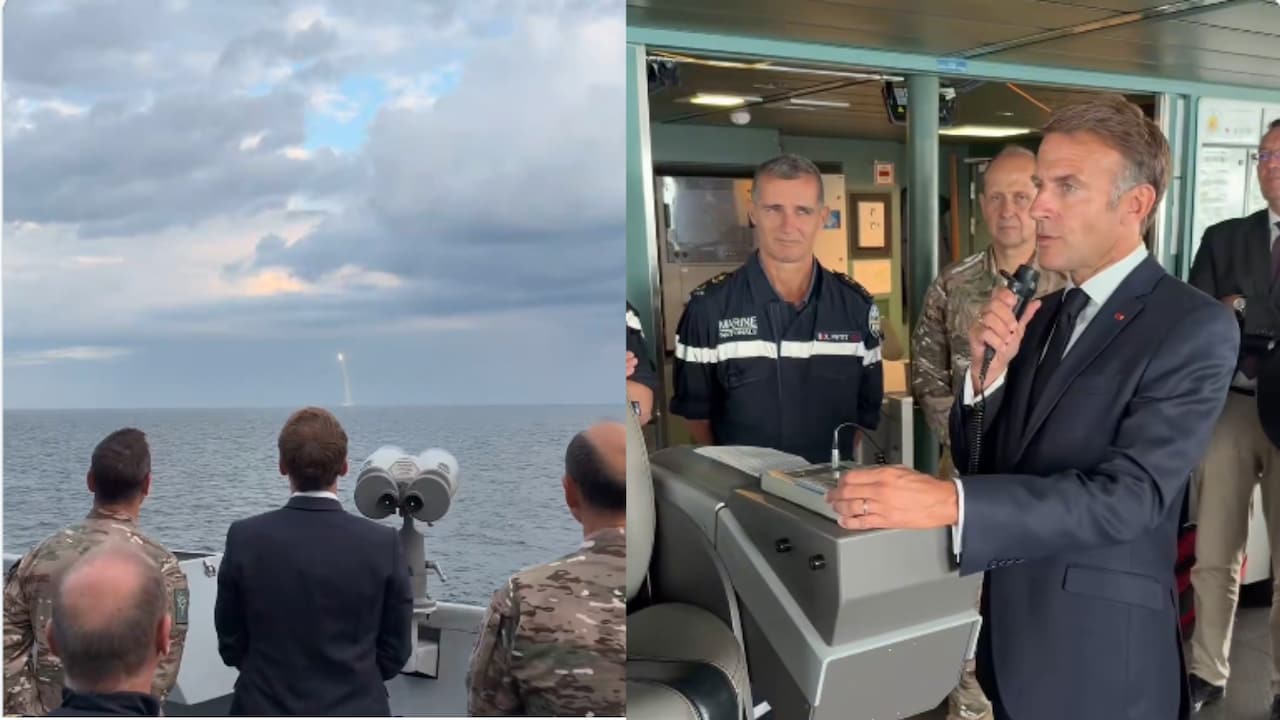
Modern military deterrence functions on verifiable capability rather than political rhetoric. When the French Navy successfully launched an unarmed M51.3 submarine-launched ballistic missile from the Le Vigilant off the coast of Brittany, the operation provided a clear baseline for evaluating Europe's premier sea-based nuclear deterrent. Strip away the geopolitical commentary surrounding the event, and the technical mechanics reveal a calculated exercise in weapon system lifecycle validation, payload delivery evolution, and strategic signaling.
The Architecture of the M51.3 Program
The transition from baseline iterations of the M51 architecture to the M51.3 variant represents a targeted evolution in intercontinental ballistic missile engineering. The primary objectives of this variant center on upgrading guidance accuracy, improving range characteristics, and refining penetration aids designed to defeat modern multi-layered missile defense networks.
The technical parameters of the program are governed by strict physical constraints inherent to submarine-launched systems:
- Mass limitations imposed by the internal diameter and vertical launch tubes of the Triomphant-class and future SNLE 3G submarines.
- Propulsion efficiency demands managed by a three-stage solid-fuel rocket motor configuration using an ammonium perchlorate composite propellant.
- Thermal management and guidance precision required during atmospheric re-entry at speeds exceeding Mach 25.
The October 2026 test flight was not merely an experimental launch; it was the final validation step required to certify the platform's readiness following a major maintenance overhaul of the Le Vigilant. By launching the missile without a nuclear payload, the Directorate General of Armaments isolated telemetry data to verify stage separation, inertial navigation accuracy, and the functional integrity of the onboard guidance systems under real-world launch conditions.
The Strategic Cost Function and Industrial Base
Maintaining an independent nuclear triad or dyad requires continuous capital allocation and specialized industrial capacity. France allocates approximately 5.6 billion euros annually to sustain an arsenal of roughly 290 operational warheads divided between submarine- and air-launched delivery vectors. This expenditure sustains a closed-loop domestic defense industrial base, featuring prime contractors such as ArianeGroup and Safran, who manage solid propulsion, structural materials, and guidance systems without external dependency.
The economic and operational trade-offs of this posture are clear:
- Autonomy versus Cost: Retaining sovereign control over design, manufacturing, and deployment isolates the nation from foreign supply chain disruptions or export controls like the United States ITAR regulations, but concentrates financial burdens entirely within the national budget.
- Maintenance Cycles: Ballistic missile submarines operate on rotational deployment schedules where overhaul periods dictate operational availability. Testing weapons systems immediately following a major refit ensures that the mean time between failures for critical launch electronics remains within acceptable operational thresholds.
European Security Architecture and Extended Deterrence Mechanics
The timing of the Le Vigilant test coincides with shifting security dynamics across the European continent. As questions regarding the long-term reliability of traditional security umbrellas persist, discussions surrounding European strategic autonomy have gained functional urgency. French leadership has advocated for integrating European partners into structured dialogues concerning its nuclear doctrine.
However, operationalizing extended deterrence across multilateral alliances introduces friction points:
- Command and Control Integrity: French nuclear doctrine relies on a centralized, singular decision-making authority held exclusively by the President of the Republic. Sharing operational deterrence does not equate to sharing the nuclear launch authorization chain.
- Doctrinal Divergence: Different European states maintain varying thresholds for strategic risk, non-proliferation commitments, and regional threat perception, creating a structural barrier to unified nuclear planning.
The utility of the M51.3 test lies precisely in its demonstration of credibility. By proving that the upgraded missile system can transition smoothly from manufacturing design to active submarine deployment, Paris maintains the baseline deterrence required to support its broader diplomatic proposals without altering the strict command protocols that safeguard its arsenal.
The immediate operational priority for the French Navy remains the integration of the M51.3 across the remainder of the ballistic missile submarine fleet and the concurrent development of the next-generation SNLE 3G platform. Success in this domain depends entirely on continuous flight testing, strict adherence to payload weight limits, and rigorous software validation for onboard guidance computers.
This video provides a brief visual overview of the M51.3 submarine-launched missile test from the French Navy vessel.