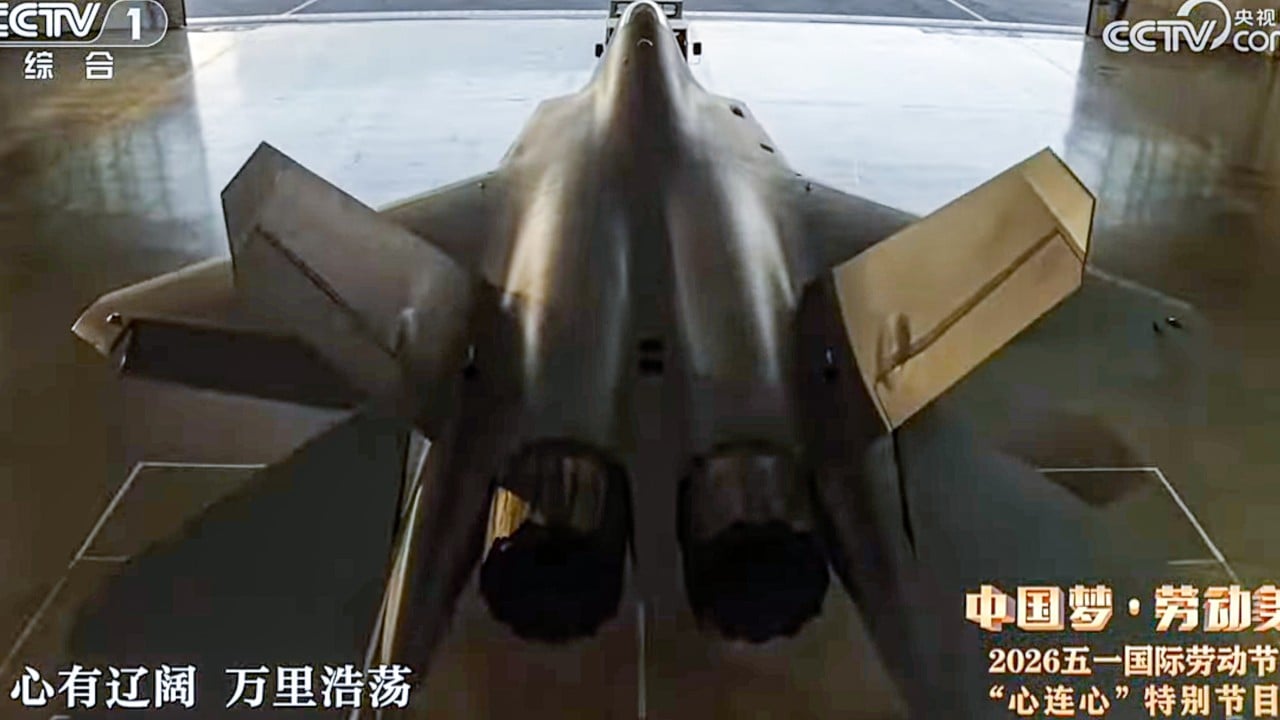
The potential transfer of the Shenyang J-35A to the Pakistan Air Force (PAF) represents more than a procurement cycle; it is a fundamental recalibration of the South Asian balance of power. While mainstream reporting focuses on the visual similarities between the J-35A and the F-35, a rigorous analysis must prioritize the technical-industrial incentives and the operational necessity of fifth-generation capabilities within the specific constraints of the Indus Basin.
The Strategic Imperative for Fifth-Generation Platforms
The PAF currently operates a fleet anchored by the F-16 Block 52 and the JF-17 Block III. While these platforms are capable, they are Fourth-Generation Plus (4.5G) systems defined by high-performance sensors and data links but limited by high radar cross-sections (RCS). The Indian Air Force’s (IAF) acquisition of the S-400 Triumf surface-to-air missile (SAM) system and the Rafale’s Meteor missile suite creates an "anti-access/area denial" (A2/AD) bubble that renders 4.5G platforms increasingly vulnerable.
To maintain a credible deterrent, Pakistan requires a platform capable of surviving in high-threat environments. The J-35A addresses this through three specific mechanisms:
- Low Observability (LO): The J-35A utilizes internal weapon bays and specialized skin coatings to minimize its RCS. This reduces the detection range of ground-based radars, allowing the PAF to strike high-value targets behind enemy lines before an intercept can be vectored.
- Sensor Fusion: Unlike legacy platforms where the pilot must manually correlate data from radar, infrared, and electronic warfare (EW) suites, the J-35A employs automated sensor fusion. This creates a unified tactical picture, reducing pilot cognitive load during high-G maneuvers.
- Network-Centric Warfare: The J-35A acts as a "force multiplier." It can fly forward into contested airspace, identify targets, and transmit that data to JF-17s or ground-based missile batteries, allowing older systems to engage targets they cannot see.
Industrial Logic and the Sino-Pakistani Defense Nexus
The probability of a J-35A export to Pakistan is underpinned by China’s need for an anchor customer for its export-oriented fifth-generation fighter. Historically, China used the JF-17 program to establish Pakistan as a tier-one defense partner. The J-35A serves as the logical evolution of this relationship.
For Shenyang Aircraft Corporation (SAC), an export contract with Pakistan provides critical data on operational performance in diverse climates—from the high altitudes of the Karakoram to the humid coastal regions of the Arabian Sea. This feedback loop is essential for refining the aircraft’s stealth coatings, which are notoriously sensitive to environmental degradation.
Pakistan’s interest is driven by the "One-Platform Solution." Diversification of hardware sources—specifically the reliance on US-made F-16s—carries significant political risk, including sanctions or maintenance cut-offs. Transitioning to a predominantly Chinese fleet ensures a secure supply chain for spare parts and software updates, which are vital for maintaining high sortie rates during a conflict.
Technical Architectures: J-35A vs. Regional Rivals
To understand the tactical advantage, we must decompose the J-35A’s performance metrics against the projected IAF fleet, specifically the Rafale and the upcoming AMCA (Advanced Medium Combat Aircraft).
Thrust-to-Weight Dynamics
The J-35A is powered by twin WS-13 or WS-19 engines. Unlike the single-engine F-35, the twin-engine configuration offers a safety margin for over-water operations and provides higher electrical power generation for advanced AESA (Active Electronically Scanned Array) radars. If the production models utilize the WS-19, the aircraft will likely achieve "supercruise"—the ability to maintain supersonic speeds without afterburners. This capability is critical for intercept missions where time-to-target is the deciding factor.
Radar and Electronic Warfare
The J-35A’s nose cone is designed to house a large-aperture AESA radar. In air-to-air combat, the "First Look, First Kill" metric is determined by the radar’s ability to detect an enemy before the enemy’s EW suite can jam the signal. The J-35A’s integration of Distributed Aperture Systems (DAS) provides 360-degree infrared coverage, allowing the pilot to track incoming missiles and enemy aircraft even when they are outside the primary radar's field of view.
Economic Constraints and Financing Models
The primary barrier to this acquisition is not technical, but fiscal. Pakistan’s macroeconomic volatility places a significant strain on large-scale defense expenditures. However, the defense relationship with China often operates outside traditional market economics.
The financing of a J-35A fleet will likely follow one of three models:
- Long-term Sovereign Credit: China extends low-interest loans specifically for defense procurement, effectively subsidized by the state to maintain regional stability.
- Barter or Debt-for-Infrastructure Swaps: Involving concessions related to the China-Pakistan Economic Corridor (CPEC).
- Joint Production: Similar to the JF-17, Pakistan may seek to assemble portions of the J-35A domestically at the Pakistan Aeronautical Complex (PAC) Kamra. While stealth coatings and engines would remain Chinese-produced, domestic assembly reduces the immediate hard-currency outflow and builds technical expertise.
The Counter-Stealth Equation
India’s response to a Pakistani J-35A will likely involve a two-pronged strategy: the procurement of more S-400 batteries and the acceleration of its own AMCA program. The S-400 uses VHF and L-band radars that are theoretically better at detecting stealth aircraft than X-band radars, though they lack the precision for a missile lock at long ranges.
This creates a "cat-and-mouse" electronic environment. The J-35A’s success will depend on its Electronic Countermeasures (ECM) suite’s ability to "spoof" these low-frequency radars. If the J-35A can effectively jam or deceive the S-400’s tracking sensors, the entire Indian A2/AD strategy collapses.
Operational Integration and Training Hurdles
Acquiring a stealth fighter is a systemic challenge, not just a hardware purchase. The PAF must overhaul its entire operational philosophy to leverage the J-35A:
- Maintenance of Stealth Materials: Unlike the JF-17, the J-35A requires climate-controlled hangars and specialized technicians to maintain the integrity of the Radar Absorbent Material (RAM). Even small scratches on the surface can significantly increase the RCS.
- Data Link Interoperability: For the J-35A to function as a force multiplier, it must communicate with Pakistan's existing Saab 2000 Erieye AWACS and JF-17 Block IIIs. Integrating Chinese fifth-generation software with Swedish and older Chinese systems requires a robust, secure "data bridge" to prevent electronic fratricide or hacking.
- Pilot Selection: Transitioning from 4th-generation stick-and-rudder flying to 5th-generation "system management" requires a different psychological profile. Pilots must be trained to trust the sensor fusion rather than their own visual cues.
Strategic Forecast: The Shift Toward an Offensive Posture
The introduction of the J-35A into the PAF would signal a shift from a "Defensive Deterrence" posture to "Offensive Counter-Air" capabilities. With the ability to penetrate Indian airspace undetected, Pakistan gains a first-strike capability against command-and-control centers and airbases. This increases the "fog of war" for Indian planners and necessitates a massive reinvestment in Indian air defense.
The most probable timeline for this transfer is within the next 36 to 48 months, coinciding with the J-35A’s full operational capability within the People's Liberation Army Air Force (PLAAF). The first batch will likely consist of 12 to 18 aircraft, enough to form a single "elite" squadron tasked with high-priority suppression of enemy air defenses (SEAD) missions.
The J-35A is not a "game-changer" in isolation; it is a catalyst for a broader shift in the regional arms race. Its arrival forces India to either accelerate its indigenous programs or look toward the United States for F-35s—a move that would fundamentally alter India’s long-standing policy of strategic autonomy.
The strategic play for Pakistan is to utilize the J-35A to negate India's numerical and technological edge in 4.5G aircraft. By deploying a "Silver Bullet" force of stealth fighters, the PAF can achieve local air superiority at a fraction of the cost of matching the IAF’s total fleet size. Success depends entirely on the maturity of the WS-19 engine and the ability of PAC Kamra to sustain the high-maintenance requirements of stealth technology.