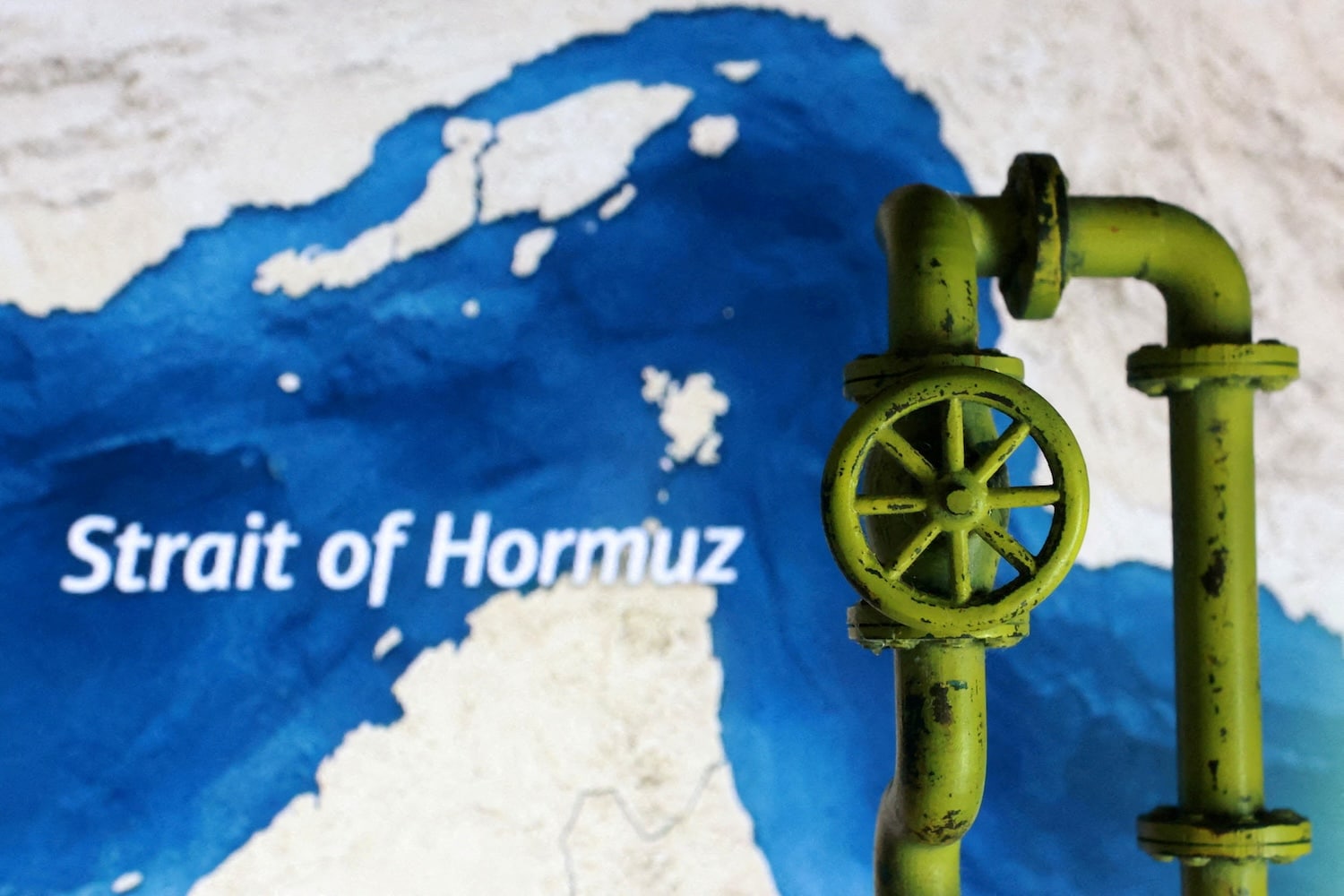
The international security establishment is predictably hyperventilating over Iran's announcement of a maritime "hotline" in the Strait of Hormuz. The mainstream consensus has already crystallized: we are witnessing either a desperate bid for regional dominance or a fragile diplomatic breakthrough designed to prevent accidental escalation.
Both interpretations are fundamentally wrong. They mistake geopolitical theater for operational reality.
The establishment press loves a crisis narrative because crisis drives clicks. But if you talk to the people actually underwriting the risk—the hull underwriters in London, the sovereign wealth funds backing the fixtures, and the commodity traders moving three-million-barrel stems of Basrah Medium—you get a completely different story. The shipping markets aren't panicking about a "new normal" or a permanent blockade because they understand a basic truth that naval analysts consistently ignore: the Strait of Hormuz cannot be permanently closed by asymmetric friction, and a hotline changes absolutely nothing about the underlying math of energy logistics.
This is not a story about military brinkmanship. It is a story about financial risk management, structural redundancies, and the sheer vanity of thinking a red telephone can stabilize a chokepoint that thrives on calculated instability.
The Lazy Consensus of Permanent Escalation
The prevailing narrative treats the Strait of Hormuz as a fragile glass thread. If Iran pulls too hard, the thread snaps, global oil prices hit $150 a barrel, and the global economy implodes. This assumption underpins every boilerplate analysis coming out of Washington and Brussels. When Tehran says there is "no return to pre-war conditions," the foreign policy apparatus nods solemnly and prepares for chronic supply shocks.
Let's dismantle that premise with basic structural geography and commercial reality.
First, the idea of a permanent blockade assumes that closing a shipping lane is purely an act of military will. It isn't. It is an act of economic suicide for the party attempting the closure. Iran relies on the same maritime arteries to export its own crude—even under heavy sanctions regimes—and to import vital commodities. Total closure means total self-strangulation.
Second, the shipping industry has spent decades building layers of insulation against this exact brand of posturing. I have spent years reviewing maritime risk profiles, and if there is one thing the market excels at, it is priced-in cynicism.
Consider what actually happens when friction spikes in the Gulf. War risk premiums move. War risk premiums are the additional insurance fees charged to vessels operating in high-risk zones. When an incident occurs, these premiums spike from nominal rates to fractions of a percent of the vessel's total value. For a $100 million Very Large Crude Carrier (VLCC), a spike to 0.5% means an extra $500,000 per voyage.
Does that stop the ships? No. It just alters the freight economics. The cost is absorbed, passed down the line to the refiner, and ultimately paid by the consumer at the pump. The oil keeps moving because the spread between the cost of the risk and the value of the cargo remains massive. The system is designed to absorb friction, not shatter because of it.
The Illusion of the Red Telephone
Now let's talk about this celebrated hotline. The concept of a crisis communication link sounds comforting to anyone who views geopolitics through the lens of Cold War movies. The theory is that direct lines prevent miscalculation. If an Iranian Revolutionary Guard Corps (IRGC) fast attack craft gets too close to a commercial tanker, a quick call to the hotline de-escalates the tension before an escort frigate opens fire.
This is a profound misunderstanding of how modern maritime gray-zone warfare operates.
Gray-zone operations are not accidental. They are highly calibrated, state-directed actions designed to achieve specific psychological or economic leverage without crossing the threshold into open war. When an asset is harassed, or a vessel is detained under a flimsy regulatory pretext, it is not because a local commander got confused. It is because a deliberate decision was made to signal capability or register displeasure.
A hotline assumes both parties desire absolute clarity. In reality, the strategic value for a state utilizing asymmetric tactics lies precisely in ambiguity. If you remove the ambiguity, you remove the leverage.
Imagine a scenario where an international naval task force calls the hotline during a boarding incident. What happens?
- Option A: The line goes unanswered because the ambiguity is intentional.
- Option B: The response is a bureaucratic wall of boilerplate denials and jurisdictional counterclaims.
- Option C: The line is used to deliver a scripted warning.
In every single scenario, the operational outcome on the water is identical. The hotline does not defuse the crisis; it merely provides a digital record of the breakdown. It is a ghost wire—an administrative band-aid applied to a structural tumor.
The Flawed Questions People Always Ask
When analysts try to parse these developments, they almost always start from a flawed premise. They ask questions that assume the primary driver of Gulf instability is a lack of communication or an unresolved diplomatic grievance.
Does a maritime hotline reduce the risk of war?
This question assumes that wars in maritime chokepoints start because two ships bumped into each other in the dark and things got out of hand. History shows us otherwise. Accidental tactical friction rarely causes strategic wars unless both parties were already fully committed to fighting. The 1980s "Tanker War" did not happen by accident; it was a deliberate, multi-year economic campaign of attrition during the Iran-Iraq War. The presence of a phone line would not have stopped a single anti-ship missile because the targets were hit intentionally.
Will this stabilize global oil prices?
The market doesn't care about diplomatic gestures; it cares about physical volume and insurance liquidity. Oil prices react to hotlines with a brief, algorithmic dip because trading bots are programmed to view "diplomacy" as a negative volatility signal. But physical traders look at the loading schedules at Ras Tanura and Ju'aymah. If the stems are loading and the Lloyds market is writing covers, the price stays anchored to global macroeconomic demand, not political theater.
The E-E-A-T Reality Check: What the Boardrooms Know
If you sit in the risk assessment meetings of major Western oil majors or Asian state-owned refiners, you do not hear people talking about the latest press releases from regional capitals. You hear them talking about deadweight tonnage, routing optimization, and alternative infrastructure.
The real counter-weight to maritime friction isn't diplomacy; it is infrastructure redundancy. Over the last two decades, the regional energy landscape has quietly built bypass valves that fundamentally weaken the strategic leverage of the Strait.
[East-West Pipeline (Saudi Arabia)] ----> Bypasses Hormuz to Red Sea (5 million bpd capacity)
[Abu Dhabi Crude Pipeline (UAE)]     ----> Bypasses Hormuz to Fujairah (1.5 million bpd capacity)
Are these pipelines enough to handle the entire daily output of the Persian Gulf? No. But they provide an immediate, high-volume release valve for the most critical baseline supplies. Furthermore, the global refining footprint has shifted. Modern complex refineries can adjust their Slates—the specific blend of crude types they process—far more dynamically than they could thirty years ago. If a specific grade of Middle Eastern sour crude faces short-term transport friction, buyers pivot to West African, US Permian, or Latin American alternatives.
The downside to acknowledging this reality is that it strips away the drama. It forces us to admit that regional actors have far less structural leverage over the global economy than their rhetoric suggests. It requires us to view these flashpoints not as existential threats to civilization, but as recurring operational expenses built into the cost of doing business in a complex world.
Stop Managing the Drama, Manage the Arbitrage
The conventional advice for companies and governments facing maritime security challenges is always the same: invest in security escorts, lobby for international freedom of navigation operations, and support diplomatic de-escalation frameworks like this new hotline.
That advice is outdated, expensive, and largely ineffective for commercial actors. Instead of trying to fix a geopolitical dynamic that is inherently unfixable, sophisticated operators focus on mastering the structural arbitrage created by the friction.
First, stop treating maritime risk as a binary switch (open vs. closed). Treat it as a variable cost curve. The moment tension rises, the spread between different regional crudes widens. This is where the money is made or saved. Smart charterers do not pull out of the Gulf when headlines turn red; they demand steeper discounts on the FOB (Free on Board) price to offset the rising insurance premiums, often locking in wider margins once the initial media panic subsides.
Second, decouple your logistics strategy from the assumption of regional stability. Optimization should assume friction as a baseline parameter. This means maintaining structural optionality in charter parties—ensuring you have the legal and operational flexibility to swap hulls, change discharge ports, or alter routing without triggering catastrophic demurrage penalties.
The competitor article wants you to believe we are entering a dangerous, uncharted era where new rules are being written via hotlines and proclamations. It is an old, tired script rewritten for a modern audience that has forgotten how resilient global trade actually is. The Strait of Hormuz remains exactly what it has always been: a highly policed, heavily monetized transit corridor where the volume of noise will always exceed the volume of actual disruption.
The hotline is not a shield. It is a stage prop. And the actors will keep playing their parts as long as the audience keeps buying tickets.

/https://tf-cmsv2-smithsonianmag-media.s3.amazonaws.com/filer/c6/97/c697b065-e0bd-4970-81ea-819779296b91/u765404inp.jpg)
