The Strait of Hormuz is effectively a chokehold on the global heart. If you think the recent naval skirmishes are just another blip in a long history of Middle Eastern tension, you’re missing the bigger picture. We’re not looking at a temporary delay in shipping schedules anymore. This is a full-scale disruption of the most vital artery in the energy world. When the water gets quiet in Hormuz, the rest of the world starts screaming.
The reality on the ground—or rather, on the water—is grim. Following a series of aggressive naval engagements between regional powers and international task forces, the passage has become a no-go zone for commercial insurance providers. You can’t sail a billion-dollar tanker through a shooting gallery. It's that simple. While official statements might use diplomatic language to describe "heightened risks," let’s be real. The Strait is blocked by fear, fire, and the sheer cost of doing business.
The Physical Reality of a Chokepoint
The Strait of Hormuz isn't some vast, open ocean. It’s narrow. At its tightest point, the shipping lanes are only about two miles wide in either direction. Think about that for a second. You’re trying to move massive, lumbering vessels through a gap that’s essentially a back alley in maritime terms.
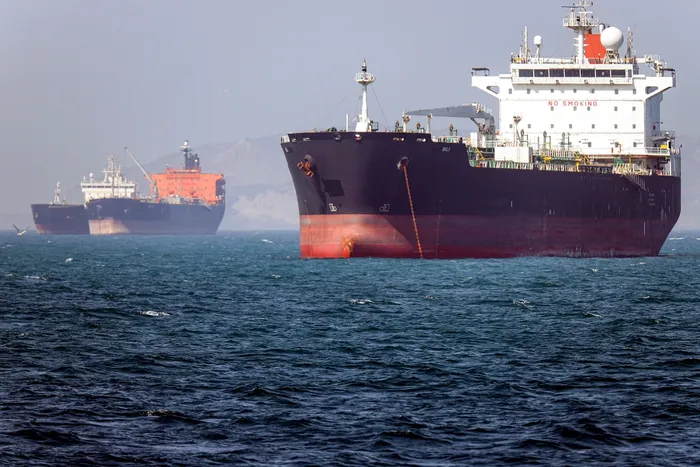
Recent skirmishes have seen the deployment of fast-attack craft and loitering munitions. These aren't just threats; they're active deterrents. When a drone strikes a hull, the physical damage is one thing, but the psychological impact on the shipping industry is the real weapon. Captains are refusing to enter the Gulf. Crews are demanding hazard pay that makes the trip's margins vanish. We’ve seen reports of tankers dropping anchor outside the Gulf of Oman, waiting for a security detail that might never arrive.
Oil isn't just sitting in those ships. It’s stalled in the global supply chain. Roughly 21 million barrels of oil pass through this strait every single day. That's about 20% of global petroleum consumption. When that flow stops, the math gets ugly fast.
Why Escorts and Convoys Aren't Saving the Day
You’d think the presence of high-tech destroyers and international naval coalitions would fix the problem. It doesn't. Not entirely. I’ve seen this play out before where the sheer volume of traffic outweighs the capacity for protection.
Modern naval warfare in narrow waters is a nightmare for big ships. A billion-dollar destroyer is great at swatting down missiles, but it struggles against a swarm of twenty small, explosive-laden boats coming from different directions. The skirmishes we just witnessed proved that the "asymmetric" approach works. It creates enough chaos to make the entire strait "effectively blocked" even if there isn't a physical wall across the water.
Commercial shipping companies operate on thin margins and high stakes. They don't want to be part of a military experiment. Lloyd’s of London and other major insurers have hiked premiums to the point where a single transit can cost millions extra in coverage alone. For many, it’s cheaper to sit and wait—or take the long way around Africa. But you can't easily take the long way when the oil is coming from the Persian Gulf. There is no "Plan B" for a locked-down Hormuz.
The Price of Silence in the Gulf
Let’s look at the numbers because they don't lie. Crude prices don't just go up when ships stop; they jump on the mere rumor of a stoppage. After the latest naval engagements, Brent crude spiked. This isn't just about what you pay at the pump, though that's where you’ll feel it first. It’s about the cost of everything.
Plastic, fertilizer, jet fuel—everything relies on this specific transit point. If the Strait stays in this state of "effective blockage," we’re looking at a global inflationary shock that makes previous years look like a warm-up act.
- Energy Security: Nations like China, India, and Japan rely heavily on this route. Their strategic reserves are deep, but they aren't infinite.
- Supply Chain Contagion: A delay in Hormuz means a delay in Rotterdam, which means a factory in Ohio shuts down because a specific polymer didn't arrive on time.
- Geopolitical Leverage: The parties involved in these skirmishes know exactly what they’re doing. They’re using the world’s gas tank as a bargaining chip.
Misconceptions About the Blockade
People often ask why we don't just use pipelines. It’s a fair question, but it shows a lack of understanding regarding the sheer scale of the problem. Yes, there are pipelines that bypass the Strait, like the Habshan–Fujairah line in the UAE or the East-West Pipeline in Saudi Arabia.
But here’s the kicker. These pipelines combined can only handle a fraction of what the ships carry. You can't fit 21 million barrels a day into those pipes. They are a band-aid on a gaping wound. Honestly, relying on pipelines to solve a Hormuz crisis is like trying to drain a swimming pool with a straw. It’s technically doing something, but it’s not going to save you from drowning.
Another mistake is thinking the "blockade" is a physical barrier like a chain across the water. It’s an electronic and kinetic barrier. It’s mines that might be there. It’s the radar lock from a coastal battery. It's the uncertainty. In the shipping world, uncertainty is just as effective as a concrete wall.
The Failure of Diplomacy Under Fire
We’ve reached a point where words are losing their value. Diplomatic protests are filed every time a ship is harassed, yet the skirmishes continue. The recent naval engagements represent a failure of the "rules-based order" that everyone likes to talk about but few seem able to enforce in the Strait.
When naval forces exchange fire in these waters, the "rules" go out the window. It becomes a game of chicken. Who blinks first? The problem is that the world’s economy is the one being squeezed while the players wait for a blink. International maritime law says everyone has the right of transit, but law doesn't stop a kinetic missile.
I’ve talked to people in the logistics industry who are genuinely terrified. They aren't worried about a week-long delay. They’re worried about a permanent shift in how we perceive the safety of global trade routes. If the Strait of Hormuz can be shut down by a few skirmishes, what does that say about the South China Sea or the Bab el-Mandeb?
Immediate Steps for Navigating the Crisis
If you’re involved in energy, logistics, or even just high-level investment, you can't afford to wait for a "clearance" signal. You need to act based on the reality that the Strait is effectively out of commission for the foreseeable future.
First, diversify your sources immediately. If your supply chain is dependent on Gulf-produced petro-chemicals or crude, you need to look toward West African or American alternatives, even if the spot price is higher. The "security premium" you pay now is nothing compared to the cost of a total supply failure.
Second, re-evaluate your insurance contracts. Most standard policies have "war risk" exclusions that are being triggered right now. You need specialized coverage, and you need to lock it in before the rates climb even higher.
Third, watch the tanker tracking data, not the news headlines. Governments will try to downplay the severity of the blockage to keep markets calm. Look at the actual ship positions. If the "waiting room" in the Gulf of Oman is growing, the Strait is blocked. Period.
The skirmishes have fundamentally changed the risk profile of the region. Stop waiting for things to "go back to normal." This is the new normal. Adjust your strategy, hedge your energy costs, and prepare for a long period of volatility. The Strait of Hormuz is a bottleneck, and right now, the cork is jammed in tight.