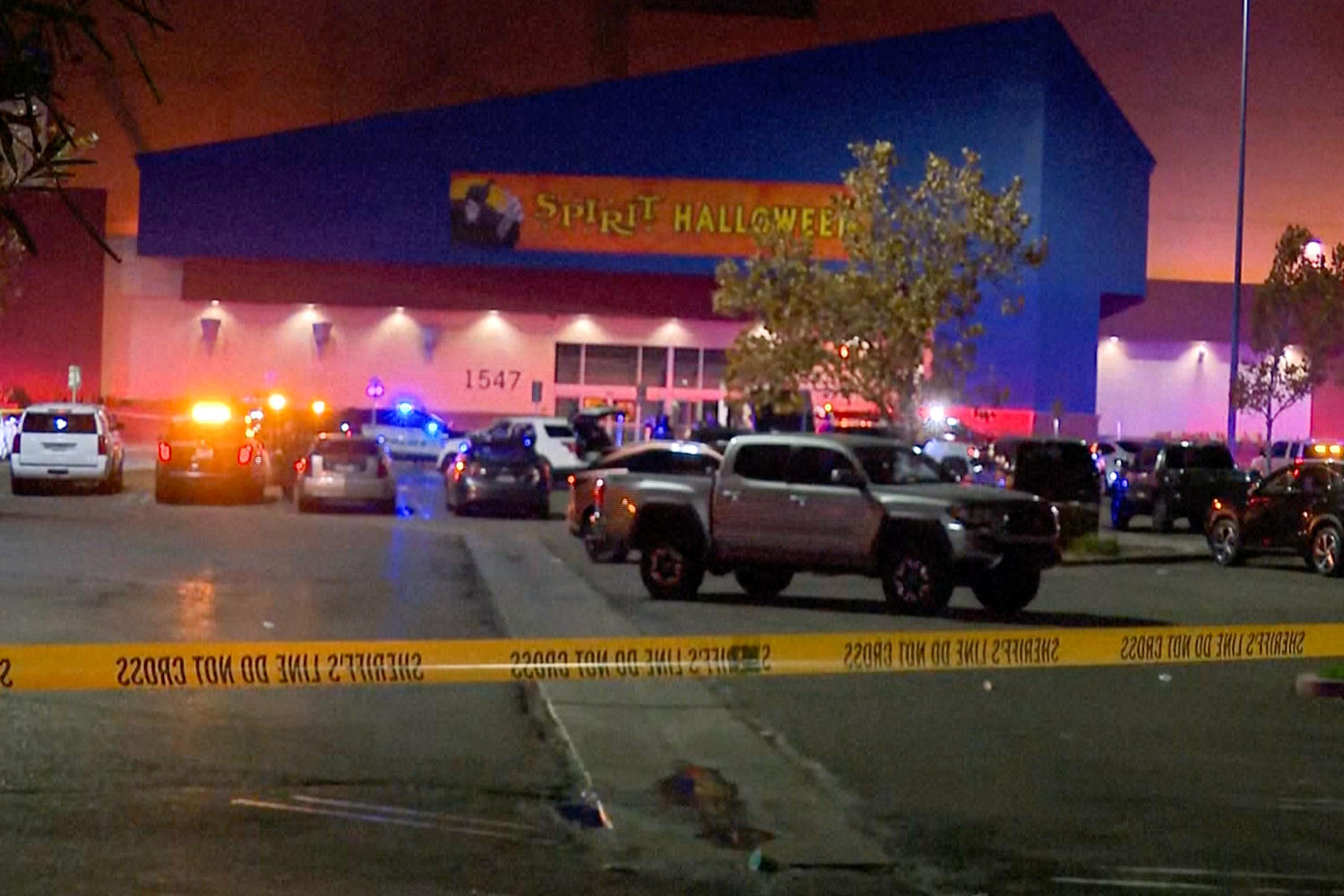
Every time gunfire erupts inside a crowded seasonal storefront, local newsrooms dust off the exact same template. A teenager is arrested. A pregnant bystander loses her life. Six others are rushed to trauma centers. Reporters stand behind yellow crime-scene tape, somberly reciting police blotter timelines while offering zero structural analysis of why a temporary costume shop became a shooting gallery.
The lazy consensus treats a tragedy like the Spirit Halloween shooting as an unpredictable bolt of lightning—a random act of juvenile violence that just happened to occur next to racks of polyester vampire capes. That narrative is convenient for commercial landlords, national retail chains, and municipal leaders. It is also dangerously wrong.
When you strip away the sensational headlines, a brutal operational reality emerges. Temporary pop-up retail models are engineered for maximum margin and minimum overhead, creating predictable security vacuums that turn high-foot-traffic spaces into soft targets.
The Illusion of the Isolated Incident
Standard crime reporting focuses almost exclusively on the shooter's profile and the immediate aftermath. Journalists ask neighbors if the 17-year-old suspect seemed quiet. They quote city officials expressing shock that violence touched a family-friendly shopping plaza.
This framing misses the forest for the trees. By treating every retail shooting as an isolated behavioral anomaly, legacy media completely ignores environmental criminology—the established discipline examining how physical space, operational design, and management practices directly influence criminal opportunity.
I have spent over fifteen years auditing physical security and loss-prevention frameworks for commercial real estate portfolios and national retail operators. I have watched executives sign off on multi-million-dollar seasonal rollouts without budgeting a single dime for baseline access control or trained deterrence. They treat risk as a public relations problem to be managed after the fact rather than an architectural flaw built into the lease.
Why Seasonal Pop-Ups Are Uniquely Vulnerable
Traditional anchor stores spend years refining their physical floor plans, camera sightlines, and loss-prevention protocols. A seasonal pop-up store operates under the exact opposite mandate. Speed to market dictates everything.
Consider the structural vulnerabilities baked into the temporary retail model:
- Zero Sightline Architecture: Pop-up operators take over hollowed-out big-box spaces—dead pharmacies, bankrupt department stores, vacant grocery outlets—and cram them with towering, temporary cardboard displays and tightly packed clothing racks. These aisles create blind canyons. Neither employees nor the few hastily mounted dome cameras can see from one end of the floor to the other.
- Transitory, Undertrained Staff: Seasonal hires are onboarded in days, not weeks. Their training consists of operating a point-of-sale terminal and restocking shelves. Expecting a 19-year-old seasonal cashier to recognize pre-incident indicators—like concealed-carry printing, agitated group dynamics, or territorial posturing—is a fantasy.
- The Security Guard Theater: When seasonal retailers do hire security, they overwhelmingly contract the lowest-bidding third-party guard firms. These personnel are routinely unarmed, poorly briefed on the specific property's layout, and instructed strictly to "observe and report." Criminals recognize passive deterrence immediately. A uniform without authority or tactical awareness does not stop an escalating dispute; it merely provides another target.
- Parking Lot Spillover: Pop-up stores thrive on peak-window congestion. In the final days of October, foot traffic spikes exponentially, turning poorly lit, under-patrolled strip mall parking lots into staging grounds for neighborhood beefs. When disputes spill through wide-open automatic doors into dense crowds, the results are catastrophic.
Dismantling the Common Myths Around Retail Violence
If you search for answers following a high-profile store shooting, you will encounter the same tired talking points. None of them hold up under scrutiny.
Does stricter juvenile sentencing stop these shootings?
No. Deterrence theory relies on a rational actor weighing long-term consequences before pulling a trigger. A 17-year-old bringing an illegal handgun into a crowded retail plaza is operating on status, impulsivity, and immediate threat perception—not an actuarial calculation of state sentencing guidelines. While accountability after the fact is necessary for justice, relying on the criminal court system as a primary prevention strategy guarantees you are always reacting to bodies on the floor.
Are metal detectors at store entrances the answer?
They are a logistical non-starter for high-volume retail, and pretending otherwise wastes valuable capital. Walkthrough magnetometers create massive bottlenecks outside the storefront, concentrating crowds in unscreened exterior zones where an attacker can simply open fire before reaching the threshold. Worse, they create a false sense of security while requiring constant, high-cost staffing that thin-margin seasonal businesses will never sustain.
Is this just a reflection of broader societal decline?
Blaming vague cultural forces is the ultimate cop-out for property owners and retail executives. Crime rates fluctuate, and illegal firearms remain pervasive, yet certain commercial corridors experience repeated violent escalations while comparable plazas ten miles away remain untouched. The differentiator is rarely the macro-economy; it is micro-level property management.
The CPTED Framework Industry Leaders Ignore
In the late 1960s and early 1970s, criminologist C. Ray Jeffery and architect Oscar Newman pioneered Crime Prevention Through Environmental Design (CPTED). Their core thesis was straightforward: the proper design and effective use of the built environment can lead to a reduction in the fear and incidence of crime.
Decades of empirical research backed by the National Institute of Justice confirm that manipulating physical space alters offender behavior. Yet commercial landlords routinely waive CPTED standards when signing short-term percentage-rent leases just to generate cash flow from dormant square footage.
When a landlord hands over keys to a vacant box store for a 60-day lease, lighting maintenance gets deferred. Exterior cameras remain disconnected because nobody wants to pay for network integration on a two-month tenancy. Dead zones behind dumpsters and loading docks go unmonitored.
Imagine a scenario where a national pop-up chain is required by municipal ordinance—or commercial insurance underwriters—to meet basic environmental security thresholds before receiving a temporary certificate of occupancy. Sightlines across the sales floor would remain unobstructed above four feet. High-definition, cloud-connected cameras would cover every ingress, egress, and parking lane. Off-duty sworn law enforcement officers, rather than minimum-wage contractors, would patrol peak-volume hours.
Would every act of violence vanish overnight? Of course not. A determined killer willing to die on scene cannot be fully stopped by floor-plan geometry alone. Furthermore, rigorous physical security protocols carry a steep financial cost that would inevitably force smaller seasonal vendors out of the market and drive up retail prices for consumers. That is the honest trade-off nobody in the boardroom wants to admit: maximum convenience and rock-bottom seasonal overhead are fundamentally incompatible with hardened public spaces.
What Actually Works When Prevention Fails
Until commercial real estate owners and national retailers stop treating temporary spaces like disposable cash registers, the burden of survival falls on the people walking through the front doors. Standard "run, hide, fight" public service announcements are far too generic for the realities of a congested retail floor.
If you are inside a high-density store when shots ring out, conventional instincts will get you killed:
- Abandon the front exit immediately. Crowd crush kills and traps people at main entrances, and shooters frequently orient their fire toward the primary bottleneck. Look for rear stockroom doors, emergency fire exits, and loading bays the moment you enter any temporary retail space.
- Understand concealment versus cover. A cardboard display of Halloween masks or a rack of winter coats hides you from view, which is concealment. It will not stop a 9mm round. True cover requires dense mass—concrete pillars, steel structural beams, or heavy commercial refrigeration units.
- Drop below the line of fire and move laterally. Most untrained shooters fire at chest height while scanning straight ahead. Getting low to the floor and moving perpendicular to the sound of gunfire breaks their visual tracking and reduces your target profile.
- Never freeze to record video. Every major retail shooting now features bystander footage captured from thirty feet away. The seconds spent pulling out a phone and framing a shot are the exact seconds required to clear an emergency exit.
The Real Cost of Cheap Square Footage
A 17-year-old sits in a detention cell facing murder charges. A family is planning a funeral for a mother and her unborn child. Six survivors face months of reconstructive surgeries and psychological trauma.
Meanwhile, the temporary lease will expire on schedule. The cardboard racks will be broken down, the remaining inventory packed into semis, and the lights switched off until next autumn. Until insurers, landlords, and corporate operators are held financially liable for the predictable hazards of unguarded pop-up environments, nothing in the playbook will change. Stop mourning the symptom while subsidizing the setup.