Counting cases is the laziest form of journalism in global health.
Every time an outbreak crosses a round milestone—1,000, 5,000, 10,000—the headlines write themselves. Editors slap a terrifying number onto a wire story, summarize the symptoms of hemorrhagic fever, quote a spokesperson from Geneva, and call it a day. They treat the virus like a weather event. A storm rolling across the map of Central Africa that we can only measure by the rising water line.
That framing isn't just incomplete. It is actively dangerous.
When a headline reduces a complex epidemic in the Democratic Republic of the Congo to a raw body count, it reinforces a fatal delusion: that stopping Ebola is primarily a logistical problem of getting enough syringes, hazmat suits, and experimental antivirals into the right clinics.
It isn't. We already have the science to stop Ebola cold. We have the rVSV-ZEBOV vaccine. We have monoclonal antibody treatments like mAb114 and REGN-EB3 that drop mortality rates dramatically when administered early. From a purely biomedical standpoint, Ebola is a solved problem.
Yet the numbers keep climbing. Why? Because the global health establishment keeps showing up to an asymmetric guerrilla war armed with clipboards and Western biomedical arrogance.
The Lie of the "Unstoppable Virus"
Let’s look at the actual mechanics of transmission. Ebola is not airborne. It does not spread across a crowded room like measles or SARS-CoV-2. To catch it, you must have direct physical contact with the bodily fluids of an infected person—or someone who recently died from it.
In epidemiologic terms, its basic reproduction number ($R_0$) typically hovers between 1.5 and 2.5. That is remarkably low compared to almost every major respiratory pathogen. On paper, a pathogen with an $R_0$ under 2.5 that requires direct fluid transfer and announces itself with severe, unmistakable symptoms should be straightforward to ring-fence. You isolate the sick, trace their contacts, vaccinate the ring, and starve the virus of hosts.
So when a localized outbreak spirals into thousands of cases across North Kivu, Ituri, or Equateur, you are not witnessing a biological super-villain outsmarting modern medicine. You are witnessing a catastrophic collapse of human trust.
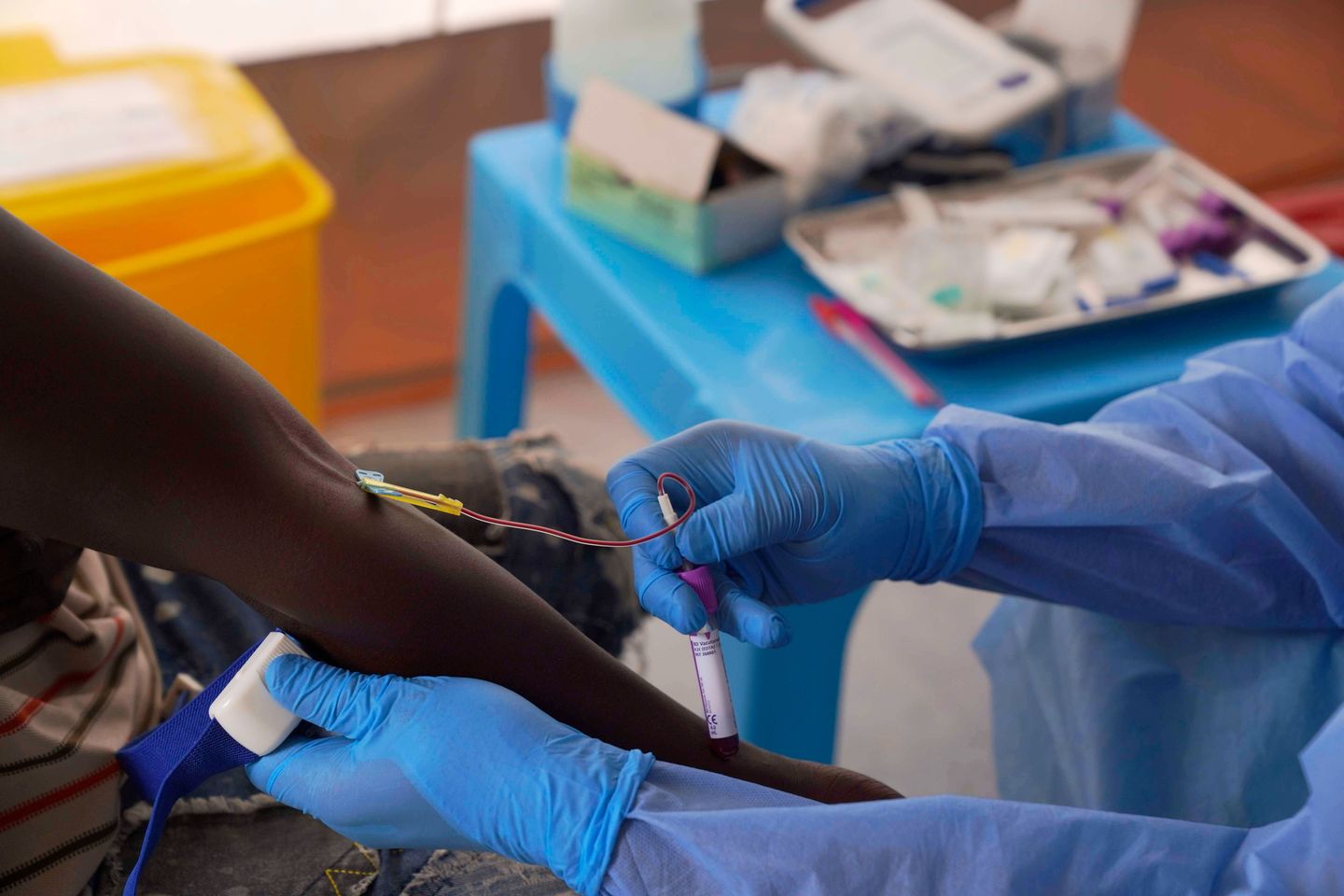
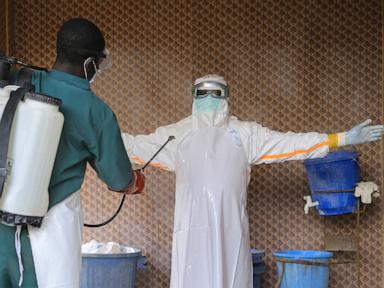
I have watched international response teams drop into conflict zones with millions of dollars in funding, fleets of white Land Cruisers, and zero understanding of the local political economy. They set up militarized Ebola Treatment Units (ETUs) surrounded by high fences and armed escorts. To a Western epidemiologist, that looks like biosecurity. To a family in Beni or Butembo who has survived decades of militia violence, state neglect, and resource extraction, it looks like a abduction center.
When people believe that entering a treatment tent is a death sentence—or worse, a political trap—they hide their sick. They perform traditional burial rituals in secret, washing the bodies of loved ones at the exact moment viral load is at its absolute peak. Every secret funeral becomes a super-spreader event.
The mainstream coverage blames "community resistance" or "misinformation," a polite way of calling local populations ignorant. That is a convenient excuse for institutions that refuse to examine their own behavior.
Follow the Money and the Mistrust
If you want to understand why case counts explode in the DRC, stop looking at virology charts and start looking at payrolls.
During major responses, international NGOs and UN agencies flood impoverished regions with sudden, massive infusions of cash. They hire drivers, translators, and security guards at wages that dwarf local salaries. Meanwhile, local doctors and nurses—the people who were treating malaria, cholera, and maternal complications long before the international cameras arrived—are often sidelined or paid a fraction of what foreign consultants make per diem.
Imagine a scenario where a foreign task force arrives in your town, ignores the deadly diseases killing your neighbors every single day, builds a heavily guarded compound exclusively for one rare virus, and hires armed soldiers to enforce compliance. Would you hand your sick mother over to them?
Of course you wouldn't. You would keep her at home. You would take her to a local herbalist or a neighborhood clinic you actually know.
And that brings us to the second massive blind spot in standard outbreak reporting: nosocomial transmission.
A massive percentage of Ebola cases do not happen in the bush or in remote villages. They happen inside poorly equipped, underfunded local health centers. A patient shows up with a fever. Because fever in the DRC means malaria 95 percent of the time, the nurse treats them without gloves, reuses a needle, or cleans an IV line without proper sterilization. Two weeks later, the nurse is dead, and twenty other patients are infected.
By pouring 99 percent of emergency funds into vertical, single-disease silos while leaving basic primary healthcare in ruins, the global health apparatus guarantees that the next outbreak will spread through the exact same clinics.
Dismantling the Questions Everyone Gets Wrong
When case numbers spike, the public and the press inevitably default to the same tired questions. Almost all of them are built on flawed premises.
"Why don't we just vaccinate everyone?"
Because ring vaccination is not mass immunization, and pretending otherwise wastes precious doses and political capital. The rVSV-ZEBOV vaccine is extraordinarily effective, proven during the 2014–2016 West African epidemic and refined in subsequent DRC campaigns. But manufacturing capacity is finite, cold-chain logistics in regions without reliable electricity are brutal, and vaccinating millions of low-risk people creates a logistical nightmare that distracts from the actual transmission chains. You don't douse an entire forest in water when you know exactly which five trees are on fire. You need precision contact tracing—which brings us right back to trust. Without community cooperation, you cannot map the ring.
"Is the virus mutating to become more contagious?"
No. Every time an outbreak drags on, armchair virologists panic about Ebola "going airborne." Filoviruses do not suddenly rewrite their fundamental mode of transmission in the middle of a human epidemic. While minor genetic drift occurs—and researchers like Pardis Sabeti and teams at the Institut National de Recherche Biomédicale (INRB) in Kinshasa track these sequences religiously—the drivers of a 10,000-case surge are behavioral and structural, not evolutionary. Blaming mutations lets policymakers off the hook for failed field operations.
"How much more funding does the WHO need to stop this?"
Throwing more money at a broken operational model just buys more white SUVs. Funding isn't the bottleneck; allocation is. When money flows through layers of international subcontractors, administrative overhead eats up resources before a single bar of soap reaches a rural clinic. Until donor nations mandate that emergency funds go directly toward strengthening permanent, locally staffed health systems—and paying local healthcare workers on time—writing bigger checks will only subsidize the emergency-response industrial complex.
The Uncomfortable Truth About "Community Engagement"
The standard playbook now includes a buzzword: community engagement. On paper, it sounds great. In practice, it usually means hiring a few local spokespeople to read translated scripts over a megaphone telling people to wash their hands and report sick neighbors.
That is not engagement. That is public relations.
Real engagement means surrendering control. Look at the lessons documented by medical anthropologists like Paul Farmer and the teams at Partners In Health, or the hard-won breakthroughs made by Jean-Jacques Muyembe-Tamfum—the Congolese microbiologist who co-discovered Ebola in 1976 and spent decades arguing that outsiders cannot run an epidemic response from the top down.
When the DRC successfully contained outbreaks in Equateur Province compared to the grinding, multi-year slog in the east, the difference wasn't better medicine. It was integrating the response into existing social structures. It meant letting families see inside the treatment units through transparent plastic walls so they knew their relatives weren't being harvested for organs. It meant modifying burial protocols so families could still witness and honor their dead safely, rather than having men in full-body protective gear toss a body bag into an unmarked trench.
Here is the downside to this approach, and it is one that technocrats hate: it is slow, messy, and politically risky.
Handing power and money over to local leaders means accepting that some funds might be mismanaged. It means negotiating with factions that Western governments dislike. It means tolerating local customs that make infectious disease specialists nervous. In a crisis, bureaucrats crave control. They want metrics they can put in a spreadsheet—doses delivered, contacts traced, beds occupied. Negotiating with a village chief for three days over burial rites doesn't look good on a donor dashboard, even if it prevents fifty new infections.
What Actually Stops an Outbreak
If you want to dismantle an epidemic before it hits five figures, you have to invert the entire response hierarchy.
- Demilitarize the perimeter. Armed soldiers at clinic gates do not create security; they create targets and confirm every conspiracy theory circulating in the market. Security comes from community buy-in, not assault rifles.
- Treat the routine diseases first. If a mobile clinic arrives in an outbreak zone, it must treat malaria, pneumonia, and obstetric emergencies alongside suspected viral hemorrhagic fever. When people see that a clinic actually saves lives from everyday killers, they will trust it when a rare killer strikes.
- Eliminate the two-tier wage system. Stop paying foreign consultants astronomical hardship stipends while local nurses work unpaid for months. Equalize hazard pay and channel resources directly through national institutions like the INRB.
- Replace isolation tents with transparent care. Modern treatment units like the ALIMA Cube—individual, transparent, bio-secure modules—allow families to talk to patients face-to-face without PPE barriers. When fear of the unknown disappears, hiding sick relatives stops.
The next time you read a breathless report about an outbreak crossing some arbitrary numerical threshold, ignore the scare tactics. Look past the death toll. Ask who is running the clinics, whether the nurses have been paid, and whether the people living in the red zone actually believe the doctors are there to help them.
Because a virus only has as much power as our institutional arrogance gives it.