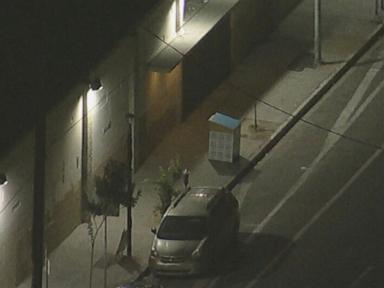
A metal drop box outside a Department of Public Social Services building in downtown Los Angeles gets stuffed with a handful of burning papers. A few miles away in Long Beach, a polling site at Cesar E. Chavez Park gets some midnight graffiti.
Cue the immediate, predictable media meltdown. Expanding on this idea, you can also read: The Anatomy of Institutional Insolvency Underlying the Karachi University Academic Gridlock.
The headlines write themselves. "Voter interference fears ramp up." "Democracy under siege." Commentators on both sides of the aisle immediately weaponize a localized act of petty vandalism to feed a massive, nationwide anxiety machine. They want you to believe that a match dropped through a slot is a coordinated, systemic threat to the integrity of the American vote.
It is not. It is an expensive distraction. Experts at BBC News have also weighed in on this matter.
I have spent years analyzing operational security, physical infrastructure, and systemic risk. If you want to actually protect the vote, you have to stop looking at the smoke and start looking at the math. The lazy consensus screams that physical attacks on drop boxes are a crisis. The reality? They are statistically irrelevant, operationally self-correcting, and completely mask the real vulnerabilities in modern elections.
The Math of a Match
Let us look at the Los Angeles incident with zero emotion.
The Los Angeles County Registrar-Recorder, Dean Logan, confirmed that the fire occurred between a scheduled Saturday collection and a Sunday morning retrieval. We are talking about a tiny, isolated window of time. The number of ballots affected was minute.
More importantly, the system did not break; it worked exactly as designed. The county tracking infrastructure immediately identified the window, pulled the logs, and triggered a standard operational response: contact the affected voters directly and issue replacement ballots.
This is not a constitutional crisis. It is a minor administrative hurdle.
To understand why the panic is misplaced, you need to understand the physical design of an official ballot drop box. These are not blue plastic curbside recycling bins. They are heavy-gauge, quarter-inch steel vaults anchored into concrete. Most modern iterations are equipped with internal fire-suppression canisters—essentially automatic mini-extinguishers that activate when heat thresholds are crossed.
Could a determined bad actor ruin a few dozen pieces of paper? Yes. Can they shift an election this way? Absolutely not.
To alter the outcome of a major election via physical arson, an adversary would need a synchronized, nationwide army of saboteurs hitting thousands of boxes simultaneously within the exact same four-hour collection window. The logistical footprint of such a conspiracy is massive, completely prone to leaks, and entirely unfeasible.
Physical vandalism does not scale. That is why it is a terrible vector for actual election interference.
The True Cost of Hyper-Fixation
The danger of the "burned ballot" narrative isn't the fire itself. It is the asymmetric psychological reaction it provokes.
When the media elevates a single act of local vandalism into a national symptom of a broken system, they do the adversary's work for them. The goal of foreign and domestic disruption campaigns is rarely to actually flip a specific tally sheet. The goal is to degrade public trust so thoroughly that the winner's legitimacy is permanently compromised.
By hyper-focusing on rare, cinematic acts of destruction, we suffer from classic availability bias. We obsess over the spectacular, visible threat while ignoring the mundane, catastrophic vulnerabilities right under our noses.
If you want to find where elections actually fail, look away from the drop boxes and look toward the boring stuff:
- Signature Verification Discrepancies: High-volume, manual verification of signatures by exhausted temporary workers creates massive variance in how ballots are accepted or rejected.
- Postal Service Chokepoints: Simple logistics management—sorting center delays, machine maintenance schedules, and route optimization—impacts thousands of times more ballots than all the arsonists in American history combined.
- Administrative Underfunding: The true threat to a precinct is not a radical with a lighter; it is a critical shortage of trained staff, leading to long lines, broken scanners, and procedural errors.
The Discomforting Truth About Absolute Security
Here is the contrarian reality that election officials hate to admit out loud: An election system with zero operational failures is an impossible, authoritarian fantasy.
If you want a system where not a single ballot can ever be lost, stolen, or burned, you have to eliminate mail-in voting entirely. You have to eliminate drop boxes. You have to force every citizen to stand in a single, heavily guarded military perimeter to cast a ballot on a single day.
The downside to that approach? It suppresses millions of legitimate votes through sheer logistical friction.
American election infrastructure is built on a deliberate trade-off. We accept a microscopic, manageable amount of localized physical risk—like a vandal in a park—in exchange for massive, decentralized accessibility. It is a portfolio optimization problem. The "cost" of a few ruined papers is vastly outweighed by the "benefit" of millions of citizens easily accessing the franchise.
When we panic over an isolated fire, we pressure politicians to implement "security updates" that do little more than restrict access. We spend millions of taxpayer dollars retrofitting boxes with cameras and hiring private security guards to watch empty parking lots, bleeding resources away from the software upgrades and staff training that actually keep the system accurate.
Stop Looking at the Smoke
The next time you see a frantic cable news segment about a scorched drop box in California or anywhere else, change the channel.
Do not let low-level vandalism masquerade as a systemic threat. The local police department can handle the arsonist. The registrar can handle the replacement forms. The system handles the variance.
If you genuinely care about the security of the vote, stop worrying about the match. Start worrying about the budget for the people counting the sheets inside the building. That is where the real work happens, and that is where the real vulnerabilities live. Everything else is just theatre.