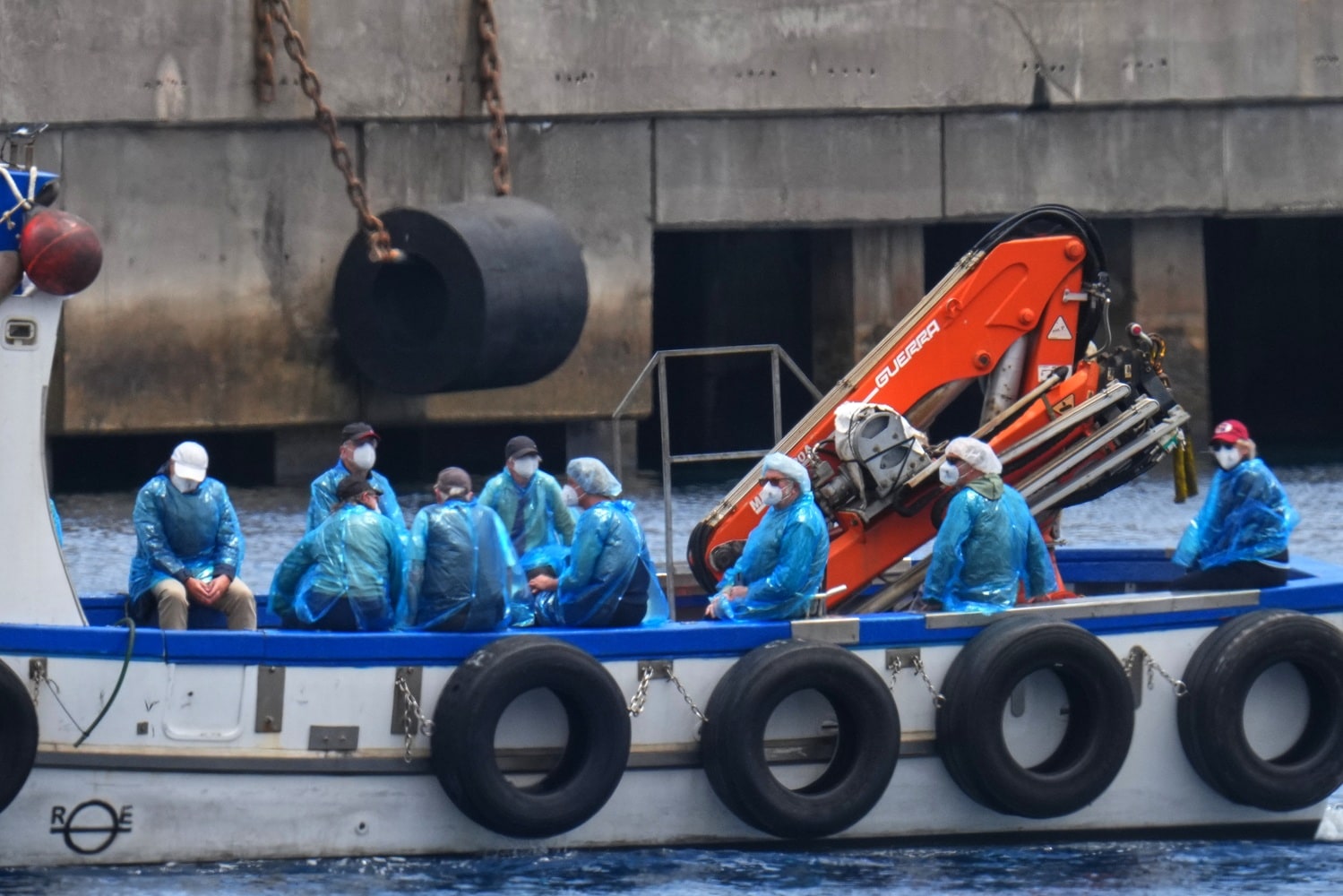
The news cycle loves a plague. It’s the ultimate click-generator. When reports surfaced of American passengers flying home after potential exposure to Hantavirus, the media did exactly what it always does: it weaponized a rare tragedy into a phantom epidemic. They want you to think the person in seat 14B is a biological time bomb. They want you to believe that international travel is a petri dish of rural rodent diseases.
They are wrong. They are lazily, dangerously wrong. Also making news lately: Viral Transmission Dynamics and Operational Risks in the Tenerife Maritime Quarantine.
If you are worried about catching Hantavirus on a Boeing 787, you don't understand how biology works, and you definitely don't understand how risk works. We are obsessed with the exotic "what-if" while ignoring the mundane "what-is." It’s time to stop treating rare zoonotic events like the next Black Death and start looking at the actual mechanics of viral transmission and the statistical insignificance of this specific panic.
The Airborne Myth That Won't Die
The biggest lie currently circulating is the idea that Hantavirus is the next respiratory contagion ready to sweep through a terminal. Let’s get the science straight before another talking head misquotes a CDC bulletin. Additional details into this topic are explored by Everyday Health.
Hantavirus Pulmonary Syndrome (HPS) is not COVID-19. It is not influenza. It does not possess the molecular machinery for efficient human-to-human transmission. In the history of the Americas, there has been exactly one documented strain—the Andes virus in South America—that has shown any ability to jump from person to person. And even that requires the kind of intimate, prolonged contact you aren't getting with a stranger over a bag of pretzels.
The Sin Nombre virus, which is what usually makes headlines in North America, requires you to breathe in aerosolized droppings, urine, or saliva from infected deer mice. It is a disease of the wilderness, of dusty cabins, and of disturbed nests. It is not a disease of pressurized cabins.
Imagine a scenario where a passenger actually has HPS. They aren't "spreading" it through the HVAC system. The virus is a dead-end in the human body. By the time a person is symptomatic enough to be a theoretical risk, they are usually too sick to stand, let alone navigate a TSA line. We are creating a narrative of "traveler-to-traveler" risk that simply has no basis in virology.
The Geometry of Misplaced Fear
We live in a culture that is statistically illiterate. We freak out over a virus that kills maybe 30 people a year in the U.S., yet we happily drive 80 mph on the highway while texting.
Let’s look at the numbers. Since HPS was first identified in 1993, there have been fewer than 900 cases in the United States over three decades. Compare that to the 30,000 to 60,000 deaths from the seasonal flu every single year. You are infinitely more likely to die from a common slip-and-fall in your own shower than you are to even see a person infected with Hantavirus in your lifetime.
The "danger" of passengers flying back to the U.S. isn't the virus. The danger is the reactionary policy that follows the headlines. When we overreact to low-probability events, we divert resources away from actual public health crises. We waste money on "enhanced screening" that catches nothing while our actual infrastructure for managing common, preventable diseases rots.
I’ve spent years watching the travel industry react to these "scares." I saw it with Ebola in 2014, where the actual risk to the American public was effectively zero, yet we spent billions on optics. We are doing it again. We are prioritizing the feeling of safety over the reality of health.
Why the "Better Safe Than Sorry" Logic is Toxic
The standard defense for these alarmist articles is that "awareness saves lives." That is a convenient fiction used to justify fear-mongering.
Total awareness of a one-in-a-million risk doesn't make you safer; it makes you neurotic. It causes people to avoid travel, which hurts economies, and it causes people to flood emergency rooms the moment they have a cough, which slows down care for people with actual heart attacks or strokes.
If you want to be "safe," don't worry about the guy flying back from a hiking trip in Patagonia. Worry about the fact that you haven't had a check-up in three years. Worry about your blood pressure. Those are the things that actually kill people. But "Middle-Aged Man Has Elevated Cholesterol" doesn't sell ads. "Hantavirus on a Plane" does.
The Industry Insider’s Truth on Cabin Air
Let’s talk about the plane itself. People treat airplane air like it’s a stagnant pool of germs. It’s actually one of the cleanest environments you can be in.
Modern aircraft use HEPA (High-Efficiency Particulate Air) filters that are identical to the ones used in surgical suites. The air is completely refreshed every two to three minutes. Even if someone on that plane could transmit Hantavirus—which, again, they can't—the airflow is designed to move vertically, not horizontally. It comes in from the ceiling and is sucked out through the floor. It doesn't blow from the front of the plane to the back.
The "exposure" happens in the dirt, not in the sky. If you spent your vacation sweeping out an old shed in the desert without a respirator, you have a problem. If you sat next to that person for six hours at 35,000 feet, you have a story for a cocktail party and zero medical risk.
Dismantling the "People Also Ask" Nonsense
People are asking: "Should I cancel my flight if I hear about an outbreak?"
The Honest Answer: No. If you cancel your flight because of a Hantavirus report, you should also stop walking outside because of the risk of being struck by a meteorite. Both are statistically comparable.
People are asking: "How do I protect myself from Hantavirus while traveling?"
The Honest Answer: Stop touching mice. Seriously. That’s the "unconventional" advice. Don't handle rodents, don't sleep on the floor of abandoned cabins, and don't vacuum up mouse nests without wetting them down with disinfectant first. Everything else—the masks in the airport, the hand sanitizer every five minutes, the glaring at your neighbor—is just theater.
The Real Cost of Viral Xenophobia
Every time a story like "Hantavirus Passengers Flying Back" hits the wire, it reinforces a subtle, ugly idea: that the "outside" world is a source of infection and the "inside" (the U.S.) is a sanctuary.
This is biological provincialism. It ignores the fact that Hantavirus is endemic inside the United States. It’s in the Four Corners. It’s in Yosemite. It’s in the rural Northeast. The threat isn't "coming home"; it’s already here, living in the woodpiles of the people reading the articles.
By focusing on the traveler, we ignore the local reality. We treat the passport as the variable, when the variable is actually the environment. A hiker in Colorado is at more risk than a tourist in a South American city, but the news won't tell you that because it’s not "news" if it’s happening in your backyard.
The Professional Hypocrisy of "Monitoring"
Health agencies will say they are "monitoring" these passengers. That’s a bureaucratic term for "doing nothing because there is nothing to do."
There is no vaccine for Hantavirus. There is no specific antiviral treatment that works effectively once the lungs start to fail. Monitoring is just a way to manage public perception. It’s a performance. If these passengers were actually a threat, they wouldn't be "monitored"; they would be in high-level biocontainment. The fact that they are being sent home to "self-monitor" is the ultimate proof that the risk is negligible.
If the experts aren't actually worried enough to quarantine, why are you worried enough to read a 2,000-word panic piece?
Stop Being a Victim of the Algorithm
The competitor article you read was designed to trigger your amygdala. It was built to make you feel a spike of cortisol so you’d click the "Share" button. It relies on your ignorance of viral vectors and your natural fear of the invisible.
The truth is boring. The truth is that biology is specific. Viruses have niches. Hantavirus has a very narrow niche, and it doesn't include the "Transportation" category.
We are living through an era of "Pre-Traumatic Stress Disorder," where we mourn and panic over disasters that haven't happened and likely never will. You are being sold a version of reality where every sneeze is a biohazard and every traveler is a carrier.
It’s a lie.
The next time you see a headline about a rare virus on a plane, do yourself a favor: check the mortality tables for heart disease, put on your seatbelt, and realize that the most dangerous part of your day was the drive to the airport.
Put the mask down. Stop eyeing the passengers. Go find a real problem to solve.