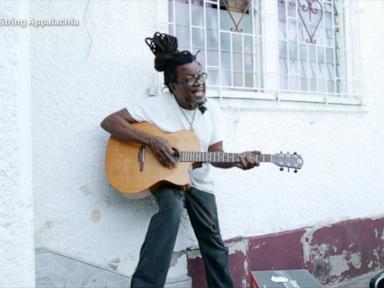
The feel-good news cycle has a predictable rhythm. A community gets flattened by a hurricane or torn apart by a tornado, the cameras roll, and the charity industrial complex springs into action. Among the most media-friendly of these endeavors is the sudden influx of nonprofits rushing to replace lost musical instruments for storm victims. It makes for beautiful television: a tearful teenager reunited with a shiny new saxophone, or a local musician strumming a donated acoustic guitar amidst the rubble.
It is heartwarming. It is deeply empathetic.
And it is completely backwards.
When you analyze the actual mechanics of long-term disaster recovery, flooding a crisis zone with specialized material goods like musical instruments is a masterclass in misallocated resources. It satisfies the ego of the donor while ignoring the brutal, logistical reality faced by the survivor. We need to stop equating emotional resonance with effective aid.
The Illusion of Immediate Cultural Recovery
The prevailing sentiment behind instrument replacement charities is that music is essential for healing minds and preserving community culture after a catastrophe. While psychological recovery is vital, the timeline is dangerously skewed.
I have spent years analyzing resource distribution networks during supply chain breakdowns. In the immediate aftermath of a localized disaster, the local economy undergoes severe distortion. Injecting niche, high-value, non-liquid physical assets into an area lacking basic infrastructure creates a secondary crisis of storage, maintenance, and security.
The True Cost of Material Influx
Consider the physical reality of a post-storm environment. Homes are gutted. Roofs are tarped. Mold is actively consuming drywall.
In this environment, introducing a delicate wooden instrument—like an acoustic guitar or a violin—is a logistical nightmare.
- Atmospheric Instability: Instruments are highly sensitive to humidity fluctuations and temperature extremes. A flooded region without stable electrical grids will ruin a solid-wood instrument within weeks.
- Security Vulnerabilities: Displaced populations often live in temporary shelters, vehicles, or compromised structures. High-value portable items are prime targets for theft.
- Maintenance Scarcity: A woodwind instrument requires reeds, pads, and specialized tech support. A brass instrument needs valve oil and ultrasonic cleaning after exposure to contaminated floodwaters. None of these support structures exist in a disaster zone.
When a nonprofit hands a storm victim a $1,200 trumpet before that victim has a functioning kitchen, they aren’t giving them a gift. They are giving them a liability that requires climate-controlled storage they do not possess.
The Economic Distortion of Niche Charity
Charitable organizations love material donations because they offer a tangible metric for fundraising reports. It is easy to tell donors, "We sent 500 keyboards to the coast." It is much harder to explain the bureaucratic reality of structural mitigation.
However, the economic principle of opportunity cost dictates that every dollar spent purchasing, shipping, and insuring a heavy instrument is a dollar diverted from flexible, liquid cash assistance.
The Direct Cash Superiority
Data from organizations like GiveDirectly and extensive studies by the World Bank consistently demonstrate that unconditional cash transfers are the most efficient form of disaster relief. Cash allows the survivor to prioritize their own hierarchy of needs.
Imagine a scenario where a musician loses everything. A well-meaning nonprofit gives them a replacement drum kit worth $1,500.
| Resource Given | Immediate Utility | Hidden Costs | Better Alternative |
|---|---|---|---|
| $1,500 Drum Kit | Zero (No dry space to set it up, no bandmates, neighbors dealing with trauma). | Storage fees, transport costs, high risk of water damage. | $1,500 Unconditional Cash |
| $1,500 Liquid Cash | High (Can pay a insurance deductible, buy a generator, or secure temporary housing). | None. | N/A |
By forcing a specific material asset onto a survivor, the charity makes the arrogant assumption that they know what the survivor needs more than the survivor does. The musician might need that $1,500 to fix their car so they can drive to a job two towns over. Giving them a drum kit instead traps their capital in a non-liquid asset they cannot easily liquidate without taking a massive financial loss.
Dismantling the "People Also Ask" Assumptions
Whenever this critique is raised, defenders of the status quo fall back on several flawed assumptions. Let us address them directly.
"Don't instruments help professional musicians get back to work?"
This is the most common justification. The argument states that a professional musician needs their tool to earn a living.
This ignores the demand side of the economic equation. If an entire city has been decimated by a storm, the venues are gone. The bars are closed. The festivals are canceled. The local population is spending their disposable income on contractors and building materials, not concert tickets.
A professional musician with a replaced instrument still has nowhere to play locally. They need regional relocation assistance or short-term unemployment stipends, not a shiny new tool for a market that currently has zero demand.
"Isn't any help better than no help at all?"
No. This is a dangerous fallacy in disaster economics. Bad help actively crowds out good help.
Logistical bottlenecks are real. Planes, trucks, and distribution centers have finite capacity. When a charity utilizes warehouse space and transport trucks to move pallets of guitar cases into a disaster zone, they are consuming precious logistical bandwidth that should be used for bottled water, industrial dehumidifiers, diapers, and medical supplies.
The Downside of Pure Liquidity
To be fair, the contrarian approach of abandoning material donations in favor of pure cash infrastructure has its own structural flaws.
Cash systems require functioning banking networks, digital payment rails, or secure physical distribution methods. If the cellular towers are down and the ATMs are underwater, digital cash transfers are useless in the first 72 hours.
Furthermore, cash lacks the emotional resonance that triggers human generosity. It is incredibly difficult to run a prime-time television campaign asking people to donate to a general fund that hands out electronic bank transfers. The public wants the narrative arc of the replaced violin.
But our goal should be maximizing survivor outcomes, not satisfying the emotional cravings of the viewing public.
Redefining True Cultural Resilience
If we actually care about the long-term survival of a community’s musical heritage after a climate disaster, we must shift our focus from individual asset replacement to macro-infrastructure preservation.
Stop buying individual instruments for people who do not have roofs.
Instead, direct those funds toward stabilizing the cultural institutions that anchor the community.
- Climate-Insured Communal Hubs: Fund the construction of fortified, community-managed storage facilities outside of immediate flood zones where local musicians can store their existing gear safely before a storm hits.
- Institutional Grants for Schools: Focus exclusively on rebuilding the public school music rooms and community centers months after the initial cleanup. These institutions have the scale, climate control, and security to manage assets properly.
- Underwrite Touring Subsidies: If local musicians cannot play at home, fund their travel to perform in unaffected regions so they can earn real income and bring capital back to their rebuilding communities.
The urge to send a musical instrument to a disaster zone is an emotional reflex, not a strategic decision. True solidarity means resisting the easy, photogenic gesture and doing the hard, unsexy work of funding structural recovery. Stop treating disaster zones like a feel-good reality television show. Drop the instruments, pick up the cash cards, and fix the infrastructure first.