Every headline when that old Falcon 9 booster drifted toward a lunar collision shouted about cosmic destruction, orbital debris, and the reckless vandalism of the heavens. Commentators clutched their pearls over a dead hunk of metal slamming into a desolate rock at thousands of miles per hour. It made for great apocalyptic theater. It was also completely wrong.
People panicked because they looked at a piece of space junk through the lens of terrestrial vandalism. They imagined a fender bender on the highway or a crane collapsing on a city street. Space does not care about your earthly property norms.
That untethered upper stage hitting the lunar surface was not a disaster. It was a high-energy, completely unscripted subsurface geology experiment paid for by someone else. If scientists tried to buy a dedicated kinetic impactor mission to punch a fresh crater into the moon to study ejecta dynamics and regolith compaction, space agencies would spend a decade debating budgets and environmental impact reports. Instead, orbital mechanics handed us a free seismic testing package.
Let us look at the lazy consensus. The narrative claimed this uncontrolled chunk of hardware proved humanity is trashing the solar system with careless abandon. The reality is far more mundane and far more useful.
The Physics Nobody Wants to Talk About
To understand why the hand-wringing over the lunar impact missed the mark entirely, you have to look at the sheer scale of the energy involved and compare it to what the moon handles every single day without breaking a sweat.
That Falcon 9 second stage weighed roughly four metric tons empty. It hit the moon at about 2.5 kilometers per second. That is a lot of kinetic energy on paper, translating to roughly the explosive equivalent of a few tons of TNT.
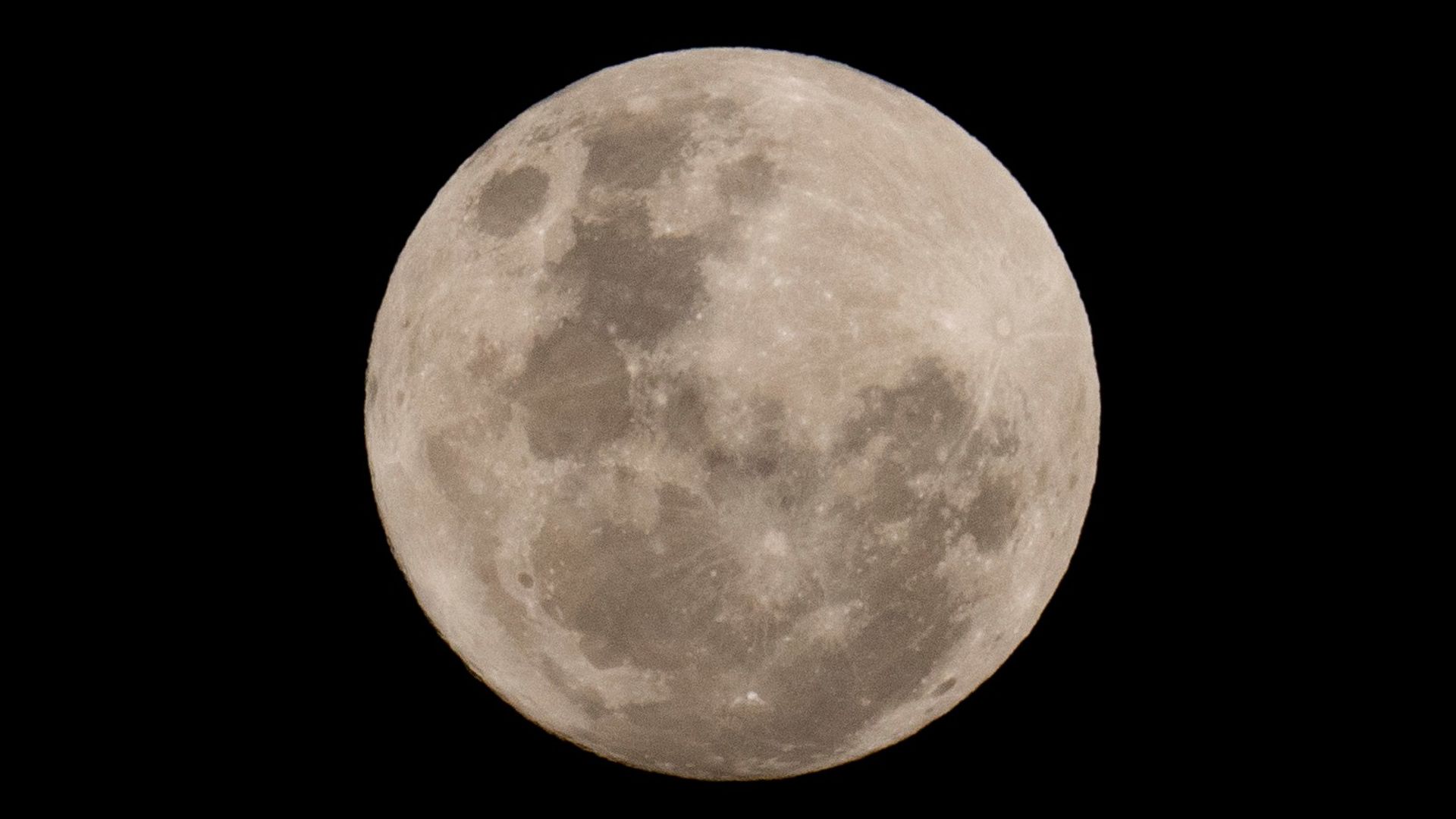
Now, look at the moon. The lunar surface is a battered, scarred archive of cosmic violence. Micrometeoroids hammer it constantly. Asteroids large enough to carve out craters visible from your backyard hit it with regularity. Nature drops heavy objects on the moon all the time with zero regard for planetary etiquette.
When a human-made rocket stage hits the moon, it does not crack the crust, knock the orbit out of whack, or unleash toxic space goo. It digs a shallow trench, vaporizes some aluminum and steel, and kicks up a plume of dust that settles right back down into the vacuum.
I have watched aerospace programs burn billions of dollars on simulated impact testing, building tiny vacuum chambers and firing compressed air guns at fake regolith cakes to see how dust behaves. It is expensive, highly theoretical, and constrained by Earth gravity. Here, nature and a neglected rocket stage provided a full-scale, four-ton ground-truth test in actual lunar gravity.
We should have cheered. We should have tracked the plume with every telescope we owned.
Why Orbital Mechanics Make Predictability Overrated
Critics love to point out that we lost active control of that booster years ago. It looped around the Earth-Moon system on a chaotic, unpredictable trajectory until gravity finally reeled it in. They use this as evidence of shoddy space traffic management.
Here is the dirty secret of deep space tracking: space is big, empty, and very difficult to micro-manage once you get past geostationary orbit.
When a rocket delivers a payload to a high-energy orbit, the upper stage is often left stranded in a graveyard orbit or a heliocentric path. Tracking every dead bolt, spent tank, and discarded interstage adapter with centimeter-level precision is an impossible engineering fantasy. Solar radiation pressure, Earth oblateness, and lunar gravity perturbations combine to create chaotic orbits that defy long-term pinpoint forecasting.
Pretending we can neatly marshal every piece of metal we ever shoot past low Earth orbit is bureaucratic wishful thinking. The correct response to orbital debris is not pretending we can lock down the solar system with permit offices. The correct response is designing systems that minimize risk where humans actually live and work, and accepting that deep space is an open highway, not a pristine national park.
The moon is a giant target. If you miss Earth, you have a very high statistical probability of eventually hitting the moon or the sun if you drift for centuries. The universe is a messy place. Trying to sanitize it is a fool's errand.
The Real Danger We Are Ignoring
While the media was busy hyperventilating over a harmless piece of space scrap hitting a dead rock, they completely ignored the actual, immediate orbital crisis happening right above your head.
It is not dead upper stages hitting the moon. It is the traffic jam in low Earth orbit.
Thousands of active satellites, dying constellations, and tiny fragments of shrapnel from old anti-satellite tests are swirling around our planet at seventeen thousand miles per hour. That is where a collision triggers a cascade. That is where Kessler Syndrome turns useful orbital shells into impenetrable clouds of shrapnel that trap us on this rock.
I have seen companies blow millions on launch insurance while completely ignoring collision avoidance protocols for their active constellations. They worry about the cosmic noise while sleeping right through the domestic alarms.
Worrying about a rocket hitting the moon is like standing in the middle of a busy highway during rush hour and screaming because a bird dropped a twig on a mountain fifty miles away. It reveals a profound misunderstanding of scale and consequence.
Turning Waste Into Data
We need a complete paradigm shift in how we view discarded space hardware. Instead of treating every dead booster as an environmental catastrophe, we should be engineering them to finish their lives usefully.
Imagine a scenario where upper stages are intentionally directed toward scientifically interesting targets at the end of their utility, instrumented with simple accelerometers and telemetry beacons that broadcast right up until the moment of impact. We could turn every discarded tank into a seismic probe.
Seismology is how we figure out what is going on inside a planetary body. The Apollo missions left seismometers on the moon, and they recorded moonquakes for years, giving us our baseline understanding of the lunar interior. But those instruments were sparse. Adding targeted, high-velocity impactors gives geologists active seismic sources across different regions of the lunar body.
Instead, the fear-mongering industry treats these events as sins against the cosmos. They want sterile skies and predictable trajectories where nothing ever happens.
That is not exploration. That is a museum exhibit.
Space exploration is inherently violent, messy, and loud. It involves controlled explosions, burning metal, and hurling tons of machinery into the void. If you want a clean, safe environment where nothing ever collides or breaks, stay inside and watch simulations on a screen.
The Falcon 9 booster that hit the moon did what garbage has always done in a harsh environment: it met its end, transferred its energy, and left behind a tiny scar on a scarred world. The universe absorbed it without blinking. It is time we did the same.