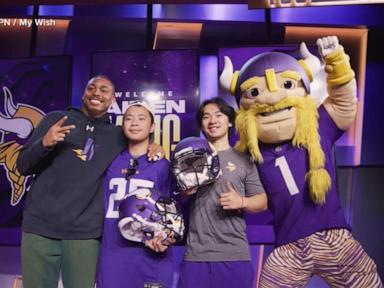
Two brothers walk onto an NFL practice field. Cameras roll. A quarterback signs a jersey, high-fives the kids, and offers a rehearsed soundbite about how "blessed" he feels to give back. Within four hours, local news affiliates syndicate the clip with a tear-jerker headline designed to harvest clicks, shares, and warm fuzzy feelings.
You have seen this exact video a thousand times. Whether it is two brothers visiting the Minnesota Vikings through Make-A-Wish or a rookie visiting a pediatric ward, the sports media industrial complex runs on a predictable, assembly-line emotional formula. They package human vulnerability into a 90-second highlight reel, slap a sponsor logo on the chyron, and call it community outreach.
Here is the uncomfortable truth nobody in sports public relations wants you to examine too closely. Those viral moments are rarely about the kids. They are high-margin, low-cost brand laundering operations for multi-billion-dollar sports franchises.
Before you reach for the pitchforks, let us be crystal clear about one thing. Make-A-Wish is an extraordinary organization. The joy those two brothers felt standing on the turf in Eagan, Minnesota, is completely real. For a child battling a critical illness, meeting their heroes provides a genuine, documented psychological boost that helps them endure brutal medical treatments. Nobody is attacking the wish itself.
The problem is the machine built around the wish. The lazy consensus in sports journalism treats every charity photo-op as an unassailable moral triumph. Journalists act as unpaid stenographers for team PR departments, regurgitating press releases without asking a single critical question about where the real money goes, why taxpayers are subsidizing the stadiums hosting these events, or what happens the second the camera crew packs up its tripods.
The Economics of Feel-Good PR
If you want to understand why NFL franchises roll out the red carpet for viral charity visits, stop looking at the philanthropy department and start looking at the marketing budget.
A 30-second commercial during a prime-time NFL broadcast costs hundreds of thousands of dollars. Even with that spend, viewers skip it, mute it, or scroll past it on their phones. Consumers have developed near-total immunity to traditional corporate advertising. We know when we are being sold to, and we resent it.
Enter cause-related marketing. When a franchise hosts a Make-A-Wish visit and invites local television cameras to capture every tear and smile, they bypass consumer skepticism entirely. You cannot criticize a heartwarming story about two sick brothers meeting their favorite football players without looking like a monster.
I have spent years watching corporate communications teams weaponize empathy to insulate brands from scrutiny. When an organization controls the narrative through emotionally charged video clips, they generate millions of dollars in "earned media"—free publicity that carries infinitely higher trust ratings than paid advertisements. The team spends virtually nothing. They donate a few sideline passes, a couple of customized jerseys that cost $40 to manufacture, and twenty minutes of a player's time after practice. In return, they get wall-to-wall positive coverage across local news, social media algorithms that prioritize high-engagement emotional content, and a halo effect that boosts merchandise sales and ticket renewals.
It is the most efficient return on investment in modern sports business. And because the emotional payoff is so immediate, audiences never stop to look at the balance sheet behind the curtain.
The Billion-Dollar Distraction
Let us look at the broader financial reality of professional football, using the Minnesota Vikings as a prime case study of how modern sports franchises operate.
U.S. Bank Stadium, the gleaming glass fortress where the Vikings play, cost roughly $1.1 billion to build. Nearly half of that bill—$498 million—was footed directly by Minnesota taxpayers through state and local public funds. That is half a billion dollars pulled from public coffers to build a venue for a privately owned franchise valued by Forbes at over $4.6 billion.
Think about the sheer scale of that wealth transfer. Every single year, NFL teams extract massive tax breaks, infrastructure subsidies, and sweetheart lease deals from cities that simultaneously claim they do not have enough money to properly fund public schools, repair crumbling bridges, or expand pediatric healthcare access.
Then, once the stadium is built and the luxury suites are sold to Fortune 500 executives, the team invites two brothers onto the field for a Make-A-Wish visit. The local news broadcasts the clip, anchors wipe away tears, and the public applauds the franchise's boundless generosity.
Do you see the sleight of hand?
By spotlighting hyper-visible, micro-level acts of kindness, sports franchises distract the public from macro-level economic extraction. Giving a kid a signed football is cheap. Paying fair property taxes, funding community health initiatives at scale without demanding tax write-offs, or lowering ticket prices so working-class families can actually afford to attend a game without taking out a small loan—that costs real money. So they choose the photo-op every single time.
What the Cameras Miss When They Stop Rolling
There is another layer to these viral videos that industry insiders rarely discuss publicly: the emotional toll of performative philanthropy on the subjects themselves.
When a child's medical struggle becomes content for a sports network's social media feed, that child is subtly transformed from a human being into a prop. Watch the framing of almost any viral sports charity video. Notice how often the camera cuts away from the kids to capture the reaction of the athlete, the coach, or the general manager. The narrative arc is rarely centered on the child's resilience or personality. Instead, the story is subtly framed around the athlete's humility and grace.
"Look how down-to-earth this millionaire superstar is," the subtext screams. "He took ten minutes out of his busy schedule to talk to a regular kid."
This dynamic relies on what disability advocates and medical ethicists often critique as "inspiration porn"—the portrayal of people with disabilities or severe illnesses solely as inspirational props to make able-bodied viewers feel grateful for their own lives. When local news outlets syndicate a story about two brothers visiting an NFL facility, the comments section inevitably fills up with people saying things like, "This puts all my problems into perspective!" or "Faith in humanity restored!"
Notice who is at the center of those comments. Not the brothers. Not the pediatric nurses keeping them alive. Not the researchers struggling to secure grant funding for rare childhood diseases. The viewer is at the center. The athlete is at the center. The franchise is at the center.
And what happens the next day? The news cycle moves on. The social media team starts editing the next heartwarming clip. Meanwhile, the families of critically ill children still face crushing medical debt, labyrinthine insurance denials, and grueling hospital stays—none of which are solved by a signed jersey or a tour of the locker room.
Dismantling the "People Also Ask" Myths
Whenever these clips go viral, search engines light up with predictable questions from well-meaning fans. Let us dismantle the premises behind the most common assumptions.
Do NFL teams actually pay for Make-A-Wish visits?
Rarely, and certainly not in the way fans assume. Make-A-Wish is an independent 501(c)(3) nonprofit funded primarily by individual donors, corporate sponsorships, and community fundraisers. When a child wishes to meet an NFL team, Make-A-Wish coordinates the travel, lodging, and logistics using their own charitable funds. The NFL team provides access—passes to practice, a locker room tour, a meet-and-greet with players, and some team merchandise. While franchises certainly cooperate and make the day special, they are not writing massive checks to underwrite the wish. They are donating access that costs them virtually zero marginal dollars.
Are athletes genuinely invested in these visits, or is it forced by their contracts?
Both can be true at the exact same time, and pretending it is purely one or the other misses the reality of locker room culture. Many NFL players come from working-class backgrounds, understand adversity intimately, and genuinely love spending time with kids. Their smiles are real. Their empathy is authentic. At the same time, standard NFL player contracts include mandatory community appearance clauses, and team PR staff aggressively manage player schedules to maximize positive press. An athlete can care deeply about the two brothers standing in front of him while simultaneously serving as a cog in a massive corporate reputation-management machine.
Doesn't media coverage of these visits help Make-A-Wish raise more money?
Yes, visibility drives donations—and this is the strongest counterargument to any critique of viral charity videos. Make-A-Wish relies on public awareness to keep funding wishes, and seeing a joyful moment on the evening news reminds people that the organization exists and delivers on its promise. However, there is a massive difference between raising awareness for a nonprofit and allowing a multi-billion-dollar sports league to harvest all the reputational credit without putting real skin in the game. If the media segment fails to include a direct donation link or fails to highlight the actual financial needs of the organization, it is functioning as a commercial for the football team, not a fundraiser for the charity.
The Structural Flaw in Sports Philanthropy
To understand why this dynamic persists, look at the structural design of modern sports foundations. Almost every major professional athlete and every NFL franchise operates a charitable foundation. On paper, it looks like an army of generosity. In practice, sports philanthropy is plagued by staggering inefficiencies.
Investigations by outlets like ESPN and the Associated Press have repeatedly exposed how athlete and team foundations often spend vast percentages of their raised funds on overhead, gala events, administrative salaries, and travel expenses rather than direct charitable grants. In some documented cases, foundations hosted lavish charity golf tournaments or black-tie dinners where 70 to 80 percent of the revenue went straight back into paying for the catering, venue rental, and event planners, leaving pennies on the dollar for the actual cause.
Why do teams and players still run these foundations? Because hosting a celebrity charity gala allows corporate sponsors to write off their attendance as a charitable contribution while networking with star athletes. And when the local news covers the event, the headlines celebrate the "millions raised" (gross revenue) rather than the paltry net proceeds that actually reach families in need.
Compare that performative model to high-impact, unglamorous philanthropy. You rarely see viral videos of an NFL owner quietly writing an unrestricted $10 million check to fund pediatric oncology nursing salaries, because unrestricted grants do not come with red carpets, step-and-repeat banners, or tearful sideline interviews. Quiet money solves structural problems. Loud money buys public relations.
What Real Accountability in Sports Media Looks Like
If you are a sports fan, you do not have to become cynical about two brothers getting the thrill of a lifetime at a Vikings practice. Celebrate their joy. Be happy that they got a break from hospital rooms and medical charts to stand on an NFL field and meet their idols.
Just stop letting the billion-dollar enterprises hosting them off the hook so easily.
If sports journalists and fans want to elevate the conversation beyond cheap sentimentality, we need to demand a completely different standard of coverage:
- Follow the money, not just the cameras. Whenever a franchise promotes a major charitable initiative, reporters should ask for the net dollar contribution from ownership—not just the value of donated tickets or merchandise.
- Audit the community benefits agreements. When teams demand public subsidies for stadium renovations or new facilities, city leaders and journalists must enforce binding, transparent community investment targets rather than accepting vague promises of "community outreach."
- Center the nonprofit, not the brand. Media outlets running feel-good stories about wish-granting organizations should be required to feature direct calls to action and donation metrics for the charity itself, stripping away the franchise's ability to treat the broadcast as a free commercial.
- Normalize unglamorous giving. Fans should reward athletes and owners who fund systemic, unsexy initiatives—like medical debt relief, municipal youth sports infrastructure, and pediatric research grants—with the same enthusiasm currently reserved for 90-second viral clips.
I will admit the downside to taking this stance. Pointing out the corporate machinery behind a heartwarming story makes you wildly unpopular at dinner parties. People want to believe the fairy tale. They want to watch two brothers smile on a football field, feel a brief surge of dopamine, and believe that the world is fundamentally kind and generous.
And in small, individual moments, it is. Those players meant every word they said to those kids. Those brothers will remember that afternoon for the rest of their lives.
The tragedy is not that the moment happened. The tragedy is that a $4.6 billion franchise can give away two sideline passes, capture it on an iPhone, and convince an entire city that they have paid their debt to the community.