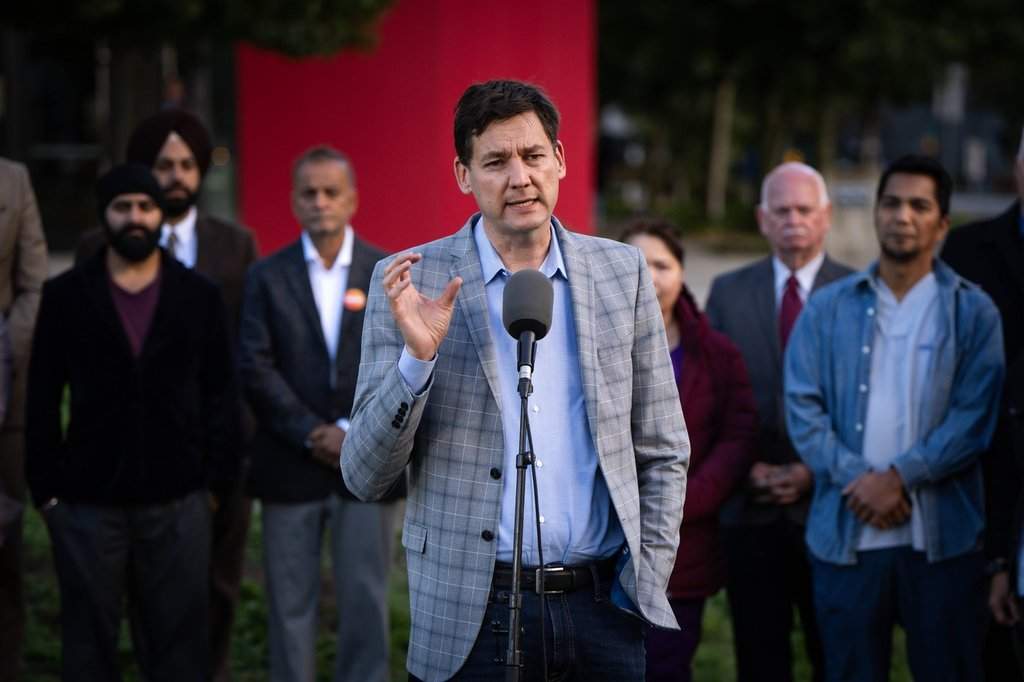
Every election cycle in British Columbia follows the exact same tired script. Party leaders step up to a podium, look gravely into the cameras, and promise to fix the health care system and protect our seniors. They throw around massive dollar figures. They promise more hospital beds, faster emergency room wait times, and subsidized assisted living.
And the media eats it up. Mainstream coverage treats these announcements like a serious policy debate, dutifully tallying up which party promised more billions or more nurses. For a deeper dive into this area, we recommend: this related article.
They are all missing the point. Completely.
If you are voting based on who promises to pour the most money into B.C.’s acute care hospitals or build the biggest senior care facilities, you are actively voting for the system's collapse. The lazy consensus in Victoria—shared across the political spectrum from the NDP to the Conservatives—is that B.C. has a supply problem. We don't have enough beds. We don't have enough doctors. We don't have enough money in the pot. For additional background on this issue, extensive reporting is available at BBC News.
Wrong. We have a structural design problem. And throwing another $5 billion at an obsolete medical model is like trying to fix a sinking ship by buying more expensive buckets.
The Lie of the Acute Care Monopoly
I have spent years watching provincial health ministries burn through staggering sums of public money while emergency room wait times only get worse. Whenever a crisis hits—like an ER closing overnight in a rural B.C. town—politicians panic and announce a new capital project or a hiring blitz.
Here is what they will never tell you on the campaign trail: Hospitals are the worst possible place for seniors to get care.
B.C.’s health care budget is overwhelmingly consumed by acute care—high-tech, high-cost interventions designed for trauma, surgery, and sudden severe illness. Yet, if you walk through the wards of Vancouver General, Royal Columbian, or Kelowna General today, a massive percentage of those expensive beds are occupied by frail seniors who do not need acute medical intervention.
In health policy, we call these patients Alternate Level of Care (ALC). They are medically cleared for discharge, yet they remain trapped in $1,500-a-day hospital beds because there is nowhere safe for them to go.
Meanwhile, ambulances sit ramped outside the emergency department for hours, unable to offload patients because the hospital is gridlocked from the inside out.
When a B.C. party leader promises to "build more hospital beds" to fix hallway medicine, they are proposing the most expensive, least effective solution imaginable. Building a new hospital wing in the Lower Mainland takes a decade and costs billions. By the time the ribbon is cut, the demographic wave of aging Baby Boomers will have already swamped the capacity.
Why "More Doctors" Won't Save Primary Care
The second pillar of every B.C. campaign speech is the family doctor shortage. Roughly one in five British Columbians lacks a regular primary care provider. The political response? Tweaking payment models, offering signing bonuses, and promising to open more medical school seats.
Let's do the basic math that politicians ignore. It takes roughly ten years to train a family physician from the start of undergrad to the end of residency. Even if B.C. doubled its medical school intake tomorrow morning, those doctors wouldn't see a single patient independently until the mid-2030s.
Furthermore, the traditional solo-practitioner family doctor model is dead. Younger physicians do not want to run small businesses, manage overhead, and work 60-hour weeks doing administrative paperwork. The recent Longitudinal Family Physician payment model in B.C. was a necessary patch to stop the bleeding, not a cure.
If you want to fix access to care right now, you stop obsessing over MDs and start aggressively expanding the scope of practice for nurse practitioners, pharmacists, and paramedics. You build interdisciplinary clinics where a patient sees the right professional for their specific issue, rather than bottlenecking every prescription renewal and minor infection through a physician. Politicians rarely campaign aggressively on this because it means picking a fight with entrenched medical associations and unions. It is much easier to just promise "more doctors" and let the next government deal with the timeline.
The Institutionalization Trap for B.C. Seniors
When B.C. politicians talk about "supporting seniors," their imaginations rarely stretch beyond two things: slightly increasing the Shelter Aid for Elderly Renters (SAFER) grant, or promising to build more long-term care (LTC) beds.
This reveals a fundamental misunderstanding of how aging works and what seniors actually want.
Nobody wants to end up in a long-term care facility. Surveys consistently show that over 90% of Canadians want to age in their own homes and communities. Yet, B.C.’s funding model is heavily biased toward institutionalization. The province will readily spend upwards of $80,000 to $100,000 a year to house a senior in a publicly subsidized long-term care bed, while starving the home-care system that could have kept that same senior independent for a fraction of the cost.
Look at the mechanics of B.C.’s home support system. It is fragmented, understaffed, and rigidly bureaucratic. A senior might get a care aide for 30 minutes in the morning to help with bathing, and another 15 minutes at night. Those aides are rushing from house to house, paid hourly with minimal travel compensation, facing burnout rates that rival emergency room nurses.
When that frail senior falls at 2:00 PM because nobody was there to help them prepare lunch, they call 911. They end up in the ER. They fracture a hip. They get admitted to an acute care ward. They lose their muscle mass lying in a hospital bed for three weeks, and suddenly they are no longer safe to go home. They become an ALC patient waiting for a long-term care bed.
That single fall just cost the B.C. taxpayer $150,000, ruined a senior's quality of life, and blocked a hospital bed needed for a car crash victim.
If B.C. leaders actually wanted to support seniors, they wouldn't be bragging about building massive new institutional facilities. They would be radically overhauling home care, funding direct-to-consumer care budgets (where families can hire their own trusted caregivers, similar to models used in parts of Europe and Australia), and investing in community-based adult day programs that give family caregivers a break before they collapse from exhaustion.
Dismantling the Campaign Trail Myths
To understand why B.C. health care remains trapped in a cycle of mediocrity, you have to strip away the comfortable lies voters are told every four years.
Myth 1: Privatization is the Root of All Evil (or the Magic Bullet)
In B.C., the word "privatization" is used as a political grenade. One side screams that allowing private clinics to perform publicly funded surgeries will destroy universal health care. The other side pretends that unleashing the free market will magically eliminate waitlists overnight.
Both sides are peddling nonsense.
B.C. already relies heavily on private delivery within a publicly funded system. Most family doctors are private contractors. Lab work (like LifeLabs) is privately delivered. Many long-term care facilities and surgical centers operate under private or non-profit contracts paid for by the public purse.
The real issue isn't public versus private delivery; it is human resource cannibalization. There is only one pool of nurses, anesthesiologists, and surgical technicians in British Columbia. If you open a private surgical clinic that poaches staff from Vancouver General Hospital to perform lucrative, low-complexity cataracts and knee scopes, you haven't increased the system's capacity. You've just shifted staff from the public ward to a private suite, leaving the public hospital even shorter-staffed to handle complex, life-threatening emergencies.
Conversely, banning private delivery entirely while the public system is failing forces desperate British Columbians to fly to Calgary, Seattle, or Mexico to pay out-of-pocket for diagnostics and surgeries. That is two-tier health care in practice, regardless of how loudly politicians claim to defend the Canada Health Act.
Myth 2: We Just Need to Cut "Bloated Bureaucracy"
Every opposition party in B.C. history has promised to pay for front-line care by slashing "middle management" and "health authority bloat." B.C. has five regional health authorities (Fraser Health, Vancouver Coastal, Island Health, Interior Health, Northern Health) plus the Provincial Health Services Authority and the First Nations Health Authority.
Do these authorities have administrative inefficiencies? Yes. Is consolidating them or firing a few hundred managers going to fund a $30+ billion health care budget? Not even close.
Administrative costs in Canadian health care actually represent a relatively small percentage of total spending—often lower than in the U.S. system, which spends astronomical sums on insurance billing and claims processing. When politicians promise to "cut bureaucracy" to fund nurses, they are offering a painless fairy tale. Firing managers doesn't magically create licensed practical nurses or respiratory therapists. In fact, stripping out clinical managers often forces front-line nurses to take on scheduling, supply ordering, and administrative duties, pulling them away from patient bedside care.
Myth 3: Pharmacare and Dental Care Are "Free"
When leaders promise expanded coverage for medications, vision, or dental care for seniors, it sounds compassionate. And clinically, preventative dental and pharmaceutical care keeps seniors out of the hospital.
However, voters need to recognize the trade-offs. Every dollar allocated to a new universal entitlement program is a dollar not spent on home support workers, paramedic wages, or rural ambulance stations. Governments do not have magic money trees; they have tax bases and debt limits. When a party promises massive tax cuts alongside massive health care expansions without detailing which specific programs will be cut, you are being lied to.
What Radical, Effective Reform Actually Looks Like
If we strip away the campaign slogans and look at what actually works in high-performing health systems globally—like those in Denmark, the Netherlands, or Singapore—the roadmap for British Columbia becomes blindingly obvious. It requires political courage, which is why no party leader is talking about it.
1. Flip the Funding Ratio from Acute to Community
Imagine a scenario where the B.C. Ministry of Health mandates that 25% of all new health spending must go directly into home care, community paramedicine, and preventative aging-in-place infrastructure, rather than hospital construction. Denmark stopped building traditional nursing homes decades ago. Instead, they invested heavily in 24-hour mobile home care teams and accessible senior housing. The result? Lower long-term care costs and vastly higher senior satisfaction. B.C. needs to stop building monuments to acute care and start funding mobile, decentralized care.
2. Pay Family Caregivers Directly
Right now, unpaid family caregivers—usually adult daughters—provide the vast majority of senior care in B.C. They take unpaid leave from work, ruin their own physical and mental health, and save the province billions of dollars. When they finally burn out, their parent enters the public system at massive expense. Instead of gatekeeping care through rigid health authority contractors, B.C. should offer direct cash stipends or tax credits to family caregivers, allowing them to buy respite care, hire neighborhood help, or offset lost wages.
3. Mandate Transparent, Real-Time Data
Try finding out the exact surgical waitlist time for a specific orthopedic surgeon in Fraser Health, or the real-time staffing ratios at a specific long-term care home in Victoria. The data is buried, delayed, or obscured behind bureaucratic metrics. We cannot fix what we refuse to measure transparently. B.C. needs a public, real-time dashboard tracking outcomes—not just how much money was spent, or how many "spaces were announced," but actual patient outcomes, readmission rates, and ER boarding times.
4. Tie Funding to Activity, Not Block Budgets
Most B.C. hospitals operate on global block budgets. They get a lump sum of money at the start of the year regardless of how many patients they treat. In this system, a patient is financially viewed as a cost to be managed, not a client to be served. Shifting toward Activity-Based Funding—where hospitals are paid based on the specific procedures they perform and the complexity of the patients they treat—creates an immediate incentive to improve efficiency, reduce unnecessary stays, and clear surgical backlogs.
The Hard Truth About Trade-Offs
Let's be entirely honest about the downsides of this contrarian approach. Shifting B.C. away from a hospital-centric model is politically brutal and messy in the short term.
If you aggressively redirect funds into home care and community clinics, existing hospitals will still feel strained during the transition period. Unions representing institutional workers will fight tooth and nail against any decentralization that threatens traditional hospital-based bargaining units. Voters who equate "good health care" with seeing a shiny new hospital tower built in their riding will punish politicians who tell them that concrete isn't the answer.
And if you introduce Activity-Based Funding or expand the use of contracted surgical centers, you require ironclad regulatory oversight to ensure private operators don't cherry-pick easy cases while dumping complicated patients back onto the public system. It requires smart, tough governance—something that is perpetually in short supply.
Stop Rewarding Lazy Promises
The next time a B.C. party leader stands in front of a podium and promises to "protect health care" by spending another billion dollars on the exact same broken model, don't applaud. Ask them what they are going to stop doing.
Ask them how they plan to get frail seniors out of $1,500-a-day hospital beds when home support workers can't afford to live in the communities where they work. Ask them why we are still treating 21st-century chronic aging with a 1960s acute-care hospital system.
Until British Columbians stop rewarding politicians for simply throwing money at symptoms, the ER doors will keep locking, the ambulances will keep waiting, and our seniors will keep paying the price.


