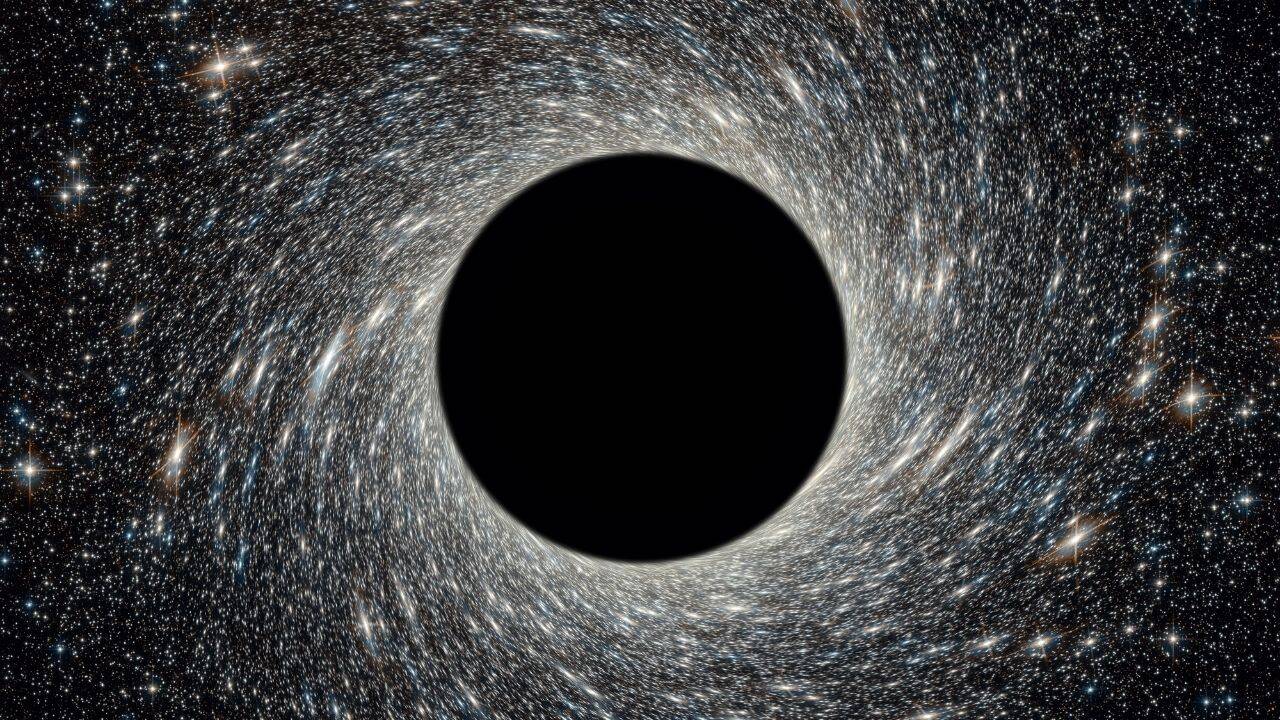
Popular science loves a comeback story. Headlines across the web breathlessly report on repeat tidal disruption events, painting a romanticized picture of a battered star repeatedly walking into the gravitational grinder of a supermassive black hole, losing a chunk of its mass, and walking away like a cinematic action hero shaking off a punch.
It is a comforting narrative. It is also fundamentally wrong.
The lazy consensus in modern astrophysics communication is that these partial tidal disruption events represent a resilient celestial body playing a high-stakes game of survival against an aggressive monster. Observers track repeating flares, map the stripped material, and treat the star as a recurring protagonist.
I have spent years analyzing high-energy transient data, and I am tired of the sentimentality. That star is not surviving. It is being systematically liquidated, and calling its prolonged agony a "comeback" is a profound misunderstanding of stellar mechanics and orbital decay.
The Anatomy Of A Slow Motion Execution
To understand why the mainstream narrative is bankrupt, look at the physics of a partial tidal disruption event. When an orbiting star loops too close to a supermassive black hole, the gravitational gradient across its radius creates differential forces. The near side feels an intense inward pull, while the far side feels a weaker one.
If this tidal force exceeds the star's self-gravity, material gets ripped away. The conventional reporting stops right there and treats the surviving core as a victorious survivor.
That is an amateur mistake.
The core that bounces back into an elliptical orbit is fundamentally altered. It has lost a massive fraction of its envelope. Its internal pressure-temperature profile is wrecked. Fusion rates shift violently. More importantly, every single pass robs the orbit of energy and angular momentum through gravitational wave emission and mass-loss interactions.
Imagine a runner who loses a limb every time they round a specific corner on a track. Cheering because they managed to cross the finish line with one leg missing is not scientific optimism. It is delusion. The star is on a one-way trajectory toward total destruction. Every repeating flare is just a lower-energy installment on a debt that must be paid in full.
Dismantling The Mainstream Myths
Let us address the common questions floating around public forums and astronomy blogs.
- How can a star survive a black hole encounter multiple times?
It doesn't. It merely takes multiple orbits to die completely. The term "survive" implies it returns to its original state or maintains long-term stability. Neither happens. The remnant is a stripped, degenerate corpse bleeding gas until nothing remains. - Does the star get smaller after each pass?
Yes, but not uniformly. Mass loss reduces its gravitational confinement, which can paradoxically cause the remaining core to expand temporarily before cooling and contracting into an exotic, low-mass white dwarf or a helium-rich remnant. - Can we predict when the final disruption will happen?
With precise astrometry and orbital decay modeling, yes. Yet, most papers treat each flare as an isolated event rather than a sequence in a tightly wound mechanical clock running down to zero.
The literature treats these systems as perpetual motion machines of destruction, where the victim magically replenishes its structural integrity between passes. It does not. Stellar interiors do not heal. Once convective zones are sheared open and hydrogen envelopes are stripped into accretion streams, the clock is ticking down to total shredding.
Why The Sentimentality Hurts Science
Why do science communicators lean so hard into this anthropomorphic garbage? Because humans crave narrative arcs. We want underdogs. We want redemption.
When applied to astrophysics, this psychological bias distorts how we model accretion physics. By viewing the star as a persistent object, researchers sometimes misinterpret the timescales of fallback mass and fallback rates. They assume the stellar core is behaving normally, ignoring the severe hydrodynamic shocks reverberating through the interior during closest approach.
I have seen telescope time and computational grants wasted on models trying to fit repeating flares into standard stellar evolution tracks, as if the star were aging naturally. It is not aging. It is being tortured to death by degrees.
If you want to study extreme gravity, stop treating the black hole's victim as a character in an ongoing soap opera. Treat it for what it is: a transient thermodynamic casualty.
The Unforgiving Reality Of Orbital Mechanics
Look at the orbital energetics. In systems like those observed in recent transient surveys, the semi-major axis shrinks with every close encounter due to orbital energy loss. The pericenter distance shifts. The stellar remnant is forced onto an increasingly tight leash.
You cannot cheat the Schwarzschild radius. You cannot negotiate with tidal forces.
The next time you read a headline celebrating a star that refuses to die against a supermassive black hole, remember the truth behind the data. There is no comeback. There is only the lag time between the first cut and the final spatter.
The black hole always wins. It just likes to play with its food.