Every art headline since July 2022 has sold you the exact same bedtime story.
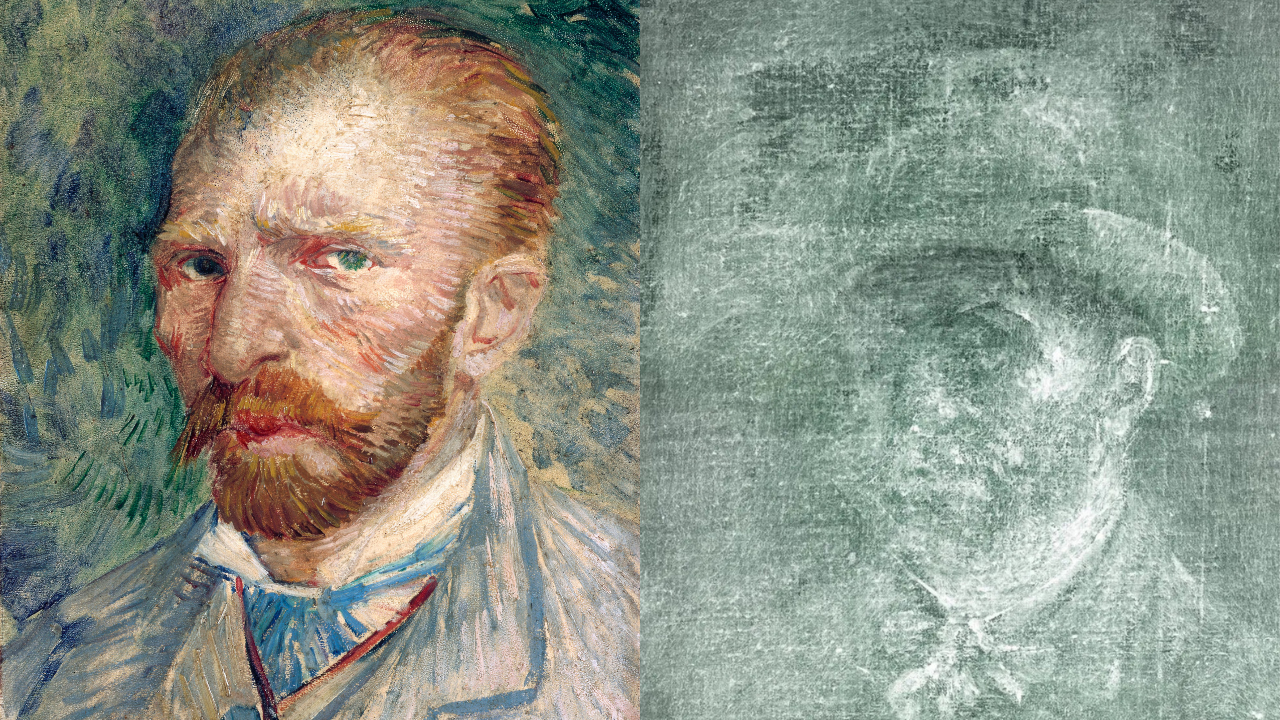
Conservators at the National Galleries of Scotland X-rayed Vincent van Gogh’s 1885 painting Head of a Peasant Woman and miraculously uncovered a hidden self-portrait on the back, sealed away under layers of glue and cardboard for over a century. The press ate it up. Viral threads framed it as a romantic resurrection—a lost masterpiece rescued from the dark by modern science.
They are feeding you museum PR, not art history.
If you actually look at the mechanics of 19th-century studio practice, conservation ethics, and how institutions manufacture scarcity, that "miraculous discovery" looks completely different. Van Gogh did not hide that self-portrait for a future generation to find, and the curators who mounted Head of a Peasant Woman in the early 20th century were not villains suppressing genius. Worse, the breathless obsession with uncovering hidden underpaintings is quietly incentivizing museums to treat canvases like scratch-off lottery tickets rather than physical artifacts.
Let’s strip away the romantic fiction and look at what actually happened behind that cardboard.
The Myth of the "Hidden" Masterpiece
Mainstream coverage treats the reverse of Head of a Peasant Woman like a time capsule. The narrative relies on the word "concealed," implying secrecy, mystery, or tragic neglect.
Here is the reality of Vincent van Gogh’s finances in Nuenen and Antwerp between 1885 and 1886: he was broke. Painfully, chronically broke. Relying entirely on stipends from his brother Theo, Vincent frequently lacked the cash to buy stretched linen canvases. When he wanted to practice brushwork, test color theory, or study facial anatomy in a mirror, he flipped over an existing study and painted on the raw back.
This was not a secret code. It was thrift.
Art historians and technical researchers—including specialists at the Van Gogh Museum in Amsterdam—have documented dozens of double-sided canvases across his oeuvre. To Van Gogh, the verso of Head of a Peasant Woman was scrap paper. When he painted the bearded man in a brimmed hat with a neckerchief loosely tied at the throat on the reverse, he was running an anatomical drill. He was teaching himself how to capture structure under harsh directional light, transitioning from the muddy earth tones of his Dutch period toward the brighter palette he would adopt in Paris.
Calling an abandoned practice sketch a "hidden self-portrait" inflates a sketchbook exercise into a mythic event. It turns a budget constraint into a plot twist.
Why Conservators Glued Cardboard Over a Van Gogh
When the X-ray image hit the internet, amateur commentators immediately asked how anyone could be so reckless as to slap animal glue and heavy board directly onto a Van Gogh self-portrait.
That question exposes a massive misunderstanding of historical framing and structural conservation.
In the early 1900s—likely around 1905 when Head of a Peasant Woman was prepared for major exhibitions, including a pivotal show at the Stedelijk Museum in Amsterdam—framers had one primary objective: stabilize the front image. Unlined 19th-century canvases painted on cheap linen are notorious for warping, slackening, and flaking. Without rigid backing, vibrations from shipping and fluctuations in humidity cause paint layers to delaminate.
To save the finished portrait of the peasant woman on the front, early 20th-century technicians lined the back with cardboard and adhesive. To them, the rough, unfinished sketch on the verso was structurally irrelevant compared to preserving the completed composition on the recto.
You can hate the crude materials they used—animal glue becomes brittle and acidic over decades, and cardboard off-gasses acids that degrade linen fibers—but their logic was sound. They sacrificed an unvarnished, unfinished study to keep a finished work intact. Had they left the canvas unbacked to preserve the sketch on the rear, you might not have either painting today.
The Conservation Trap Nobody Talks About
Now comes the part museums rarely advertise in their press releases: finding an X-ray ghost is easy; physically freeing it is a nightmare.
Senior paintings conservator Lesley Stevenson and her team in Edinburgh used standard radiographic imaging—a routine diagnostic step before lending a work to an exhibition—and spotted the crisp white lead-white highlights of Van Gogh’s face cutting straight through the dark silhouette of the peasant woman.
That X-ray image is magnificent. It is also a trap.
Once an institution announces a "lost Van Gogh" trapped beneath glue and cardboard, public pressure builds immediately to peel back the backing and reveal the paint layer. Yet in conservation studios, mechanical removal of aged animal glue and cardboard from an unvarnished oil sketch is one of the highest-risk procedures in the profession.
Consider the physical mechanics of what happens at the microscopic level:
- Absent Isolation Layers: Finished paintings have a ground layer (gesso) between the linen and the oil paint, plus varnish on top. When Van Gogh painted on the back of a canvas, he often applied oil paint directly onto raw, unprimed fibers, or over thin sizing.
- Adhesive Penetration: Over a century, liquid animal glue seeps into the microscopic crevices of raw linen and porous oil paint, locking the cardboard fibers directly to the pigment particles.
- Mechanical Shear: Attempting to pare away the cardboard with scalpels or soften the glue with moisture risks ripping the pigment straight off the canvas threads, or causing the front painting—Head of a Peasant Woman—to buckle from sudden tension release.
In my years reviewing technical conservation dossiers and watching institutions chase headline-grabbing discoveries, I have seen curators push technical staff toward invasive treatments simply because an X-ray went viral. A responsible conservator knows that leaving a painting sealed in its historical lining is often the only way to keep it stable. The moment a museum turns a diagnostic X-ray into a marketing campaign, scientific restraint goes out the window.
What Technical Art History Actually Revealed
If you ignore the sensationalism, the genuine value of the Edinburgh X-ray has nothing to do with "solving a mystery" and everything to do with forensic chronology.
Before this radiograph existed, dating Van Gogh’s transition between his dark Dutch realism and his Parisian modernism relied heavily on surviving letters to Theo and stylistic guesswork. The X-ray gives technical art historians hard physical data.
Look closely at the radiographic density of the hidden portrait:
- Lead White Distribution: Radiographs map heavy elements. Lead white blocks X-rays, appearing bright white on the film, while earth pigments like umber and ochre allow rays to pass through. The sharp, architectural strokes of lead white across the forehead, nose bridge, and cheek show Van Gogh abandoning smooth blending in favor of structural, directional planes.
- Left-Ear Visibility: Because Van Gogh painted himself using a mirror, the image on the canvas is laterally inverted. The visible ear in the radiograph corresponds to his left ear—the very ear he would mutilate in Arles in December 1888—anchoring the work firmly in his pre-Arles years, likely during his brief, intense stint studying at the Royal Academy of Fine Arts in Antwerp in early 1886.
- Brushwork Velocity: The long, loaded strokes in the hat brim and jacket indicate rapid execution in a single session, contrasting sharply with the labored, built-up impasto of the Nuenen peasant woman on the reverse.
That is real scholarship. It proves how quickly his hand evolved once he left rural Brabant and encountered Rubens and Japanese prints in Antwerp. You do not need fairy tales about "hidden treasures" to appreciate forensic proof of an artist rewiring his brain in real time.
Dismantling the Worst Questions Around the Discovery
Whenever a hidden painting makes the news, search engines flood with the exact same flawed assumptions. Let’s clear the wreckage.
"Why didn't museums X-ray every Van Gogh decades ago?"
Because X-raying a painting is not like taking a smartphone photo, and museums do not have unlimited budgets to radiograph thousands of stable canvases just to see what is behind the stretcher bars. Industrial radiography requires specialized lead-lined facilities, precise kilovoltage calibration so you do not fog the image, and dozens of hours of digital stitching to align overlapping plates. Institutions run X-rays when a painting exhibits structural failure, enters a major catalogue raisonné project, or undergoes condition checks prior to travel—which is precisely how the National Galleries of Scotland caught it while preparing A Taste for Impressionism.
"Does this double the value of the painting?"
Market valuation for a national museum asset is completely irrelevant, and even in the private auction market, double-sided works are a double-edged sword. You cannot hang both sides of a canvas against a wall simultaneously without building an expensive, climate-controlled freestanding vitrine that exposes the back to ambient light and gallery traffic. Collectors hate logistical headaches. A double-sided Van Gogh is a curatorial triumph, not a two-for-one financial windfall.
"Will removing the cardboard ruin the painting on the front?"
If done poorly, yes. Even if done brilliantly, it permanently erases physical evidence of the painting’s 20th-century provenance and exhibition history. The cardboard and glue are not mere trash; they are historical records of how early modernists handled Van Gogh’s estate after his sister-in-law, Johanna van Gogh-Bonger, began systematically placing his works into international exhibitions. Stripping off that backing destroys one layer of history to expose another.
The Uncomfortable Truth About Museum Spectacle
There is an obvious downside to pushing back against the hype around discoveries like the Edinburgh self-portrait: without viral media moments, public funding and donor enthusiasm for museum conservation labs dry up fast.
Conservation departments are chronically underfunded. A single multi-spectral imaging rig or macro X-ray fluorescence (MA-XRF) scanner costs hundreds of thousands of dollars, and municipal arts budgets rarely cover the bill. When the National Galleries of Scotland unveiled a lightbox display allowing visitors to view the X-ray alongside Head of a Peasant Woman, attendance spiked and global press gave Edinburgh free publicity worth millions.
I understand why museums play the game. If framing a routine condition check as a dramatic archaeological rescue brings donors through the doors and pays for the X-ray tubes, curators are going to take the win.
Still, you do not have to swallow the narrative whole.
When you look at that ghostly, bearded face emerging through the X-ray screen, stop imagining a lonely genius hiding secrets in the dark. Look at what is actually there: a broke, relentless painter scraping every last inch of utility out of a cheap piece of linen, surrounded by a century of pragmatic human decisions to keep his work from falling apart.
The truth behind the cardboard is grittier, smarter, and infinitely more interesting than the press release. Stop falling for the fairy tale.